
A product page can have the right product, a fair price, and solid margins – and still fail in search.
That usually happens because the page was built to display inventory, not to win visibility. Search engines need clearer signals. AI systems need structured context. Shoppers need confidence fast. If even one of those is missing, the page underperforms.
For most stores, ecommerce SEO product pages are not failing because of one major issue. They are losing traffic through dozens of smaller gaps: weak titles, copied descriptions, thin content, missing schema, poor internal links, slow media, or pages that do not match search intent.
This is where a stronger SEO framework matters. Product page optimization is not about stuffing keywords into a template. It is about building a page that search engines can interpret, AI systems can cite, and buyers can act on.
What makes ecommerce SEO product pages rank
Strong product pages send clear relevance signals at every layer. The URL, title tag, H1, body copy, image context, schema markup, review content, and internal links should all support the same entity and search intent.
That does not mean every page needs long copy. In some categories, users want fast specifications, pricing, and shipping details. In others, they need comparisons, use cases, sizing help, or proof that the product solves a specific problem. The right format depends on the product type and how people search.
A page for a branded SKU behaves differently from a page for a generic category-leading product. If someone searches for an exact model number, they usually want precision, availability, and trusted store signals. If they search for a broader commercial phrase, they may need more education before buying. Treating both cases the same is a common mistake.
Start with search intent, not just product data
Many product pages are generated from a catalog feed. That is efficient for operations, but weak for SEO.
Catalog data tells you what the item is. Search intent tells you why someone is looking for it.
That difference shapes the page. If users are searching with terms like “best running shoes for flat feet,” they are not looking for a raw SKU page with two lines of manufacturer text. They need fit guidance, support features, material details, and maybe comparison cues. If they search a model name, they need quick confirmation that your page is the right result.
This is why keyword mapping should happen before on-page optimization. One product page should target one primary intent cluster, then support it with semantically related terms. That creates stronger topical relevance and avoids cannibalization across similar products.
Write product copy that helps rankings and conversions
Thin product descriptions are one of the biggest weaknesses in ecommerce SEO product pages.
Manufacturer copy is usually duplicated across dozens of stores. Even when duplicate content does not trigger a penalty, it gives Google no reason to rank your page above competitors. It also gives AI systems little original language to reference.
Useful product copy does three jobs at once. It explains the product clearly, supports the search intent behind the page, and reduces friction before purchase.
What strong product content should include
A good product page usually needs a concise value-focused introduction, key features written in plain language, technical specifications, and practical buying details such as dimensions, compatibility, materials, shipping, warranty, or returns.
In many cases, it also helps to add short sections on who the product is for, common use cases, and what makes it different from similar options. That added context supports conversion and creates more indexable relevance.
The trade-off is length. Too little content weakens rankings. Too much can bury the buy button and hurt conversion. The balance depends on the product, price point, and buyer journey.
Optimize the core on-page elements
The basics still matter because they shape how search engines interpret the page and how users respond in results.
Title tag and meta description
The title tag should lead with the primary product term or model, then include a meaningful modifier if relevant. Keep it readable. Forced keyword variations make pages look low quality.
Meta descriptions do not directly drive rankings, but they affect click-through. Focus on clarity, stock relevance, and buyer value.
H1 and URL
The H1 should match the page topic naturally. The URL should be short, descriptive, and stable. Changing URLs repeatedly creates unnecessary SEO risk unless there is a real structural problem to solve.
Image optimization
Product images support both SEO and conversion. Compress them for speed, use descriptive file names, and write alt text based on what is actually shown. Alt text is not a place to force keywords. It should help search engines and accessibility tools understand the image.
Add structured data for richer search understanding
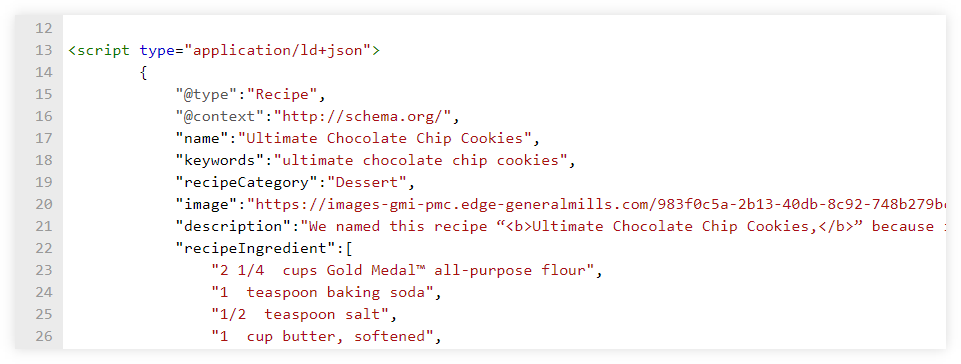
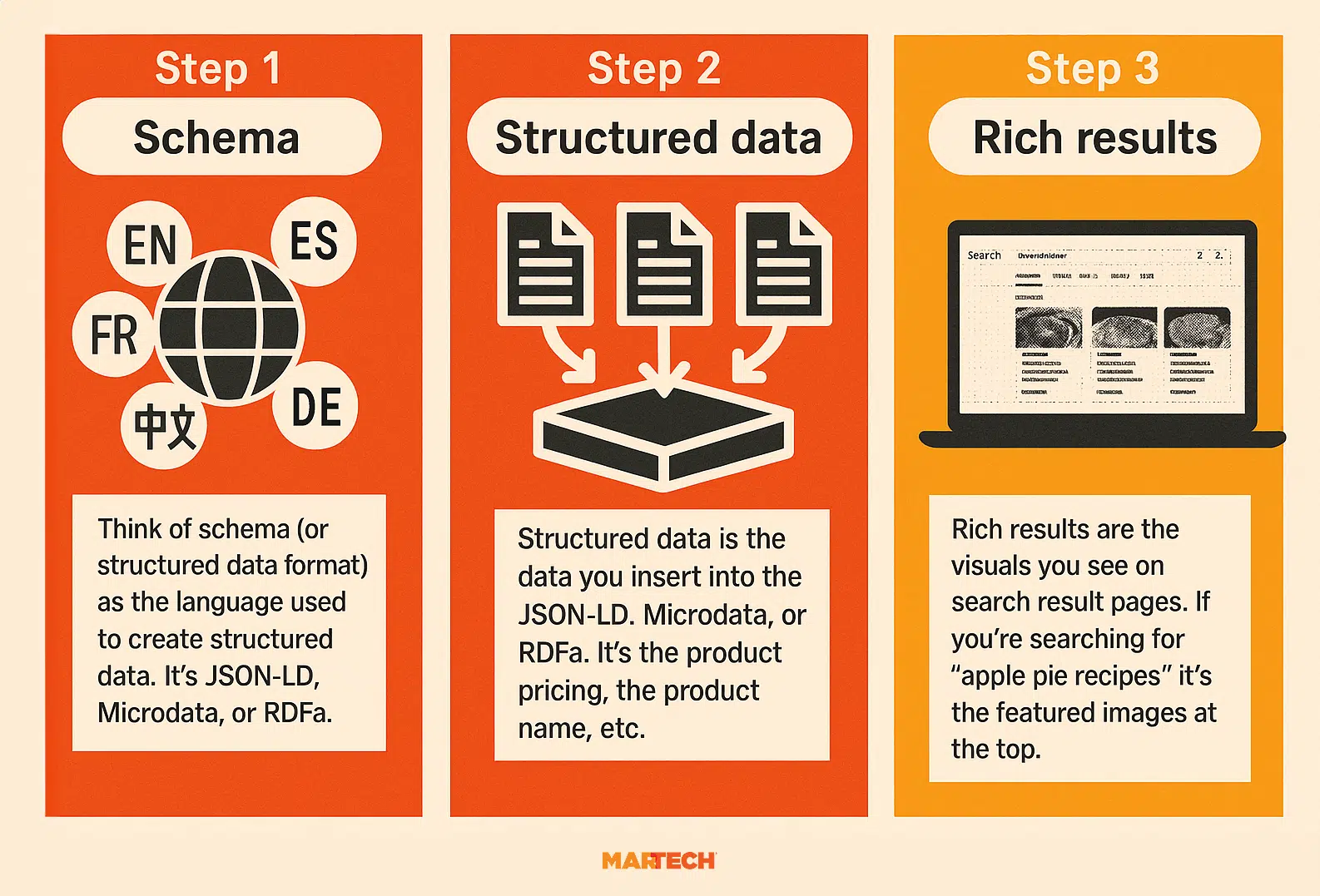
Schema markup gives search engines machine-readable context about the product. It can support eligibility for rich results and improves content clarity for AI systems.
For most stores, Product schema is the baseline. Depending on the page, Review, AggregateRating, Offer, Brand, and FAQ-related markup may also apply.
This is one area where technical accuracy matters. Invalid, misleading, or incomplete schema does not help. Markup should reflect visible page content and current product data such as price, availability, and review information.
Entity-based SEO also becomes important here. Clear brand references, product attributes, and category relationships help search engines connect your page to known entities. That improves interpretation beyond basic keyword matching.
Internal links and site structure matter more than most stores think
A product page rarely ranks well in isolation.
Its performance is shaped by the category structure, breadcrumb trail, related product modules, and the supporting content around it. If your internal linking is weak, authority does not flow efficiently through the site.
Category pages should link to priority products with context. Product pages should connect back to relevant categories and, where useful, to adjacent products or buying guides. This improves crawl paths and helps users move naturally through the funnel.
If your store has blog content, use it strategically. Informational content should support commercial pages, not compete with them. A guide about product selection should reinforce the target product or category pages through clear internal linking and intent alignment.
Technical issues can quietly suppress product page rankings
Many ecommerce teams focus on copy and ignore the technical layer. That is where rankings often stall.
Slow page speed, JavaScript-rendering issues, faceted navigation problems, duplicate URLs, poor canonical setup, and out-of-stock handling can all weaken product visibility. Large stores are especially vulnerable because these issues scale fast.
Common technical problems on product pages
- Duplicate pages created by filters, variants, or tracking parameters
- Missing or incorrect canonical tags
- Thin pages generated for unavailable or discontinued products
- Weak mobile performance due to oversized images or heavy scripts
- Orphaned products with no meaningful internal links
The right fix depends on platform setup. Some stores need template-level updates. Others need crawl controls, stronger canonical logic, or a revised category architecture. There is no single checklist that fits every ecommerce site.
Reviews, trust signals, and UX affect SEO indirectly
Search engines care about user satisfaction, even if they do not measure it in simplistic ways.
When users land on a page and quickly bounce because it lacks reviews, shipping details, return info, or clear product information, that page is less competitive. Better trust signals often improve engagement, conversion, and overall page quality.
This is especially true for high-consideration products. If buyers need reassurance, give it early. Reviews, FAQs, warranties, and clear policies reduce hesitation. They also add useful indexable content when implemented well.
For AI visibility, structured and well-labeled trust content matters too. Systems that summarize products look for explicit signals, not vague marketing claims.
Measuring success on ecommerce SEO product pages
Higher rankings matter, but they are not enough.
A product page should be evaluated by organic impressions, click-through rate, non-brand keyword growth, conversion rate, assisted revenue, and how well it captures the intended query set. Sometimes a page gains traffic but attracts the wrong audience. That is not a win.
The best optimization work connects SEO performance with commercial outcomes. That means looking at which pages deserve deeper investment, which pages should be consolidated, and which should be supported by stronger category or content hubs.
At Creative Site, this is where technical SEO, search intent mapping, and GEO strategy come together. Product pages should not only rank in Google. They should also be structured well enough to be understood, surfaced, and cited in AI-driven search experiences.
FAQ
How long does it take to improve product page rankings?
It depends on site authority, competition, technical condition, and how many changes are being implemented. Some pages improve within weeks, but stronger movement often takes a few months.
Should every product page have unique content?
Yes, where possible. The level of uniqueness can vary, but every important product page should have original copy that adds value beyond manufacturer text.
Is schema enough to rank product pages?
No. Schema supports understanding, but it does not replace intent alignment, strong content, internal linking, and technical health.
A product page should do more than sit in your catalog. It should earn visibility, answer intent, and make the next action easy. When those pieces work together, SEO becomes part of sales performance, not a separate task.