
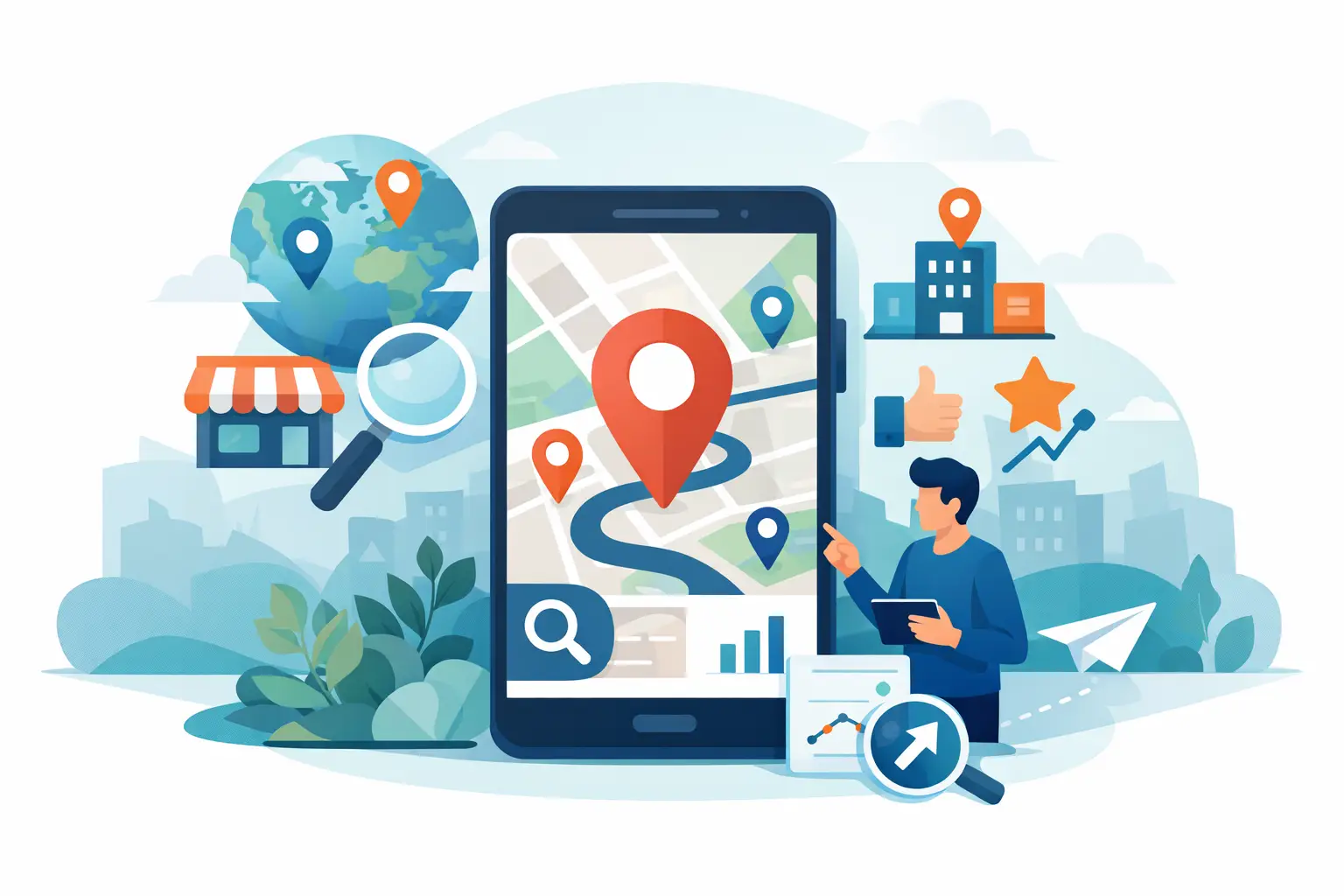
A business can have a solid website, decent services, and fair pricing – then still lose leads to a competitor three blocks away. That usually happens when local search signals are weak. This local SEO guide is built for businesses that want to show up when nearby customers are ready to call, visit, or buy.
Local SEO Guide: What Actually Moves Rankings
Local SEO is not just about adding a city name to a few pages. Google evaluates proximity, relevance, prominence, website quality, business profile signals, review sentiment, and consistency across the web. AI-driven search systems also look for clear entity signals, structured information, and trust markers that confirm who your business is, what you offer, and where you operate.
That means local visibility is part profile optimization, part website structure, and part reputation management. If one of those layers is weak, rankings can stall even when the others look fine.
Start with your Google Business Profile
For most local businesses, the Google Business Profile is the strongest non-website asset in local search. It often drives map pack visibility, phone calls, direction requests, and branded discovery before a user even reaches your site.
The basics matter more than many businesses expect. Your primary category should closely match your main service. Secondary categories should support real offerings, not stretch relevance. Your business name should reflect your actual brand, not a keyword-stuffed variation. Your address, service area, phone number, website, hours, and services must be complete and accurate.
Photos also affect trust. A profile with real location images, team photos, service visuals, and updated branding usually performs better than one with a logo and nothing else. Posts can help, but they are secondary. Accuracy, category alignment, and review quality carry more weight.
Your website still decides whether rankings convert
A Google Business Profile can earn visibility, but your website often determines whether that visibility turns into leads. If your site is thin, slow, confusing, or missing location relevance, you may still rank, but conversion rates will suffer.
Strong local SEO pages are built around search intent. A plumber in Dallas and a family law firm in Miami should not use the same page pattern. Service pages need to explain what you do, where you do it, and why a customer should trust you. That sounds simple, but many local sites still rely on vague copy with little geographic context and no supporting proof.
Your key local pages should clearly show your service areas, core offerings, contact details, and trust signals. Testimonials, certifications, years in business, project examples, and FAQs all help. So does a logical site structure that separates primary services from supporting locations instead of forcing everything onto one generic homepage.
A practical local SEO guide for site structure
For most small to mid-sized businesses, local structure works best when it follows real business logic. Core services should have dedicated pages. Important cities or neighborhoods should have their own pages if you genuinely serve them and can support the content with useful detail.
Avoid creating dozens of near-duplicate city pages with only the place name changed. That can dilute quality and create indexing issues. A better approach is to build fewer, stronger pages with specific local context, clear service relevance, and unique supporting details.
What to include on local landing pages
A strong local page usually includes the service, the location, a concise explanation of the problem you solve, and proof that you serve that market. It should also answer practical questions such as service scope, response area, booking process, and expected outcomes.
Schema markup can strengthen these signals by helping search engines understand your business entity, service type, and location associations. This is where technical SEO supports local SEO directly. Search engines are better at interpreting structured information than vague marketing copy.
Reviews influence both rankings and decisions
Reviews do two jobs at once. They can support local visibility, and they shape whether people trust your business enough to contact you. Quantity helps, but quality and recency matter more than many owners assume.
A profile with 20 recent, detailed reviews often outperforms one with 200 old reviews and no momentum. Reviews that mention specific services, outcomes, and locations provide stronger relevance signals. They also give future customers more confidence.
You do not need a complicated review funnel. You need a repeatable process. Ask at the right moment, make it easy, and respond consistently. Responses should sound human, reference the service where appropriate, and show that the business is active.
There is a trade-off here. Aggressive review requests can create friction if the timing is wrong. A better approach is to build review collection into your normal delivery process rather than forcing it after every interaction.
Citations and consistency still matter
Citations are mentions of your business name, address, phone number, and related details across business directories and relevant platforms. They are not as dominant as they once were, but they still help validate your business identity.
The goal is not to submit your business to every directory on the internet. The goal is consistency. If your phone number differs across platforms, your suite number appears on some listings but not others, or your business name varies by version, trust signals become weaker.
Start with major platforms, core business directories, and industry-relevant listings. Then clean up duplicates and outdated entries. For businesses that moved offices, changed phone numbers, or rebranded, citation cleanup can make a noticeable difference.
Local SEO now overlaps with AI visibility
More search journeys now start in AI-assisted environments. That changes how local discoverability works. A business is no longer competing only for map pack placement or blue-link clicks. It is also competing to be recognized as a credible local entity that AI systems can reference.
This is where entity-based SEO and GEO become relevant. Your website, profile data, structured content, and review ecosystem should reinforce the same business identity. Service definitions, geography, expertise, and supporting proof should be easy to extract.
If your brand mentions one set of services on your site, another set on your profile, and generic copy everywhere else, AI systems have less confidence in how to describe your business. Clear consistency improves both classic search visibility and AI retrieval potential.
Track the signals that lead to revenue
Many businesses track rankings and stop there. Rankings matter, but local SEO should be measured against business outcomes. Calls, form submissions, booked appointments, direction requests, and qualified traffic are more useful than vanity metrics.
It also helps to separate branded and non-branded performance. If you only rank when someone already knows your company name, your local acquisition is still limited. Stronger local SEO should increase visibility for service-based searches, problem-based searches, and nearby intent queries.
What usually slows local growth
The most common blockers are predictable. Weak page quality, missing service-location alignment, inconsistent business information, poor internal linking, low review activity, and technical issues such as slow mobile performance all reduce results.
Competition level also matters. A local SEO plan for a single-location home service business is different from one for a law firm in a dense metro market. Timelines depend on your starting authority, your site quality, and how aggressive the local competition is. Fast gains are possible, but sustained growth usually comes from compounding improvements over several months.
FAQ
How long does local SEO take?
Some improvements, especially profile optimization and citation cleanup, can affect visibility within weeks. Competitive gains on service and location pages usually take longer. Three to six months is a realistic expectation for meaningful progress in many markets.
Do I need a page for every city?
No. Only create location pages where you have real service relevance and enough unique value to justify them. Fewer high-quality pages usually perform better than many thin ones.
Is Google Business Profile enough?
Not if you want durable results. A strong profile helps you appear, but your website, reviews, technical SEO, and entity consistency help you rank better and convert more traffic.
Can local SEO help with AI search visibility?
Yes. Clear business data, structured content, strong service pages, and consistent brand signals can improve how AI systems understand and reference your business.
A good local strategy is rarely flashy. It is built on accuracy, relevance, structure, and trust. When those pieces work together, local SEO stops being a checklist and starts becoming a reliable acquisition channel. For businesses that want visibility that lasts, that is the work worth doing.

Leave a Reply