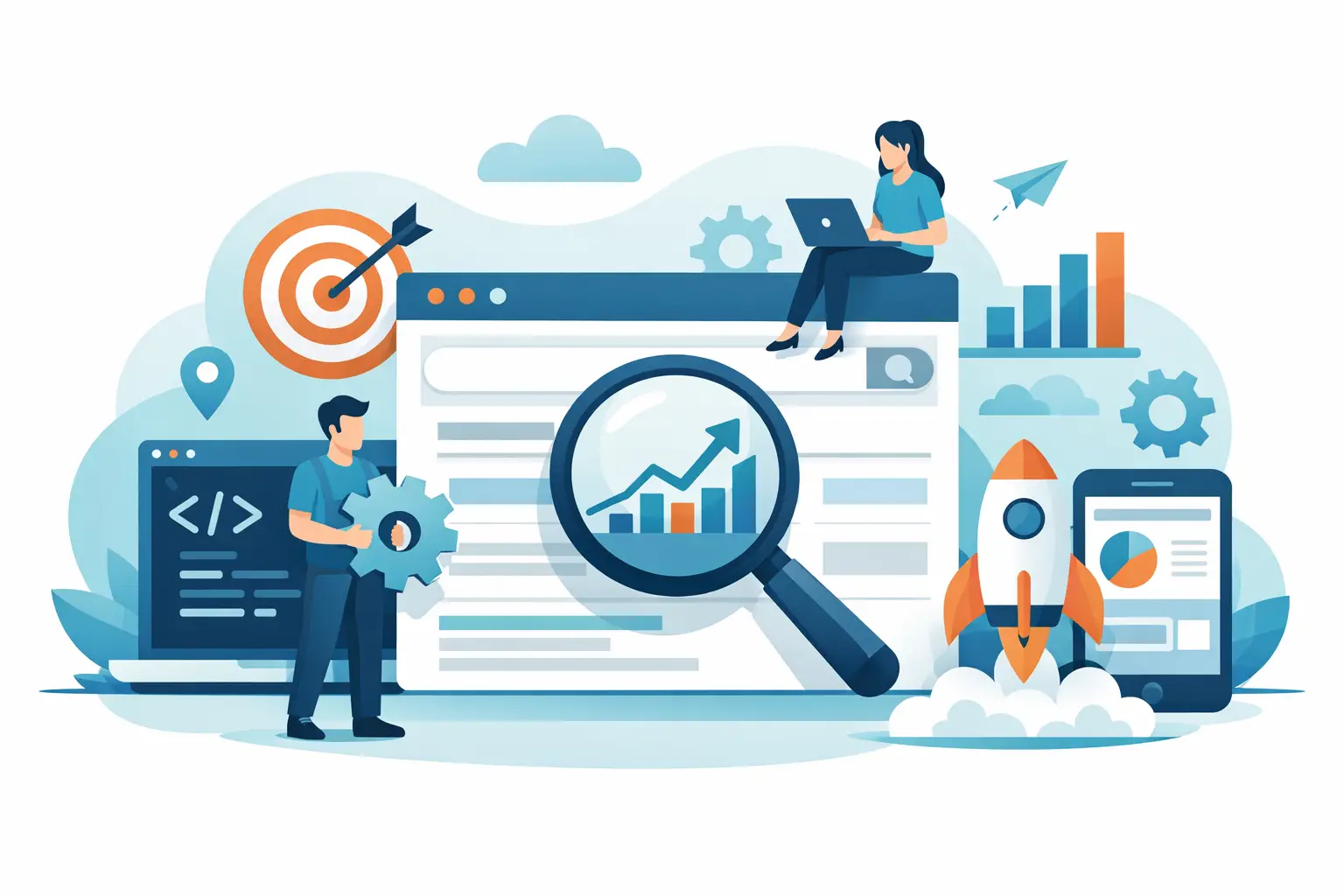
Most websites fail before SEO even starts. The design looks fine, the pages go live, and then traffic stalls because the site was never built around search intent, crawlability, speed, or content structure. That is exactly where seo website development services matter. They combine technical website builds with search strategy from the beginning, so the site is ready to rank, convert, and support AI visibility instead of needing expensive fixes later.
For business owners and marketing teams, this is not a minor detail. A website can look modern and still be weak in search. It can load slowly, bury key service pages, confuse Google with poor architecture, or fail to give AI systems enough context to understand what the business actually does. The result is predictable – low visibility, poor lead quality, and a site that feels like a brochure instead of a growth channel.
What SEO website development services actually include
At a practical level, SEO website development services sit between pure web design and ongoing SEO. They are not just about adding keywords to a few pages after launch. They shape the site structure, content framework, technical setup, and on-page signals before development is finished.
A strong service usually starts with keyword and search-intent mapping. This means identifying what your audience is searching for, what type of page should rank for each query, and how those pages should connect. If that work is skipped, businesses often end up with attractive websites that target the wrong terms or spread authority across too many weak pages.
The next layer is technical planning. That includes URL structure, internal linking paths, metadata logic, mobile responsiveness, Core Web Vitals considerations, indexation controls, schema opportunities, and CMS decisions that support future optimization. Good development makes SEO easier later. Poor development creates friction every time you want to publish, update, or scale.
There is also a content and entity layer. Search engines no longer rely only on exact-match keywords. They assess topics, relationships, expertise, and context. AI-driven search systems do the same. That is why modern development should support entity-based SEO, structured content blocks, clear service hierarchies, and pages written for real search behavior rather than vague brand messaging.
Why building for SEO from the start saves money later
The cheapest website is often the most expensive one to fix. That sounds dramatic, but it is usually true.
When SEO is treated as an add-on, businesses run into familiar problems. Key pages need to be rebuilt. Navigation needs to change. Page templates do not support optimized headings or structured content. Redirects become messy. Performance issues appear after plugins pile up. Then the business pays twice – once for the build and again for the repair.
An SEO-led build reduces that waste. It gives every important page a clear purpose. It aligns content with search demand. It makes technical optimization part of the foundation, not a cleanup project.
This also improves speed to results. Rankings still take time because SEO depends on competition, domain history, and content quality. But a search-ready website gives you a better starting position. Instead of spending the first few months fixing architecture problems, you can move straight into content expansion, authority building, and performance tracking.
SEO website development services vs standard web design
The difference is not just technical. It is strategic.
A standard web design project often prioritizes appearance, basic functionality, and brand presentation. Those things matter. No business wants an outdated or clunky site. But design-only projects tend to ask questions like: What should the homepage look like? Which colors fit the brand? How many pages do we need?
SEO website development services ask a different set of questions. What pages deserve their own search presence? Which queries signal buying intent? How should content be structured so Google and AI systems can interpret it accurately? What technical setup will support visibility six months from now, not just launch week?
Neither approach is automatically wrong. If your website exists only as a reference page for existing customers, heavy SEO planning may be unnecessary. But for businesses that want inbound leads, local search traffic, or eCommerce growth, SEO has to shape development choices early.
The technical foundations that matter most
Not every technical factor carries the same weight. Some issues are cosmetic. Others directly limit visibility.
Site architecture and crawl paths
A search-optimized site makes important pages easy to find for both users and search engines. That usually means clear navigation, logical page groupings, and shallow click depth for core services or product categories. If valuable pages are buried, they often struggle to rank.
Performance and mobile usability
Speed is not just a developer metric. It affects bounce rate, user trust, and crawling efficiency. Mobile responsiveness matters just as much, especially for local businesses and eCommerce brands where a large share of traffic comes from phones.
On-page structure
Each page should have a clear topic focus, useful headings, clean metadata, and enough depth to satisfy search intent. Thin pages rarely perform well unless competition is very low. Overloaded pages can be just as weak if they try to target everything at once.
Schema and structured content
Schema does not guarantee rankings, but it helps search engines understand context. For AI visibility, structured content matters even more. Clear definitions, service explanations, location cues, FAQs, and entity signals improve machine readability.
Where AI visibility and GEO fit into development
Businesses are starting to notice that visibility is no longer limited to ten blue links. Prospects now discover brands through AI overviews, AI assistants, and search experiences that summarize information instead of sending users straight to a homepage.
This changes website planning.
A site built only for traditional rankings may still miss opportunities in AI-driven search environments. GEO, or Generative Engine Optimization, focuses on how your content and site structure help AI systems identify your brand, services, expertise, and relevance. That includes entity clarity, structured information, topical depth, and content that answers questions directly.
This does not replace traditional SEO. It extends it. The best development approach supports both. Built for Google. Trusted by AI.
What businesses should expect from a real provider
A credible agency should be able to explain deliverables clearly. If the proposal sounds vague, that is a warning sign.
Look for a process that covers discovery, search mapping, technical planning, content structure, development, on-page optimization, QA, and post-launch support. Ask how they handle redirects, schema, page templates, local SEO signals, and performance tracking. If you run an eCommerce store, ask how category pages, filters, and product content will be managed. Those details affect rankings more than most business owners realize.
It also helps to ask what is not included. Some providers say they offer SEO website development services, but they only mean basic metadata setup. Others build the site well but leave content strategy and technical SEO unsupported after launch. The right scope depends on your goals, but clarity matters.
Creative Site approaches this as a connected system – technical build quality, intent-driven structure, ongoing SEO, and AI visibility planning working together instead of being split across disconnected vendors.
When this service makes the most sense
Not every business needs a full rebuild. Sometimes targeted technical SEO and content improvements are enough. But SEO-led website development makes the most sense in a few common situations.
It is a strong fit when your current site is outdated, slow, hard to manage, or structurally weak. It also makes sense when launching a new brand, entering a competitive market, expanding locations, or rebuilding an eCommerce store that has poor category visibility. In those cases, rebuilding on a stronger foundation can outperform trying to patch an old system.
If your site already has solid rankings, the decision is more delicate. A rebuild can improve performance, but it also creates migration risk. That is where strategy matters. Redirect planning, URL preservation, content retention, and benchmark tracking should all be part of the process.
FAQ
How long does it take to see results from SEO website development services?
A new or rebuilt site can show technical improvements quickly, but ranking growth usually takes months. The timeline depends on competition, domain history, content quality, and whether ongoing SEO continues after launch.
Are SEO website development services worth it for local businesses?
Yes, especially if local search drives calls, appointments, or store visits. Location pages, service intent mapping, mobile performance, and local SEO signals can make a meaningful difference in visibility.
Do I still need ongoing SEO after the website is built?
Usually, yes. Development gives you the right foundation, but search visibility grows through continued content, optimization, tracking, and competitive adjustment.
Can a website rank without SEO-focused development?
It can, especially in low-competition niches. But ranking is harder when the site structure, technical setup, and content framework were not designed for search in the first place.
The best website is not the one that looks impressive in a pitch deck. It is the one that can be found, understood, and trusted by both people and search systems long after launch.


[…] thin service pages, and weak conversion paths reduce the return on SEO investment. That is why search-optimized web development matters from the […]