Ranking Top 5 on Google Maps & Increasing Local Traffic by 250%
About Homi Homestay
Homi Homestay Seksyen 13 is a daily accommodation (homestay) located in a strategic area of Seksyen 13, Shah Alam — close to AEON, MSU, business districts, and high-traffic visitor locations.
As a location-based business, visibility on Google Maps and local Google searches plays a critical role in securing consistent bookings.
The main objective of Homi Homestay was:
To appear on Google Maps (Google My Business), strengthen on-page SEO, and maintain strong rankings for homestay-related keywords in Seksyen 13.
Initial SEO Challenges
During the early audit phase, we identified several issues limiting local visibility.
Key Challenges
High competition from homestays and hotels around Shah Alam
Inconsistent visibility on Google Maps
Website not fully optimized for local search (Local SEO)
Internal website structure not focused on location-based keywords
For homestay businesses, failing to appear in Google Maps Top Results or Page 1 Google significantly reduces booking opportunities.
Our Strategy: Local SEO + Website Optimization
Instead of focusing only on general traffic, the strategy centered around local search intent and booking visibility.
1. Google My Business (GMB) Optimization
We improved the business listing to increase local trust and relevance.
Updated business information (NAP: Name, Address, Phone)
Optimized categories and services
Enhanced local keyword-focused business description
Ensured address and location consistency
Strengthened trust signals
The goal was to help Google clearly understand the business, location, and service intent.
2. On-Page SEO Optimization
We improved the website structure to align with local search queries.
Restructured key pages
Optimized:
Title and meta description
Heading hierarchy
Location keywords (Seksyen 13, Shah Alam)
Improved internal linking structure
Aligned content with search intent such as:
“Homestay near me”
“Homestay Shah Alam”
3. Local Intent-Based SEO Strategy
We focused on booking-driven keywords rather than generic traffic.
Matched Google Maps visibility with organic search keywords
Optimized for transactional local intent
Ensured Google understands the relationship between business + location + service
Results & Performance
After continuous optimization, Homi Homestay achieved:
Top 5 Rankings on Google & Google Maps
For 10 primary keywords related to homestay and location-based searches.
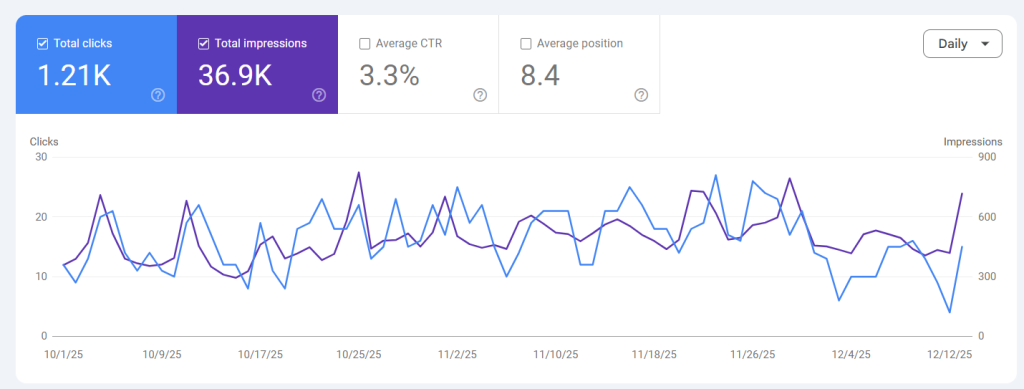
Website Traffic Increased by Approximately 250%
Driven by improvements in Local SEO and Google Maps visibility.
What This Shows
Proper Local SEO creates a strong impact for homestay businesses
Google Maps + On-page SEO is the most effective combination for location-based businesses
Visibility in the right place matters more than general traffic
Conclusion
The Homi Homestay Seksyen 13 case study proves that:
For local businesses, SEO is not just about traffic — it’s about appearing in the right place, at the right time, to the right customers.
With the right Local SEO and website optimization strategy, rankings can be maintained consistently — not just temporarily boosted.
Recovering Rankings After Website Revamp & Domain Migration
About Eskayvie
Eskayvie is a well-known Malaysian health and supplement brand with a wide range of products covering various topics related to health, wellness, and healthy lifestyle.
As a long-established brand in the market, Eskayvie already had strong brand authority. However, as part of a broader digital marketing restructuring, the company decided to revamp its website and improve its SEO foundation to ensure a more structured, competitive, and scalable online presence.
Eskayvie approached us with one primary objective:
To regain and dominate Google rankings across major health-related topics.
SEO Challenges Identified
During our initial audit, we discovered several critical technical and content-related issues that were directly affecting their organic performance.
Key Challenges
Numerous 404 pages after the website revamp
Domain migration from int.eskayvie to eskayvie.com
Risk of duplicate content between old and new domains
Outdated content structure not aligned with current SEO standards
Significant ranking and traffic loss on important pages
In a highly competitive health industry, unresolved technical issues like these can lead to severe traffic decline and long-term ranking damage.
Our SEO Strategy & Implementation
The SEO recovery and growth plan was executed progressively from March to June, focusing on long-term, sustainable results — not short-term quick wins.
1. Technical SEO & Website Cleanup
We began by stabilizing the technical foundation.
Full 404 error audit
Implementation of proper 301 redirects for important pages
Duplicate content management after domain migration
URL restructuring and internal linking optimization
Ensuring Google crawls and indexes only the correct pages
The priority was to restore trust signals and improve crawl efficiency.
2. Content SEO & Health Articles Optimization
Next, we focused on rebuilding topical authority through structured content.
Writing and updating SEO-optimized health articles
Targeting high-impact health topics
Structured article framework:
Keyword research
Clear heading hierarchy (H1–H3)
Internal and external linking
Alignment with user search intent
Content was created not only to rank — but to match real search behavior.
3. E-Commerce SEO Optimization
As an e-commerce brand, product visibility was critical.
Optimization of product pages
Ensuring products rank for relevant commercial keywords
Improved category and product structure for better indexing
This helped align informational traffic with transactional pages.
SEO Results After 3–4 Months
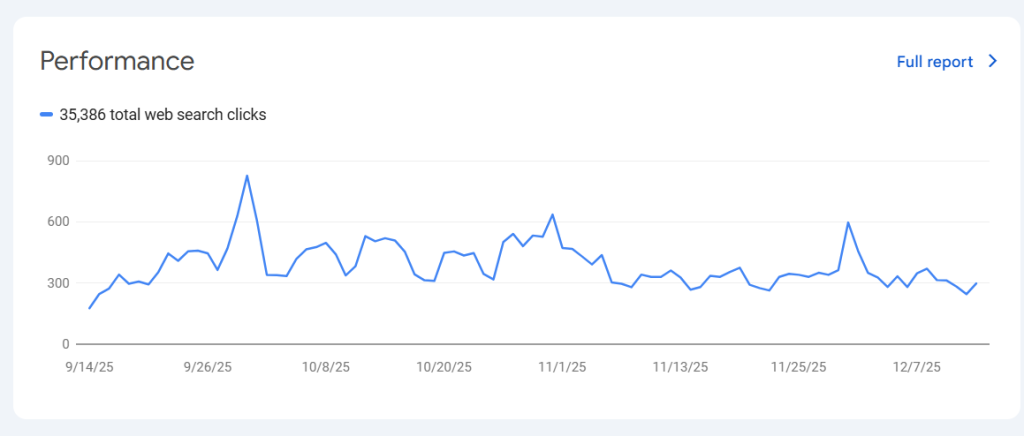
Within 3 to 4 months of consistent SEO work, performance improvements became clearly visible in Google Search Console.
Impressions Increased
400% – 500% growth (From approximately 1,000/day to 5,000–6,000+ per day)
Total Clicks Increased
200% – 250% growth (From approximately 250 clicks/day to 700–800+ per day)
CTR Increased
40% – 50% improvement (From around 8–9% to nearly 12% average)
Overall Performance Summary
Total Impressions: 707,000+
Total Clicks: 84,000+
Average CTR: 11.9%
Average Position: 12.6
What This Improvement Indicates
Google regained trust in the new website structure
Health articles began ranking for a broader set of keywords
Organic traffic stabilized and grew consistently
Technical recovery successfully prevented long-term traffic loss
Conclusion
The Eskayvie case study proves that:
SEO is not just about publishing articles. It requires a strategic combination of technical SEO, structured content strategy, and consistent optimization.
Even after experiencing ranking drops due to a website revamp and domain migration, the right SEO approach can recover and significantly improve organic performance.
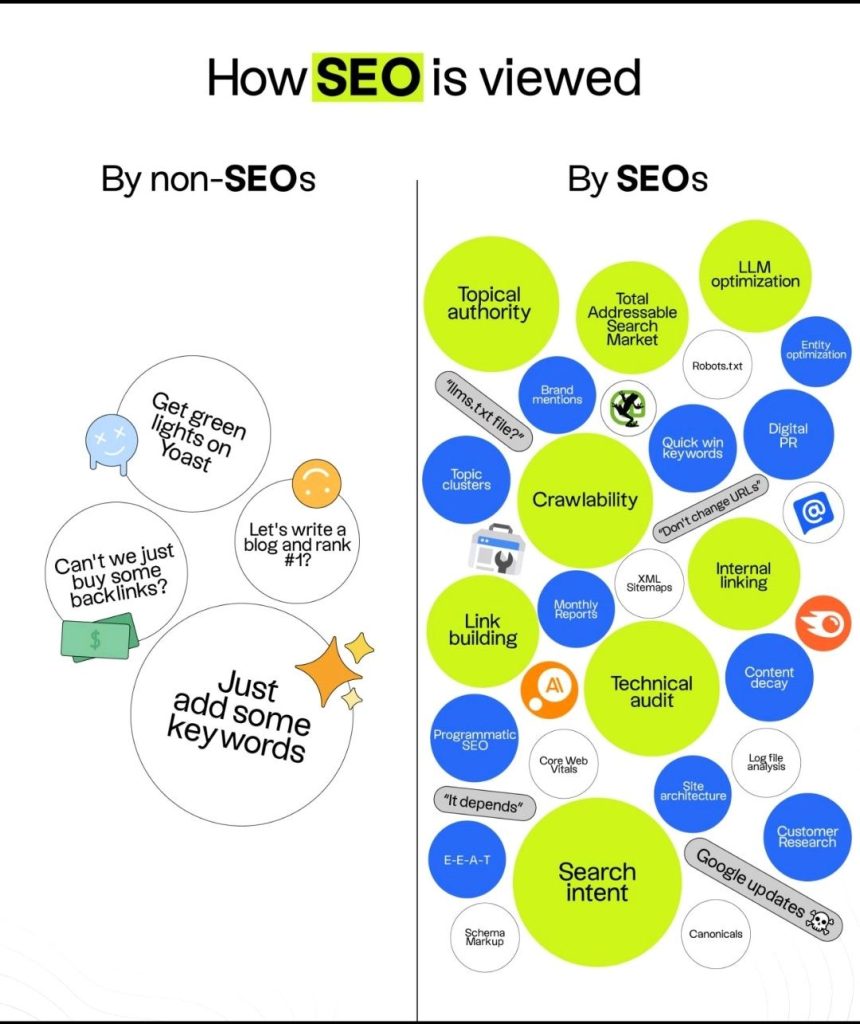
SEO in 2026 is changing faster than ever. Traditional SEO strategies that focus only on keywords, backlinks, and rankings are no longer enough to stay competitive. According to insights shared by Yoast experts, search engines are evolving into AI-driven discovery systems that prioritize clarity, trust, and machine understanding over pure ranking positions.
In other words, SEO in 2026 is about visibility, not just rankings.
AI-powered search experiences, structured data, and brand authority now determine whether your content gets surfaced, summarized, or ignored. If your website content is not easy for machines to understand, it won’t matter how well it’s written for humans.
This article breaks down the 7 most important SEO predictions for 2026 — and what you must do today to future-proof your website.
1. SEO Success Will Be Measured by Visibility, Not Rankings
For years, SEO success was simple: rank on page one, preferably position #1.
In 2026, that mindset is outdated.
Search engines and AI systems no longer rely solely on blue-link rankings. Instead, they pull answers, summaries, and recommendations from content they understand and trust. This means your content can be visible without users ever clicking your website.
What This Means for SEO:
Rankings are no longer the final KPI
Visibility includes AI summaries, featured answers, and recommendations
SEO strategies must focus on retrievability, not just traffic
If AI cannot confidently interpret your content, it won’t use it — no matter how high it ranks.
2. Structured Data Becomes a Core SEO Requirement
Structured data has existed for years, but in 2026 it is no longer optional.
AI-driven search engines depend heavily on schema markup to understand:
What your content is about
Who created it
How it relates to other entities
Websites without structured data risk becoming invisible to AI-powered discovery systems.
Key Structured Data Types to Prioritize:
Article & BlogPosting schema
Organization & Author schema
Product & Review schema (for eCommerce)
FAQ & How-To schema
Think of structured data as machine-friendly context. Without it, your content is just text — and machines struggle with ambiguity.
4
3. Content Must Be Written for Humans and Machines
In the past, long-form content often ranked well simply because it was long.
In 2026, clarity beats length.
AI systems evaluate:
Logical flow
Clear headings
Concise explanations
Easy summarization
Content that rambles, repeats, or lacks structure will be skipped — even if it’s keyword-optimized.
Best Practices for Machine-Readable Content:
One clear idea per section
Descriptive H2 and H3 headings
Short paragraphs (2–4 lines)
Bullet points where appropriate
If an AI can summarize your article accurately in seconds, you’re on the right track.
4. Rankings Still Matter — But as Authority Signals
Don’t misunderstand: rankings are not dead.
But in 2026, rankings act more as authority signals rather than end goals.
High rankings indicate:
Trustworthiness
Topical authority
Historical consistency
AI systems use these signals to decide which sources deserve to be referenced.
How to Use Rankings Strategically:
Track rankings as diagnostic indicators
Focus on topical clusters, not single keywords
Build authority within a niche, not across everything
Ranking well helps AI trust you — but trust is what drives visibility.
5. Brand Authority and Mentions Matter More Than Ever
SEO is no longer isolated to your website alone.
AI systems evaluate your brand footprint across the web, including:
Brand mentions
Reviews and ratings
Social discussions
Citations from trusted sources
A brand that is consistently mentioned across platforms appears more credible than one that only exists on its own website.
How to Build Brand Signals:
Publish expert content consistently
Get mentioned on relevant websites
Maintain consistent messaging across platforms
Encourage authentic reviews and discussions
In 2026, SEO and digital PR overlap more than ever.
6. Multimodal Content Is Now Part of SEO
SEO is no longer text-only.
Search engines and AI systems now process:
Images
Videos
Audio
Visual explanations
Content with multiple formats increases understanding, trust, and reuse potential.
What You Should Do:
Add relevant images with context
Embed explainer videos
Use visuals to simplify complex ideas
Optimize multimedia for clarity, not decoration
Text explains. Visuals reinforce. Together, they win.
7. Discovery Happens Beyond Google Search
In 2026, people don’t search only on Google.
They search on:
YouTube
TikTok
LinkedIn
Reddit
Community forums
These platforms influence what AI considers trustworthy and relevant.
SEO Strategy Must Expand:
Repurpose content across platforms
Maintain consistent expertise messaging
Participate in relevant discussions
Your website is the foundation — but discovery happens everywhere.
Bonus Insight: Email Is Still One of the Strongest Channels
While algorithms change, email remains direct and reliable.
Email helps:
Build long-term trust
Reinforce authority
Reduce dependence on platforms
In a fragmented discovery ecosystem, owning your audience matters more than ever.
What SEO in 2026 Really Means
SEO in 2026 is not about gaming algorithms.
It’s about:
Being understood
Being trusted
Being referenced
AI systems reward clarity, consistency, and authority.
If your content is:
Well-structured
Machine-readable
Authentically useful
You won’t just rank — you’ll stay visible.
Note: This article is a summarized and adapted conclusion based on insights shared by SEO experts at Yoast, as published in their official 2026 SEO predictions. The content has been restructured and simplified to highlight the key takeaways in a practical and actionable format for business owners and SEO practitioners.
If you have a WordPress website—whether for business, a blog, a landing page, or eCommerce—Google Analytics 4 (GA4) is one of the most important tools to understand your website visitors.
With GA4, you can find out:
How many visitors come to your website
Where they come from (Google, Facebook, Ads, direct traffic)
Which pages are visited the most
How long visitors stay on your website
Conversions and events (clicks, form submissions, purchases)
In this article, I’ll show you how to set up Google Analytics 4 (GA4) step by step, in a simple and beginner-friendly way.
Time needed: 10 minutes
How to set up Google Analytics 4 (GA4)
Log in to Google Analytics
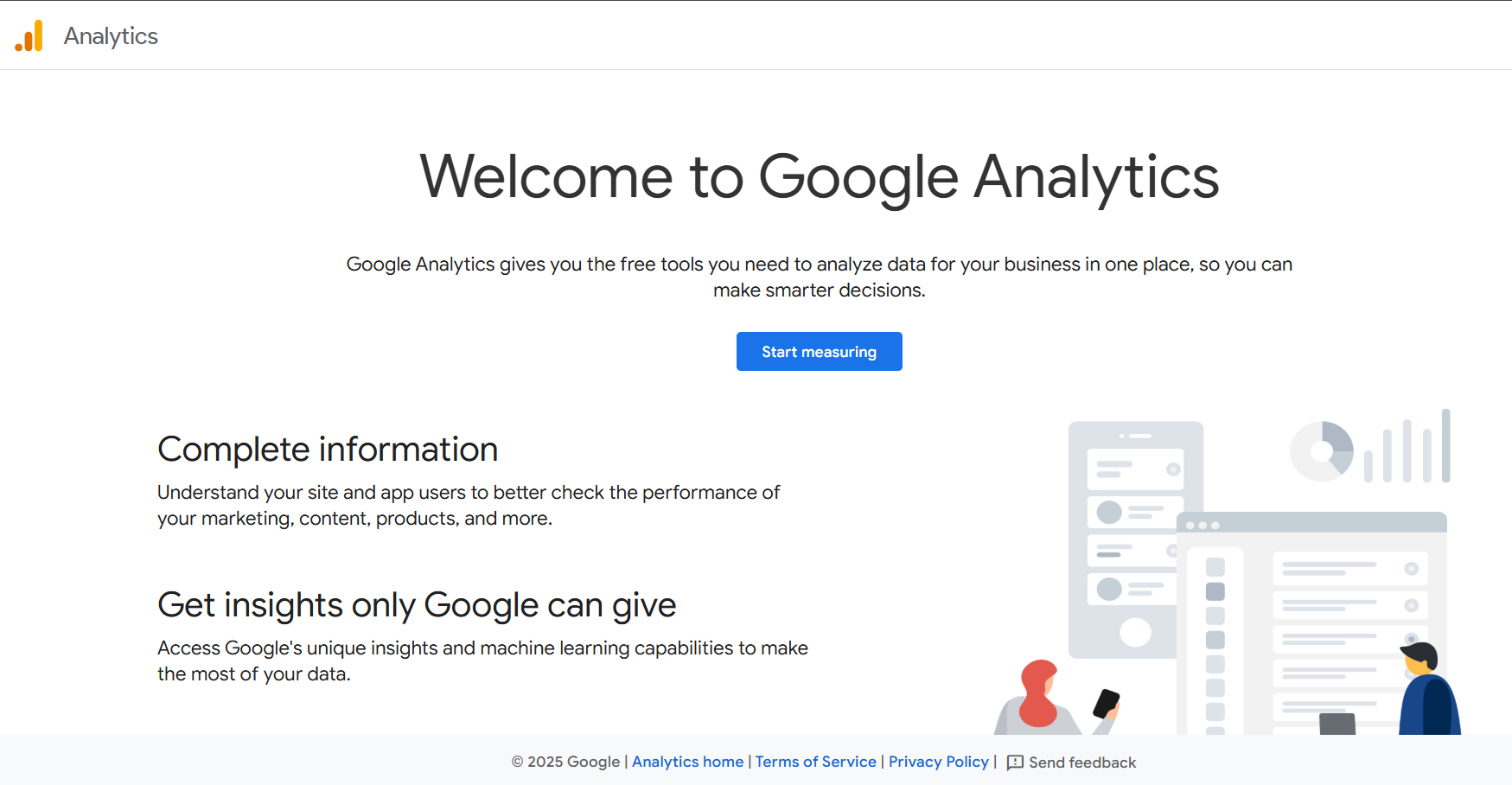
Log in to Google Analytics using your Google (Gmail) account. If this is your first time, click “Start Measuring” to begin setting up GA4.
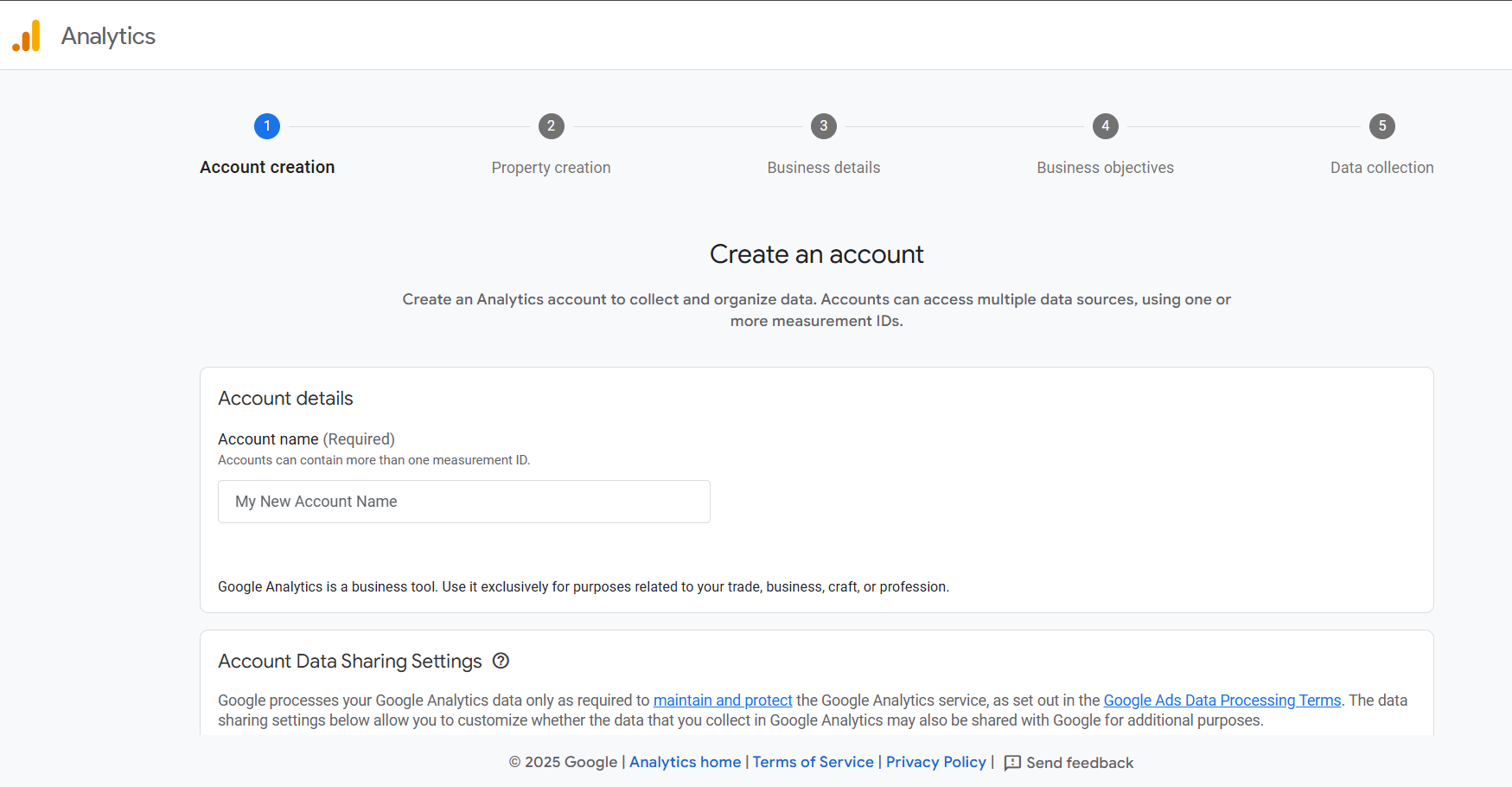
Create a GA4 Account & Property
Enter your account name, website name, select Malaysia as the time zone, and MYR as the currency. Choose your business category and complete the GA4 property setup.
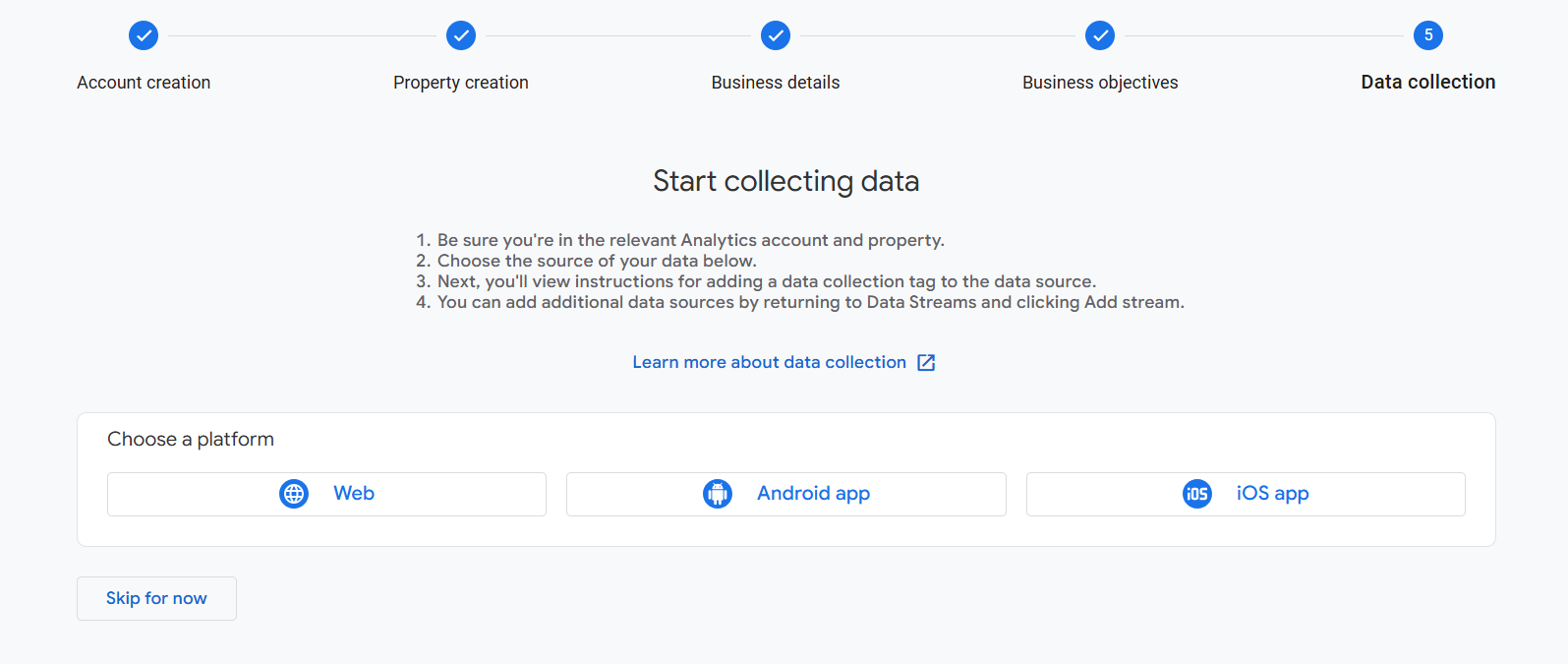
Select the “Web” Platform
Choose “Web” as the platform, enter your website URL and stream name. Make sure Enhanced Measurement is enabled before clicking “Create Stream.”
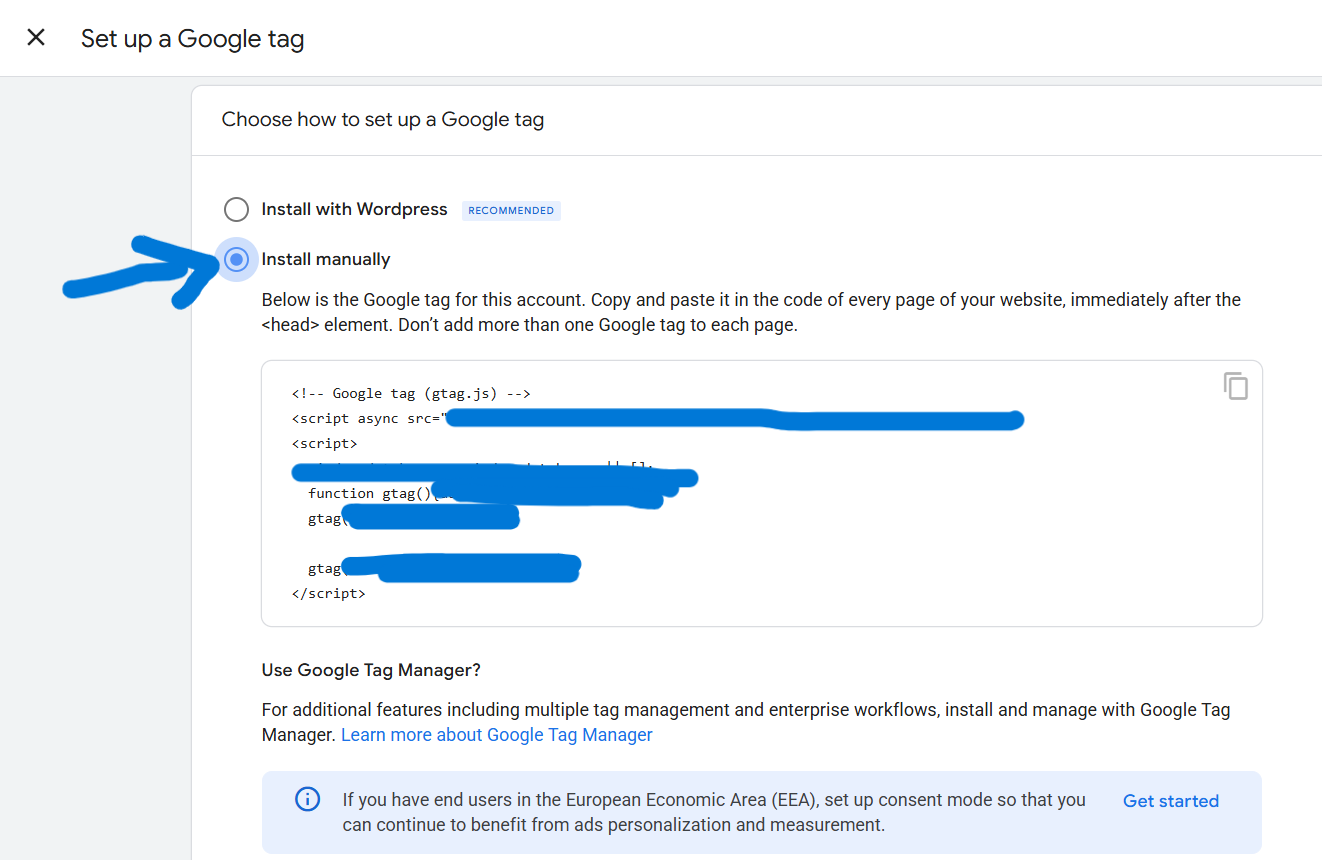
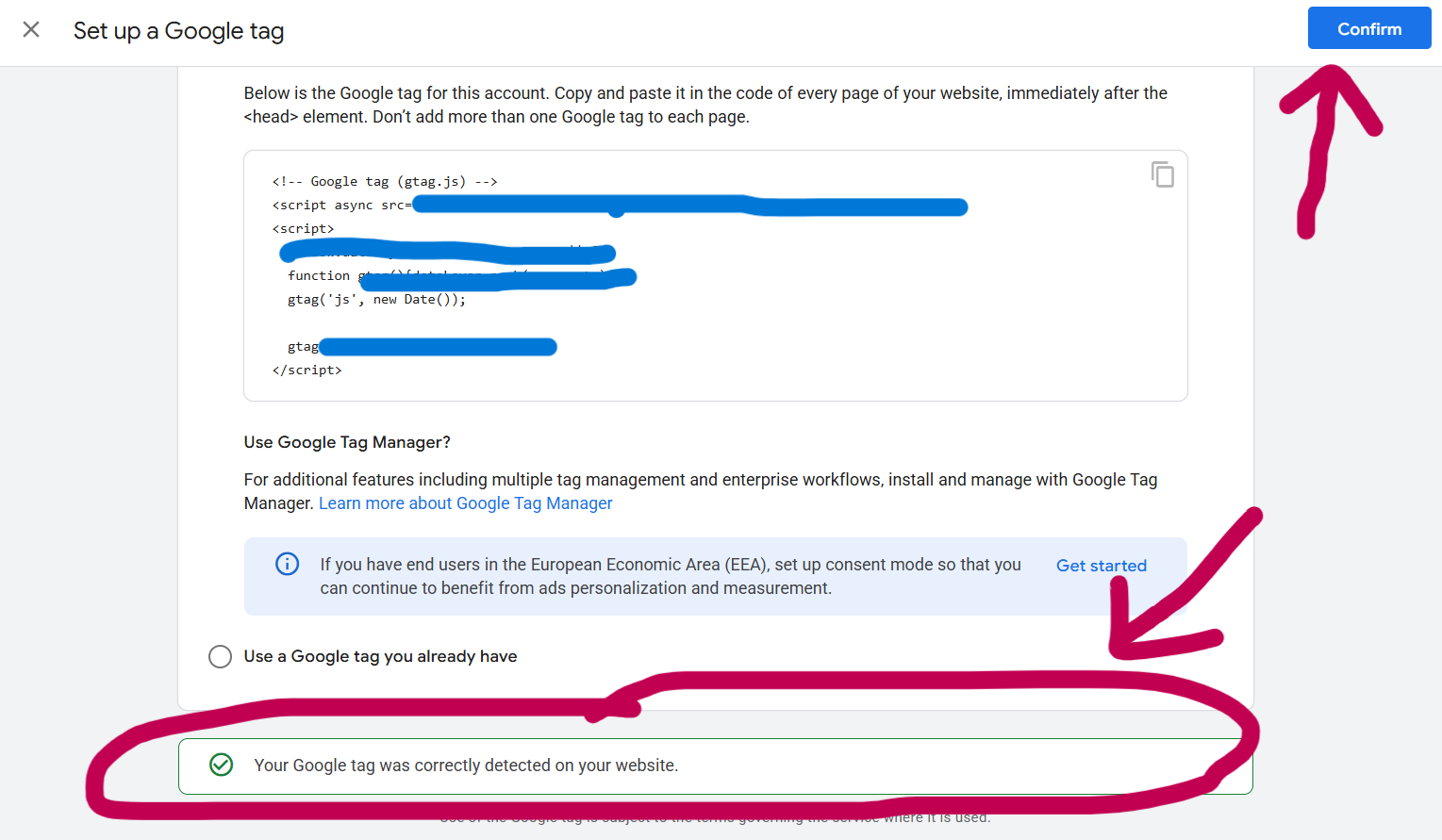
Copy the GA4 Tracking Code
Select Install Manually (recommended method) and copy the full Google Analytics 4 (GA4) tracking code provided. Do not edit or modify the code.
Log in to WordPress & Install WPCode Plugin
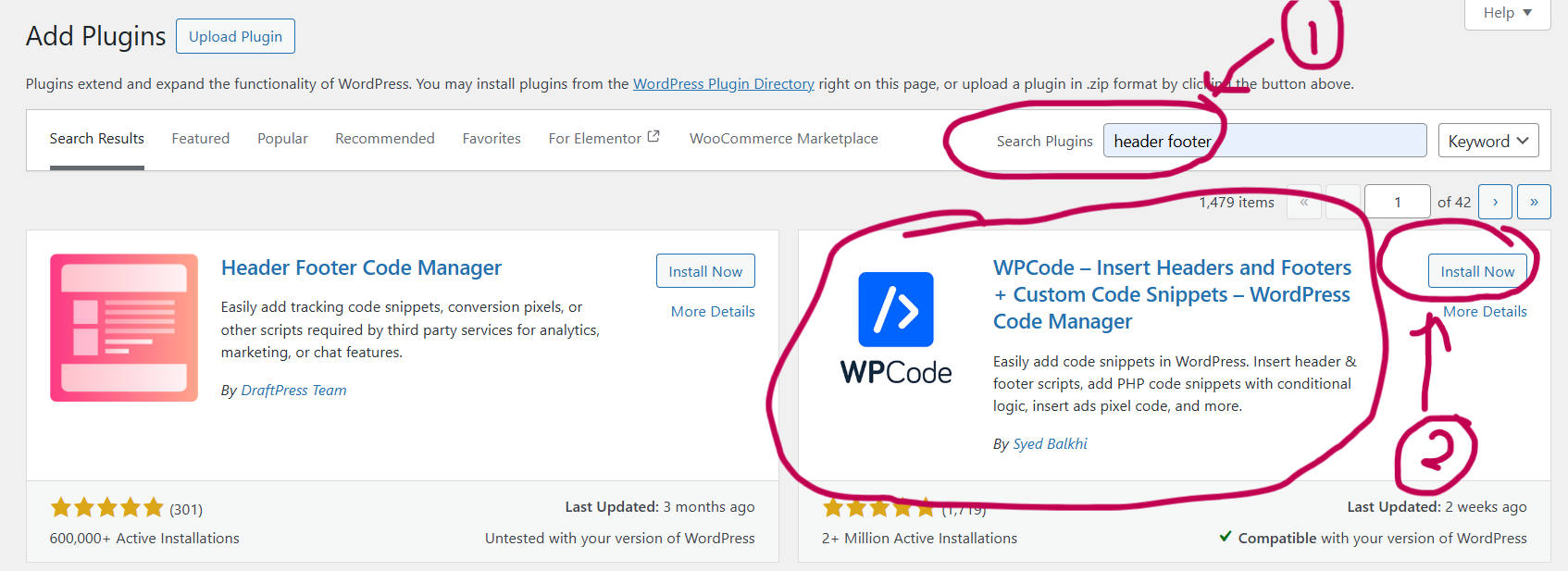
Log in to your WordPress Admin dashboard, go to Plugins, search header and footer and install the WPCode plugin to easily add the GA4 tracking code.
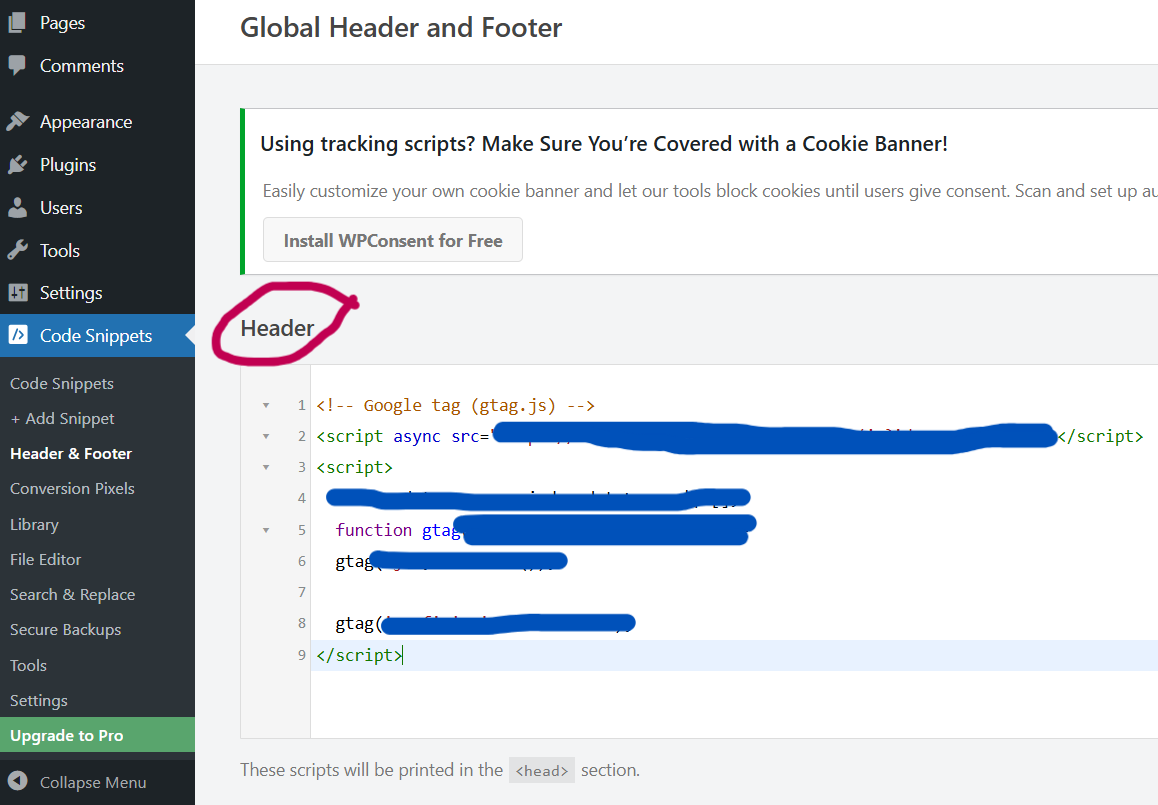
Paste the GA4 Code into the Header Section
Go to WPCode → Insert Headers and Footers, paste the GA4 tracking code into the “Scripts in Header” section, then click Save.
Test Data in GA4 (Real-Time)
Go back to Google Analytics and click Test Installation.
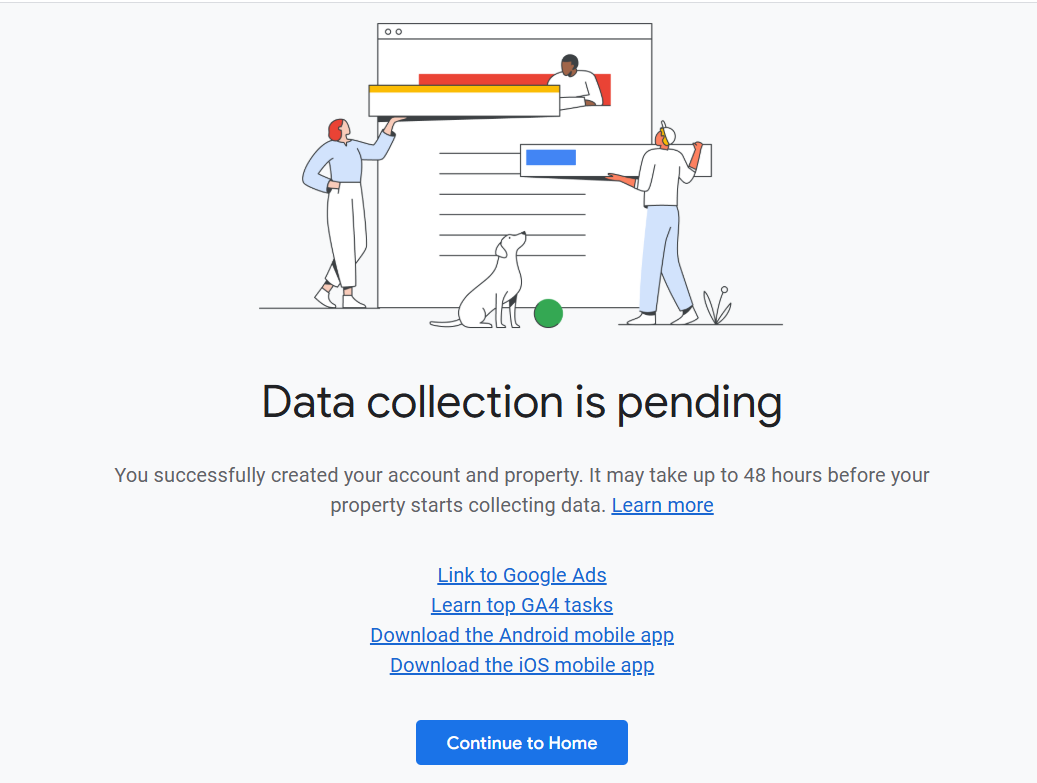
If the setup is successful, Google Analytics will inform you that it may take up to 48 hours for your data to be collected and displayed in the GA4 dashboard.
Done!
Google Analytics will inform you that it may take up to 48 hours for your data to be collected and displayed in the GA4 dashboard.
If you’re running a business in Malaysia today, SEO is no longer optional — it’s a growth requirement.
Whether you’re a local service provider in Selangor, an eCommerce brand targeting nationwide customers, or a B2B company selling high-ticket services, SEO determines whether customers find you or your competitors.
Here’s the reality:
Malaysians Google everything
Paid ads stop the moment you stop paying
SEO keeps generating traffic 24/7 without paying per click
That’s why more Malaysian businesses are now investing in SEO instead of relying 100% on Facebook Ads or Google Ads.
But the big question most business owners ask is:
“How much does SEO services cost in Malaysia?”
The short answer: RM1000 to RM15,000+ per month, depending on scope, competition, and provider.
In this guide, I’ll break down:
Real SEO pricing in Malaysia
What you’re actually paying for
Which SEO packages make sense (and which don’t)
How to avoid getting scammed
What Determines SEO Pricing in Malaysia?
Before we talk about numbers, you need to understand why SEO prices vary so much.
1. Keyword Competition
Ranking for:
“Tuisyen Matematik Bangi” → easier & cheaper
“Interior Design Malaysia” → very competitive & expensive
Higher competition = more content, links, and time needed.
2. Website Condition
SEO cost increases if:
Website is slow
Poor structure (no proper H1–H3)
Duplicate content
No internal linking
No SEO foundation
A “broken” website costs more to fix.
3. Scope of Work
SEO isn’t just keywords.
It includes:
Technical SEO
On-page SEO
Content creation
Link building
Reporting & tracking
Maintenance & updates
More scope = higher cost.
4. Local vs National vs International
Local SEO (Seremban, Shah Alam): cheaper
National SEO (Malaysia-wide): mid-range
International SEO: premium pricing
SEO Services Cost in Malaysia (Full Breakdown)
1. Freelance SEO Services
Cost: RM1000 – RM2,000 / month
Best for:
Small businesses
Personal brands
Startups
Local services
Usually includes:
Basic keyword research (3–10 keywords)
On-page SEO
Basic content optimisation
Simple monthly report
Limitations:
Limited manpower
No advanced link building
Slower results
Suitable if you’re just starting.
2. Small SEO Agency Packages
Cost: RM1,500 – RM4,000 / month
Best for:
SMEs
Clinics
Tuition centres
Local service businesses
Typical inclusions:
5–30 keywords
On-page SEO optimisation
Technical SEO fixes
Content optimisation / blog posts
Local SEO (Google Business Profile)
Monthly SEO reports
Best value for money for most Malaysian businesses.
3. Mid-Tier SEO Agency (Growth SEO)
Cost: RM4,000 – RM8,000 / month
Best for:
Companies targeting competitive keywords
Multi-location businesses
eCommerce stores
Lead-generation websites
Includes:
Advanced keyword strategy
Competitor analysis
Content marketing (blogs, landing pages)
Internal linking strategy
Backlink building
Conversion optimisation
SEO reporting dashboards
This is where real ranking battles happen.
4. High-End / Corporate SEO
Cost: RM8,000 – RM15,000+ / month
Best for:
Corporate brands
National-level competition
High-ticket services
Aggressive growth goals
Includes:
Full SEO audit
Dedicated SEO manager
Content team
Link outreach campaigns
Digital PR backlinks
CRO + UX optimisation
Enterprise-level reporting
Usually handled by agencies with SEO teams, not individuals.
One-Time SEO Costs (Common Add-Ons)
SEO Audit
RM900 – RM3,000 (one-off) Includes:
Technical SEO issues
On-page problems
Keyword gaps
Competitor analysis
Website SEO Setup
RM1,000 – RM5,000 (one-off) – Best for new websites RM500 – RM1000(one-off) – For add-on websites
SEO structure
Meta tags
Schema
Sitemap & indexing
Page speed optimisation
Monthly SEO vs One-Time SEO: Which Is Better?
Option
Suitable For
Result
One-Time SEO
New website
Short-term improvement
Monthly SEO
Growing business
Long-term ranking & traffic
SEO is not a one-time job. Google updates, competitors improve, content ages.
That’s why monthly SEO wins long term.
Cheap SEO Packages: Should You Avoid Them?
You’ll often see:
“SEO RM299/month – Guaranteed Page 1”
Red flags:
Guaranteed ranking
No clear strategy
No reporting
Spam backlinks
Auto-generated content
Cheap SEO may:
Get you penalised
Damage your domain
Kill long-term growth
How to Choose the Right SEO Package in Malaysia
Ask these questions before hiring:
What keywords are we targeting?
How long until results?
What’s included monthly?
How do you measure success?
Can I see previous case studies?
Do I own my content & website?
If they can’t answer clearly — walk away.
Check out more on YouTube from Google itself on Tips for hiring an SEO Specialist
Realistic SEO Timeline for Malaysia Market
Month 1–2: Setup & optimisation
Month 3–4: Keyword movement
Month 5–6: Traffic growth
Month 6+: Leads & conversions
SEO is compound growth, not instant gratification.
How Much Should You Budget for SEO?
Here’s a simple guideline:
Small local business: RM1,500 – RM3,000/month
Growing SME: RM3,000 – RM6,000/month
Competitive industry: RM6,000 – RM10,000+/month
If SEO is done right, ROI beats paid ads long-term.
SEO Is an Investment, Not a Cost
Businesses that invest in SEO early:
Reduce ad spend
Build authority
Own their traffic
Scale sustainably
If you’re serious about long-term growth in Malaysia — SEO is the smartest digital investment you can make.
Creative Site Digital Solution, a Malaysian-based digital agency specializing in website development and SEO-driven digital growth, has officially partnered with Chip-In Asia, a trusted online payment gateway provider, to help businesses integrate secure and seamless online payment solutions into their websites.
This collaboration aims to support Malaysian SMEs and entrepreneurs by simplifying the process of accepting online payments, enabling businesses to operate more efficiently in today’s digital economy.
With the increasing demand for cashless and online transactions, many business owners face challenges in implementing reliable payment systems due to technical complexity and security concerns. Through this partnership, Creative Site Digital Solution provides end-to-end website development and integration services, while Chip-In Asia delivers a secure and reliable payment infrastructure.
Muhammad Afiq bin Ibrahim, Founder
“Online payment capability is no longer optional for businesses that want to scale digitally,” said Muhammad Afiq Ibrahim, Founder of Creative Site Digital Solution.
“By working with Chip-In Asia, we are able to offer our clients a complete digital solution — from website development to secure online payment integration — without unnecessary complexity.”
Chip-In Asia is known for its user-friendly payment gateway designed to help businesses accept online payments quickly and securely. The platform supports businesses across various industries, making it suitable for service providers, e-commerce operators, and digital entrepreneurs.
Through this collaboration, businesses working with Creative Site Digital Solution will benefit from:
Seamless online payment integration into their websites
Secure and reliable transaction processing
Improved customer experience and trust
Faster go-live for payment-ready websites
This partnership reflects Creative Site Digital Solution’s commitment to building practical, scalable, and results-driven digital solutions for businesses in Malaysia.
By combining website performance, SEO, and payment functionality, the agency continues to position itself as a digital growth partner rather than a traditional web development provider.
As digital adoption accelerates, Creative Site Digital Solution and Chip-In Asia aim to help more Malaysian businesses transition confidently into the online space with the right tools and infrastructure in place.
About Creative Site Digital Solution
Creative Site Digital Solution is a Malaysian digital agency specializing in website development, SEO, and digital growth strategies. The company focuses on helping businesses build high-performing websites that convert visitors into customers through optimized user experience and strategic digital solutions.
About Chip-In Asia
Chip-In Asia is a Malaysia-based online payment gateway that provides secure and efficient payment solutions for businesses. The platform enables companies to accept online payments easily while ensuring transaction security and reliability.
In today’s fast-moving digital world, AI, automation, workflow optimization, organizational redesign, business efficiency—these keywords are becoming the foundation of modern operations. Many companies still rely on outdated organizational structures: rigid hierarchies, siloed departments, manual reporting, and slow decision-making. These old models quietly kill growth.
But AI is flipping the script.
Across industries—from SMEs to enterprise companies—AI is dismantling old bottlenecks and building smarter, more agile, high-performance organizations.
This article breaks down exactly how AI eliminates outdated structures, reduces costs, shortens workflows, and creates a business that moves faster than your competitors.
Let’s dive in.
1. AI Removes Operational Bottlenecks Caused by Manual Workflow Handoffs
Traditional companies rely heavily on manual handoffs:
One department completes a task
Sends it to department B
Department B reviews
Department C approves
Then someone updates the spreadsheet manually
Every handoff equals delay, confusion, cost, and mistakes.
How AI eliminates this:
AI automates the entire workflow:
AI bots automatically assign tasks
AI checks compliance
AI updates reports instantly
AI sends alerts when something is late
AI flags anomalies before the human even notices
Think of AI as a 24/7 operational coordinator. No breaks, no emotion, no delays.
Result: Workflows that previously took 3–7 days can now be completed in hours or minutes.
2. AI Breaks Down Silos by Centralizing Knowledge and Communication
Before AI, information lives everywhere:
Emails
WhatsApp groups
Google Docs
Internal chats
People’s brains
This creates departmental silos, which slow down growth.
AI fixes this by becoming a unified knowledge brain.
With AI-powered knowledge bases:
Insights are instantly searchable
All teams access the same information
No more “Who has the latest file?”
SOPs are always up to date
Training becomes 10x faster
AI also integrates data from marketing, sales, support, operations, finance—giving the entire company a single source of truth.
When AI centralizes knowledge, silos disappear.
3. AI Reduces Layers of Management by Empowering Teams With Real-Time Decision Support
Outdated organizations rely on layers:
Junior staff
Supervisor
Manager
Senior manager
Director
Why? Because historically, people needed oversight to avoid mistakes.
But AI has changed this.
AI tools can now:
Validate decisions in real-time
Predict risks
Explain the best course of action
Provide insights instantly
Remove the need for “approval chains”
This means fewer managers are needed to micromanage or oversee routine decisions.
AI acts like a digital supervisor.
Companies that adopt AI can reduce 20–40% of unnecessary managerial layers.
4. AI Predicts Problems Before They Become Crises
Traditional organizations react after things go wrong:
Sales drop → only then review
Customer churn rises → only then investigate
Inventory runs out → only then reorder
Campaign fails → only then analyze
Reactiveness is expensive.
AI switches the model from reactive to predictive.
With AI, companies can:
Detect anomalies in real-time
Predict customer churn
Forecast inventory needs
Identify bottlenecks before people feel them
Predict employee burnout
Estimate financial risk
This eliminates outdated “post-mortem” organizational structures. Teams no longer need weekly meetings just to figure out what went wrong.
AI tells you before it happens.
5. AI Eliminates Repetitive Administrative Roles
In older corporate structures, many job roles exist purely for handling:
Conclusion: AI Is Not Just a Tool—It Is a New Organizational Model
AI is redefining the way businesses are structured. Not just automating tasks, but fundamentally replacing outdated organizational models that slow companies down.
If you adopt AI now:
You cut costs
You eliminate bottlenecks
You reduce layers
You unlock speed
You outperform competitors
The companies that survive the next decade will be the ones that rebuild their structure around AI, not human bottlenecks.
In a world where more and more people are speaking to devices instead of typing, voice search optimisation (VSO) is no longer optional—it’s essential.
Keywords such as “voice search optimisation”, “voice-assistant SEO”, “how to rank for voice search” and “voice search friendly content” are becoming vital as users ask full-sentences like “What’s the best Italian restaurant near me?” rather than typing “Italian restaurant near me”.
According to recent studies, voice search continues to grow rapidly and brands that ignore this trend may miss out on sizable traffic.
Whether you run an e-commerce site, a local business, or a blog, you should prepare your content and site architecture so it answers voice queries effectively.
Below, I’ll walk you through 7 proven techniques to optimise for voice search, then provide a step-by-step example you can model for your own site.
Understand how voice search differs from text search
Before you dive into tactics, you need to understand the distinction. People speaking into a voice assistant often use conversational, question-style queries: “How do I …?”, “Where can I …?”, “What is …?” instead of terse typed strings.
Device context – Many voice searches happen on mobile, smart speakers, or while users are on the move. Optimisation must account for this environment.
Featured/answer nature – Voice assistants often pull a single result (or very few) via featured snippets, so being “position zero” is more important.
Because of these differences, traditional SEO tactics alone won’t always suffice. You must tweak your strategy for speech-based queries.
1. Technique #1: Use conversational, long-tail & question keywords
One of the first actionable steps: shift your keyword strategy. Instead of “best coffee machine” you might target “What is the best coffee machine for a beginner?” Voice search optimisation thrives on longer, more specific, question-oriented phrases.
How to implement:
Use tools to find question-based keywords (who, what, where, when, why, how).
Map out how users might ask your query verbally. E.g. “How can I fix a leaky tap myself?” instead of “leaky tap fix”.
Create content pages or sections (FAQ, “How To” guides) which directly use those question phrases.
This approach aligns with how voice search queries are phrased, increasing the chances your content is selected.
2. Technique #2: Answer intent quickly and simply (aim for featured snippets)
When someone uses voice search, they want a quick, straightforward answer. Many voice assistants fetch the content from the featured snippet of search results or other structured answer boxes. So your content must be structured to be voice-assistant-friendly.
Tactics:
Use headers and sub-headers clearly stating the question (“How do I fix a leaky tap?”).
Provide the answer early in the paragraph (first 40-50 words) so the voice assistant can extract it.
Use bullet lists or numbered steps for clarity.
Include FAQ schema markup or HowTo schema markup so search engines identify the format.
By doing so you increase your chances of being selected as “position zero” and therefore being read out by voice assistants.
3. Technique #3: Optimise for mobile, speed, user-experience & technical SEO
Voice search often occurs on mobile devices or smart speakers, so your site must be technically sound. If your page loads too slowly or is not mobile-friendly, you risk losing the voice result opportunity.
Key checks:
Mobile responsive design.
Fast loading times (use Google PageSpeed Insights, server caching, minimise heavy scripts).
Clean markup and structured data (Schema.org).
Use HTTPS.
Ensure content is easy to read and digest.
Essentially, you’re building a site that not only reads well but otherwise speaks well to devices.
4. Technique #4: Include local SEO if you target regional queries
Many voice searches are local: “Where is the nearest pizza place?” “Find plumber in Petaling Jaya.” If your business has a physical location or serves local customers, local voice search optimisation is vital.
Steps to optimise locally:
Ensure your business’s NAP (Name, Address, Phone) is correct and consistent across Google My Business/Maps and your site.
Use geo-specific keywords in conversational style (“Which Malay restaurant is closest to Batu Caves?”).
Include “near me”-type phrases and service area details.
Encourage positive reviews (since voice assistants often rely on review ratings when choosing which result to speak).
If you ignore local voice optimisation, you miss out on a large chunk of voice-driven traffic and conversions.
5. Technique #5: Leverage structured data and content format that helps voice assistants
Structured data (Schema markup) gives search engines a clearer understanding of your content, which helps voice assistants pick your answer.
Important markup to consider:
FAQ Schema for your Q&A sections.
HowTo Schema for step-by-step guides.
LocalBusiness Schema (for local businesses).
Breadcrumb, Organization, and Review markups.
Also, format your content in a way that voice assistants can parse easily: direct question headers, short paragraphs, bulleted lists, simple language.
6. Technique #6: Optimise for voice across devices and platforms (and test)
Voice search isn’t just Google on mobile. It includes smart speakers, TVs, home assistants, and different platforms (Siri, Alexa, Cortana etc).
Testing and platform strategy:
Use voice search yourself: ask your device questions that match your target keywords and see what gets read back.
Review how results appear across platforms (mobile, speaker, smart-TV).
Ensure your metadata and markup are valid across platforms.
Monitor voice traffic analytics (if available) and track featured snippet wins.
The more you test and refine, the better prepared you’ll be.
7. Technique #7: Create content with voice-search in mind (and offer value)
At the heart of voice search optimisation is making your content genuinely useful and accessible. It’s not about keyword stuffing or gimmicks; it’s about meeting the user’s voice-query intent.
Content creation tips:
Write in conversational tone, as though you were answering someone’s question face-to-face.
Include “question-and-answer” sections. Example: “Question: What time does the store open?” “Answer: We open at 9 am on weekdays…”
By creating content that resonates with how people speak, you’ll be much better positioned for voice search wins.
How to optimise an article for voice search
Let’s put these 7 techniques into practice with a mini-case study. Suppose you run a blog about “home plumbing tips” and you want to capture voice search traffic for “how to fix a leaky tap”.
Step 1: Keyword research
Find question-style long-tail keywords: “How do I fix a leaky tap in my bathroom?”, “What tools are needed to fix a leaky faucet?”, “Why is my tap leaking when turned off?”.
Use your keyword tool to filter for “questions” or “conversational” keywords.
Step 2: Create the article structure
Title: “How to Fix a Leaky Tap: A Step-by-Step Guide for Homeowners” Headings might include:
H1: How to Fix a Leaky Tap: A Step-by-Step Guide for Homeowners
H2: Why Is My Tap Leaking? (Understanding the Causes)
H2: What Tools You’ll Need to Fix a Leaky Tap
H2: How Do I Fix a Leaky Tap? (The Step-by-Step Process)
H3: Step 1: Turn Off the Water Supply
H3: Step 2: Remove the Tap Handle
…
H2: FAQ – Common Questions Homeowners Ask
H3: “How much does it cost to fix a leaky tap?”
H3: “Can I fix it myself or do I need a plumber?”
H2: Final Thoughts
Step 3: Answer the questions clearly
At the start of the article, you might write a short paragraph:
If your tap is leaking, the most common cause is a worn washer or O-ring. You can fix it yourself with basic tools in under 30 minutes following our step-by-step guide.
This establishes a clear answer within 40-50 words, helping voice assistants pick it up.
Step 4: Use conversational tone
Write as though speaking:
“Ever heard that steady drip-drip-drip when you turn off the tap? Here’s exactly how to stop it…”
This mirrors real-life speech and aligns with how users talk to devices.
Step 5: Optimise for mobile and speed
Ensure the article loads rapidly, images are compressed, article is mobile responsive, markup is valid, FAQ schema is added. Use HowTo schema for the step-by-step section.
Step 6: Local and review (if you’re a plumber or local service)
If you are a plumbing business:
Add your local business schema, geography details (city, state).
Encourage reviews from happy customers (“Fixed my tap in 20 minutes!”) because voice assistants may reference reviews when recommending.
Step 7: Test your content via voice
On your smartphone or smart speaker, ask: “How do I fix a leaky tap?” and see if the device reads from your page or snippet. If not, iterate the language/markup.
By following this process, you increase your chances of your site being found when users ask verbally.
Why voice search optimisation matters for your business
Let’s recap why this matters:
The percentage of searches done by voice assistants keeps rising.
Voice search often leads to action (calls, local visits, purchases) because many queries are bottom-of-funnel.
Optimising for voice helps overall SEO too—improving mobile performance, user experience, long-tail keyword coverage.
It helps you stay ahead of the competition. Many sites have not yet adapted their content and structure for voice search.
For these reasons, voice search optimisation should form part of your SEO roadmap for 2025 and beyond.
Common pitfalls to avoid
As you implement voice search optimisation, watch out for these mistakes:
Ignoring mobile/speed issues – Even with great content, if your site is slow you lose users and rankings.
Writing like you type – If your content still uses short, fragmented keywords rather than conversational language, you’ll miss voice-search opportunities.
Neglecting schema/structured data – Without proper markup, search engines and voice assistants may fail to interpret your content for voice results.
Ignoring local context – If you’re a local business and you don’t optimise for “near me” or local voice queries, you lose a large pool of ready-to-act users.
Failing to test voice queries – If you don’t test on actual devices (smartphones, speakers) your assumptions may be off.
By avoiding these, you increase your chance of success.
This video walks through essential steps for voice search optimisation including conversational keywords, schema markup, FAQ sections and mobile optimisation.
Voice search optimisation is no longer a fringe tactic—it’s central to any modern SEO strategy.
By applying the 7 techniques above you position your site to capture traffic from users speaking to devices like smartphones and smart speakers.
Remember: the goal is not just to rank—but to be chosen and spoken aloud by voice assistants.
The difference between a typed search and a voice query may seem slight, but the optimisation approach changes significantly.
Work through your content with the voice-first mindset: think of your user speaking the question, the assistant reading the answer, and you being the correct answer.
Start with one topic—perhaps your highest-priority service or product—optimise it using the steps above, test via voice queries, refine, then roll out to other pages.
Over time, you’ll build a voice-ready asset base that drives traffic, engagement and conversions.