
Author: Afiq Ibrahim

  • 5 SEO Tips To Boost Your Website Traffic

    5 SEO Tips To Boost Your Website Traffic

    If you own a website, one truth remains: traffic is everything.

    Whether your goal is sales, sign-ups, brand visibility, or leads — without consistent visitors, your website can’t perform.

    But SEO (Search Engine Optimization) often feels like a mystery. Algorithms keep changing, tools evolve, and what worked last year may not work today. So the question is: how do you really get more organic traffic in 2025?

    In this guide — inspired by Neil Patel’s style — we’ll walk through 5 proven SEO tips that can help you attract more visitors, boost engagement, and increase conversions.

    These aren’t “hacks” or shortcuts — they’re strategies that work long term, helping you build visibility, authority, and brand trust over time.


    1. Start with Smart Keyword Research & Search Intent Optimization

    Why it matters

    Before writing a single word, you need to know what your audience is searching for — and why.

    Many businesses skip this step and end up producing content that nobody searches for or that doesn’t match the user’s intent. The result? Low engagement and poor rankings.

    Understanding search intent — whether users are looking to learn, compare, or buy — is key to showing up for the right searches.

    How to do it

    1. Use keyword tools wisely
      Start with your main topic or product, then explore long-tail variations using tools like Ubersuggest, Ahrefs, or Google Keyword Planner.
      Example: Instead of just targeting “SEO,” go for “SEO tips for small businesses” or “how to improve website ranking.”
    2. Analyze competitors
      Check what keywords your top competitors are ranking for using SEMrush or Ubersuggest. Study their content: how it’s structured, how long it is, and what questions it answers.
    3. Map search intent
      Every keyword should be linked to a type of intent:
      • Informational – “What is SEO?”
      • Navigational – “Ubersuggest login”
      • Transactional – “Buy SEO audit tool”
      • Commercial investigation – “Best SEO tools 2025”
      Matching your content to the right intent ensures Google understands your purpose.
    4. Optimize placement
      Include your primary keyword in the title, first paragraph, meta description, one subheading, and naturally throughout the content.
    5. Use keyword clusters
      Combine related terms (e.g., “SEO strategy,” “SEO plan,” “SEO process”) to help search engines understand topic relevance and boost rankings for multiple variations.

    MORE READ : WHAT IS SEO?

    Pro Tip

    • Don’t chase high-volume keywords. Go after low-competition, high-intent ones.
    • Revisit keyword research every 3–6 months — trends change fast.

    2. Create High-Quality, Authoritative Content (That Deserves to Rank)

    Why content is still king

    Google’s algorithm updates — especially the Helpful Content and E-E-A-T (Experience, Expertise, Authoritativeness, and Trustworthiness) guidelines — reward websites that create valuable, people-first content.

    High-quality content:

    • Answers user questions better than competitors.
    • Keeps readers on your page longer.
    • Attracts backlinks and shares naturally.

    The content cluster strategy

    Instead of writing random blog posts, organize your site using topic clusters.
    This approach tells Google your website is an authority on a specific subject.

    Example structure

    • Pillar Page: “The Ultimate Guide to SEO in 2025”
    • Cluster Articles:
      • “Keyword Research for Beginners”
      • “On-Page SEO Checklist”
      • “How to Build Backlinks That Work”
      • “Technical SEO: The Complete Breakdown”

    Each cluster article links back to the pillar page — and vice versa — strengthening topical relevance.

    Best practices for content creation

    • Write for humans first, algorithms second. Focus on clarity, emotion, and usefulness.
    • Use strong introductions. Hook readers with a relatable problem and a promise of value.
    • Add visuals. Screenshots, infographics, and charts make content more engaging.
    • Refresh old posts. Update stats, fix broken links, and add fresh insights at least every 6–12 months.

    Content format ideas

    • Listicles: “10 SEO Mistakes to Avoid”
    • How-to guides: “How to Optimize Images for SEO”
    • Case studies: “How We Grew Traffic by 300% in 60 Days”
    • Expert roundups: Invite insights from industry leaders.

    Pro Tip

    Long-form content (1,800+ words) tends to perform best — but only when it’s high-value. Don’t add fluff for the sake of word count.

    chatgpt

    3. Master On-Page and Technical SEO

    Why on-page SEO is critical

    Your content might be amazing — but if your on-page structure is poor, Google may not understand or properly index it.

    On-page SEO helps search engines interpret your page while improving user experience.

    Key on-page elements to optimize

    • Title Tag: Keep under 60 characters; include your main keyword early.
    • Meta Description: Compelling, under 160 characters, and keyword-rich.
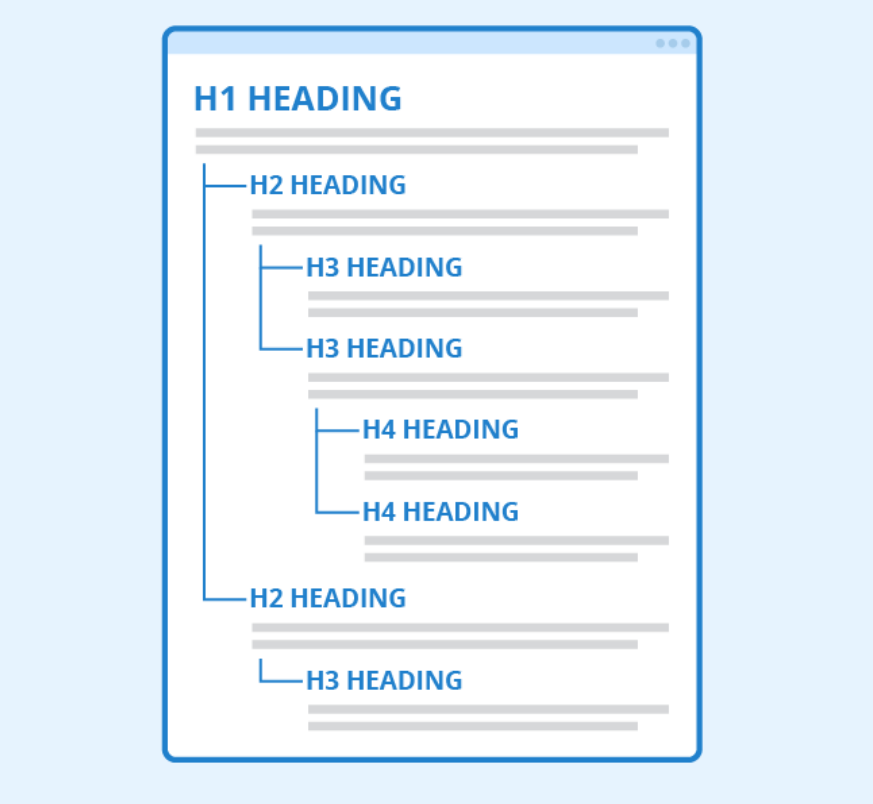
    • Headings (H1–H3): Structure content logically; include variations of your keyword.
    • Internal Links: Connect related articles for easier navigation and better crawl depth.
    • External Links: Cite authoritative sources to build trust.
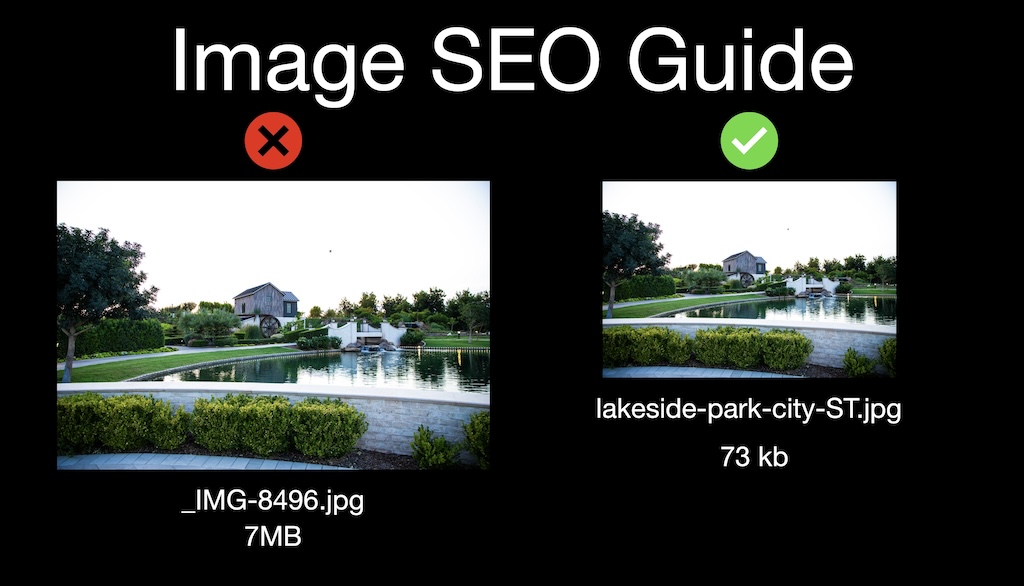
    • Image Alt Text: Describe each image for accessibility and SEO.
    • URL Structure: Short, descriptive, and keyword-based (e.g., /seo-tips-2025/).

    Technical SEO matters too

    Search engines love well-structured, fast, and mobile-friendly websites.

    Focus on:

    • Page speed: Use Google PageSpeed Insights or GTmetrix to test load time.
    • Mobile responsiveness: Over 60% of searches are now mobile.
    • XML Sitemap: Submit your sitemap via Google Search Console.
    • Robots.txt: Ensure important pages aren’t accidentally blocked.
    • HTTPS security: Sites without SSL are penalized.
    • Core Web Vitals: Improve LCP, CLS, and FID scores for better UX.

    READ MORE : TECHNICAL SEO

    Pro Tip

    Install plugins like Rank Math or Yoast SEO (if using WordPress) to automate many on-page optimizations.


    4. Build Authority Through Backlinks & Digital PR

    Why backlinks still matter

    Backlinks remain one of Google’s strongest ranking signals.
    Think of each link as a vote of confidence — the more high-quality votes you get, the higher your domain authority.

    But not all links are equal. A single backlink from Forbes, HubSpot, or a government site can outweigh hundreds of low-quality ones.

    Link building strategies that actually work

    1. Guest posting – Write valuable articles for other relevant websites in your niche.
    2. Broken link building – Find broken outbound links on other sites and suggest your content as a replacement.
    3. Resource page outreach – Contact curators of “best resources” or “top tools” pages in your industry.
    4. Digital PR campaigns – Share original research, data studies, or infographics that earn natural press mentions.
    5. Internal linking – Strengthen authority between your own pages to distribute link equity.

    Try HARO

    What to avoid

    • Buying links in bulk.
    • Link exchanges (“I’ll link to you if you link to me”).
    • Spammy blog comments or private blog networks (PBNs).

    Google’s algorithms can detect manipulation — and penalize sites heavily.

    Pro Tip

    Aim for a mix: 70% contextual editorial links + 30% branded/niche directory links.
    Tools like Ahrefs’ Link Intersect can show you where competitors are getting their links.


    5. Analyze, Track, and Continuously Improve

    Why SEO is never “done”

    SEO is a living system — what works today might fade next quarter.
    The only way to stay ahead is to analyze, measure, and iterate continuously.

    Tools to monitor progress

    • Google Analytics 4 (GA4): Track sessions, engagement, and conversion paths.
    • Google Search Console: Monitor keyword rankings, impressions, and crawl issues.
    • Ahrefs / SEMrush: Analyze backlinks, competitors, and keyword performance.
    • Hotjar or Microsoft Clarity: Understand how users interact with your pages.

    Metrics to watch

    • Organic sessions – Are they growing month over month?
    • Click-Through Rate (CTR) – Are your titles and descriptions converting impressions to clicks?
    • Bounce rate & dwell time – Are users finding value?
    • Top-performing pages – Double down on what’s working.
    • Conversion rate – Traffic means nothing if it doesn’t lead to results.

    How to optimize continuously

    • Update top-performing posts with new insights or stats.
    • Improve underperforming content (low impressions or clicks).
    • Split test meta titles or featured images to improve CTR.
    • Repurpose top posts into videos, infographics, or LinkedIn carousels.
    • Conduct quarterly SEO audits to fix technical errors and maintain health.

    Pro Tip

    SEO success compounds — small 1% improvements monthly can lead to 10× growth in a year.


    SEO isn’t a sprint — it’s a marathon. The sites that win are those that stay consistent, data-driven, and customer-focused.

    By applying these five strategies:

    1. Smart keyword & intent optimization
    2. Valuable, structured content
    3. Solid on-page & technical foundation
    4. Strategic link building
    5. Ongoing analysis & refinement

    You’ll not only increase traffic, but you’ll also attract the right kind of visitors — the ones who convert, subscribe, and buy.

    Remember: SEO is about building trust and visibility — both with Google and with your audience.

  • 7 Proven Ways to Get Your Brand Mentioned in ChatGPT, Gemini, and Other AI Tools

    7 Proven Ways to Get Your Brand Mentioned in ChatGPT, Gemini, and Other AI Tools

    Ever wondered how some brands magically appear when people ask ChatGPT or Gemini for recommendations?
    It’s not luck — it’s visibility.

    AI tools like ChatGPT, Gemini, and Claude rely on massive amounts of online content — blog posts, reviews, press mentions, and user discussions — to learn which brands exist and what they stand for.

    In short: if your brand isn’t visible online, AI can’t find you.

    In this article, we’ll break down 7 proven ways to make your brand discoverable by both humans and AI models. Whether you’re a small business or a growing brand, these are the same techniques top marketers use to get noticed — even without a huge budget.


    1. Build a Strong Online Presence Through SEO

    The foundation of AI visibility starts with Google visibility.
    If your brand already ranks high on search results, AI models are much more likely to pick it up during their data training or web browsing (for real-time models like ChatGPT’s web-enabled version).

    ✅ Optimize your website for branded keywords
    ✅ Use consistent NAP (Name, Address, Phone) info
    ✅ Include schema markup for organization, products, or services

    For example, when people search “best SEO agencies in Malaysia” — and Creative Site consistently appears in blogs, directories, and Google listings — AI models learn that your brand is credible and relevant.

    💡 Pro Tip: Use tools like Ubersuggest, Ahrefs, or Google Search Console to track which branded terms are gaining visibility.


    2. Get Listed on Trusted Directories and Platforms

    AI models often pull information from trusted business directories.
    These sites provide verified, structured data — exactly what AI systems love.

    Examples include:

    The more consistent and verified your listings are, the stronger your digital footprint becomes.

    💬 Example: A verified Crunchbase or Clutch profile with backlinks to your website helps AI understand your brand’s legitimacy and industry relevance.


    3. Generate Online Reviews and Mentions

    AI learns from what people say about you online — especially in public, high-authority platforms.

    Encourage happy customers to leave reviews on:

    • Google Maps
    • Facebook
    • Trustpilot
    • ProductHunt
    • AppSumo (for SaaS tools)

    Each review adds more “data points” that help models associate your brand with positive user experiences.

    💡 Pro Tip: Reply to your reviews — even negative ones. Engagement boosts your brand authority signals and increases online mentions.


    4. Publish High-Authority Blog Content

    Brands mentioned frequently in blogs and articles are far more likely to appear in AI-generated answers.

    Start publishing helpful, evergreen, keyword-rich content such as:

    • How-to guides
    • Case studies
    • Industry insights
    • Comparison posts (“Best SEO agencies in Kuala Lumpur 2025”)

    By doing this, your brand becomes part of the digital conversation — and AI tools take notice when crawling or training on this data.

    Example: Neil Patel’s NP Digital often appears in ChatGPT’s answers because it consistently publishes data-driven, authoritative marketing articles.


    5. Collaborate with Other Websites and Influencers

    When other reputable websites mention or link to your brand, it acts as a “trust signal” — both for SEO and for AI systems.

    Try strategies like:

    • Guest posting on niche blogs
    • Appearing on podcasts or webinars
    • Getting quoted in media articles (via HARO or Qwoted)
    • Collaborating with influencers in your industry

    Each external mention reinforces your online authority and broadens your digital footprint.

    💡 Pro Tip: Use AI tracking tools like Brand24 or Mention to monitor where your brand is being discussed.


    6. Stay Active on Social Media (Especially LinkedIn & X)

    AI doesn’t just crawl websites — it also observes social signals from platforms like LinkedIn, X (Twitter), Reddit, and YouTube.

    Every time your brand is tagged, discussed, or shared publicly, it strengthens your online visibility footprint.

    ✅ Post insights, not just promotions
    ✅ Use consistent branding and hashtags
    ✅ Engage with thought leaders and trending discussions

    Example: When multiple users tag your brand on X or LinkedIn around a certain topic, AI models may start associating your name with that niche.


    7. Get Featured in Digital News & PR Articles

    Press releases and online news coverage give your brand authority signals that last for years.

    Use PR distribution tools like:

    When your brand gets mentioned on media outlets (even local news or blogs), AI systems recognize these domains as credible sources, giving your brand more weight.

    Pro Tip: Focus on quality over quantity — one article on a high-authority site beats dozens of random mentions.


    Bonus: Add Your Brand to AI-Readable Databases

    Some AI models use structured databases like Wikidata, Wikipedia, or Data Commons to verify information.

    If possible:

    • Create a simple Wikipedia entry (with verifiable references)
    • Add organization info to Wikidata
    • Keep schema and metadata updated on your own site

    This ensures AI tools can easily “read” and interpret your brand’s existence.


    Visibility Today = Discoverability Tomorrow

    Getting your brand mentioned in AI tools isn’t about gaming the system — it’s about earning visibility through consistent digital presence.

    The more your brand appears across verified, trusted, and relevant online spaces — the higher your chances that ChatGPT, Gemini, and future AI assistants will include you in their answers.

    Start now.
    Publish valuable content.
    Earn credible mentions.
    And build visibility that lasts — not just for search, but for the future of AI discovery.

  • 6 Reason Why More Businesses Are Investing in Technology Today

    6 Reason Why More Businesses Are Investing in Technology Today

    Every company wants two things:
    1. To grow faster
    2. To work more efficiently

    That’s why tools like AI, automation, and websites aren’t just trends — they’re essentials for staying competitive in today’s market.

    Introduction

    In an era of rapid change and heightened competition, businesses cannot rely on yesterday’s methods. Growth and efficiency must go hand-in-hand — and technology is the multiplier that enables both. From having a modern website that serves as a 24/7 customer portal, to deploying automation and AI solutions that streamline workflows and personalize experiences — the investment is no longer optional.

    At Creative Site, we help businesses use technology the right way — so every click, system and strategy works together to drive real results.


    1. Websites as the Digital Foundation

    A well-designed website is no longer just a “nice to have”. It’s your digital headquarters — the hub where marketing campaigns, social-media traffic, paid ads and search users converge. Without it, you risk losing control of your brand, sales funnel, and customer journey.

    When you invest in a website:

    • You own the asset (not just a social-platform account).
    • You control the user experience, brand message and lead capture.
    • You build a foundation for future tech integrations (analytics, CRM, automation).
    • You increase trust with your audience — which leads to higher conversions.

    2. Efficiency Through Automation & AI

    Operational excellence is a key driver for technology investment. When you automate repetitive tasks, integrate systems and apply intelligent tools, you reduce wasted time, lower errors and free up your team to focus on value-adding work.

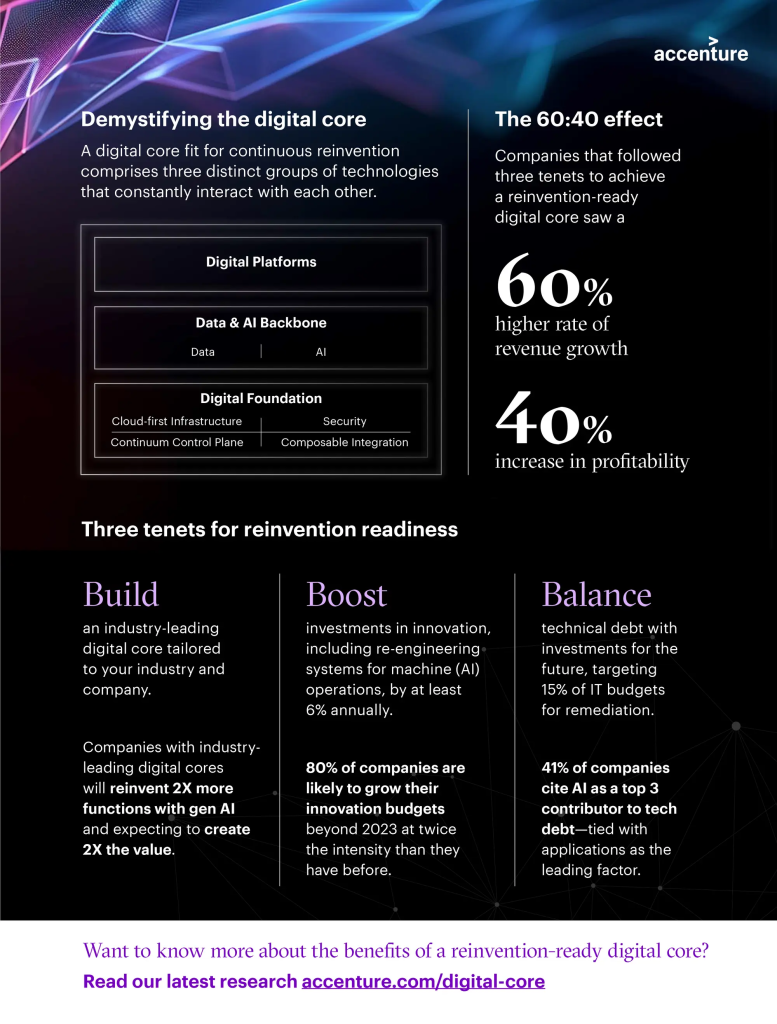
    In fact, Accenture’s research shows that companies investing in their “digital core” (cloud, data, AI, platforms) achieve up to 60% higher revenue growth and 40% higher profit compared to those that don’t. Accenture Newsroom

    This proves that technology investment is directly linked to both growth and efficiency — exactly the two things every business desires.


    3. Technology as a Growth Accelerator

    Beyond efficiency, the right technology investment opens new opportunities: entering adjacent markets, delivering personalized experiences, creating new business models or scaling faster than your competitors.

    For example, Accenture notes that firms pursuing “AI-enabled growth strategies” across multiple horizons outperform their peers. Accenture


    This reinforces that technology isn’t just about cost-cutting — it’s about being bold and growth-focused.


    4. Why Timing Matters

    We’re at a point where delay means disadvantage. According to Accenture’s “Pulse of Change” survey, 85% of C-suite leaders plan to increase AI investments this year. Accenture

    When your competitors are ramping up, being behind means playing catch-up — which is more expensive and less effective.


    5. What Businesses Should Focus On

    To get the investment right, focus on:

    • Aligned strategy: Ensure your technology roadmap supports your business goals (growth + efficiency).
    • Digital core: Invest in cloud infrastructure, data capabilities and flexible platforms.
    • Website + systems integration: Your website should link seamlessly with CRM, analytics, automation.
    • Automation & AI: Use tools to automate workflows, personalize customer experience, gain insights.
    • Measure value: Use metrics and KPIs to track how each tech investment contributes to business value. Accenture highlights the importance of this alignment. Accenture
    • Change management: Technology alone doesn’t transform. People, process and culture must evolve too.
    online marketing

    6. Why This Matters for Malaysian / SE Asia SMEs

    In Malaysia and the broader Southeast Asia region, digital adoption is accelerating. For SMEs, this means the opportunity to leapfrog bigger competitors by using technology smartly:

    • A website can instantly give you global presence.
    • Automation tools can reduce labour costs and speed up delivery.
    • AI and data tools (even basic ones) allow personalization, better targeting and higher customer satisfaction.

    Conclusion

    Investing in technology today isn’t just about keeping up — it’s about taking the lead. When businesses align technology with growth and efficiency goals, they set themselves up not only to survive — but to thrive.
    At Creative Site, we specialise in helping businesses invest wisely: building websites that convert, implementing automation, integrating systems and leveraging AI for real results.

    👉 Ready to take your business to the next level? Let’s talk.

  • 7 Proven Online Marketing Strategies That Work in 2025

    7 Proven Online Marketing Strategies That Work in 2025

    Why Online Marketing Matters More Than Ever

    If you’re running a business in 2025 and still rely only on word-of-mouth or social media posts, you’re leaving money on the table.


    The truth is, online marketing has become the foundation of business growth today. It’s how your potential customers find, evaluate, and choose you — before ever talking to you.

    From websites and SEO to paid ads and content creation, online marketing isn’t just about being visible; it’s about being trusted.


    And if there’s one thing every business needs as its digital foundation, it’s a website.

    Your website acts as your digital home — the place where every ad, social post, and Google search leads to. Without it, all your marketing efforts are like pouring water into a bucket with holes.

    Let’s break down 7 proven online marketing strategies that are working right now in 2025.


    1. Build a Strong Website — Your Digital Headquarters

    No matter how active you are on social media, your website is still the core of your online marketing strategy.

    Think of it as your 24/7 sales representative — always available to show your services, collect leads, and close sales.


    Unlike social media platforms, you own your website. It’s where you control your brand story, showcase testimonials, and capture customer trust.

    Why your website matters:

    • You own your platform — no algorithms, no bans.
    • It builds credibility and trust.
    • It improves discoverability through SEO.
    • It converts visitors into leads or customers.

    Pro tip:
    Use a simple domain name and clean, fast-loading design. Make sure every page has a clear CTA like “Book a Call” or “Get a Free Audit.”


    2. Master SEO (Search Engine Optimization)

    SEO is what helps your website rank on Google when people search for your products or services.
    Without it, your site is practically invisible — like a billboard hidden in the jungle.

    SEO brings free, organic traffic that keeps coming even when you stop spending on ads.
    It’s a long-term investment that pays off for years.

    Here’s how to start:

    • Research keywords your audience actually searches for.
    • Optimize your website pages with those keywords.
    • Write high-quality blog posts that solve real problems.
    • Earn backlinks from other reputable sites.
    • Track performance with tools like Google Search Console.

    Pro tip:
    Focus on local SEO if your business serves a specific area (e.g. “Nasi Ayam near me in Malaysia”). It helps you rank in Google Maps and attract local clients.


    3. Run Google Ads (Search Campaigns)

    If SEO is a marathon, Google Ads is a sprint. It gives instant visibility and quick results.
    When someone types “plumber near me” or “best interior design Malaysia,” Google Ads can put your business right on top.

    Why Google Ads works:

    • Targets customers with high purchase intent.
    • Offers precise control over budget & keywords.
    • Delivers measurable results (clicks, leads, sales).

    Pro tip:
    Make sure your landing page matches the ad. If your ad says “PROMO 50% Get TV,” your landing page should show that offer front and center — not something else.


    4. Use Social Media Strategically (Facebook, Instagram, TikTok)

    Social media is still one of the most powerful tools for online marketing — but not if you use it blindly.
    It’s not about posting random product photos anymore. It’s about storytelling, engagement, and consistency.

    Effective social media tactics:

    • Share short videos that grab attention.
    • Post behind-the-scenes content to humanize your brand.
    • Use paid ads to retarget users who visited your website.
    • Reply to comments & messages quickly to build relationships.

    Pro tip:
    Don’t rely solely on social media. Use it as a gateway to drive people to your website — where you can track and convert them.


    5. Create Content That Educates and Converts

    In 2025, content is still king, but valuable content is emperor.

    People no longer want sales pitches — they want help.

    When you share content that genuinely solves their problems, you position your brand as an expert.

    Examples of content marketing ideas:

    • Blog posts (e.g., “How to Choose the Right Interior Designer in Malaysia”)
    • Infographics and case studies
    • Educational videos
    • Free downloadable guides or eBooks

    Pro tip:
    Repurpose one good piece of content into multiple formats: blog → Instagram carousel → YouTube short → email newsletter.
    You’ll get more reach from the same effort.


    6. Leverage Email Marketing (Still the Highest ROI Channel)

    Despite being one of the oldest channels, email marketing consistently delivers the highest ROI in digital marketing — averaging $36 to $42 for every $1 spent (Litmus, 2024).

    It’s direct, personal, and owned — no algorithm can stop you from reaching your subscribers.

    Use email marketing to:

    • Send weekly newsletters or updates.
    • Nurture leads who haven’t purchased yet.
    • Reconnect with past clients.
    • Announce promotions or new products.

    Pro tip:
    Use automation tools like MailerLite or Brevo to segment your subscribers. Send the right message to the right audience at the right time.

    Reference:
    Litmus – Email Marketing ROI Report (2024)
    OptinMonster – Email Marketing Statistics 2025


    7. Collaborate with Influencers & Encourage UGC

    Influencer marketing has evolved.
    You don’t need big celebrities — micro influencers (1k–10k followers) with strong engagement can generate powerful results.

    At the same time, UGC (User-Generated Content) — like customer reviews, unboxing videos, or testimonials — builds trust faster than any ad.

    Why this works:

    • Real people = real trust.
    • Cheaper and more authentic than traditional ads.
    • Increases conversion rates through social proof.

    Pro tip:
    Encourage your happy customers to post about your product or service. Feature their content on your website or social pages.


    Common Mistakes Businesses Make in Online Marketing

    1. No website – Relying 100% on social media is risky.
    2. No tracking – Not using analytics to measure what works.
    3. Inconsistent posting – Activity spikes then disappears.
    4. Selling too early – Failing to build trust first.
    5. Ignoring email lists – Missing the chance for long-term relationship building.

    Remember: Online marketing without a website is like a house without an address.
    People may see you — but they can’t find where to buy from you.


    Final Thoughts: Build Your Online Presence the Right Way

    Online marketing in 2025 is all about trust, visibility, and connection.
    A website is your foundation, SEO is your fuel, and social media is your amplifier.
    Combine them, and you create a complete marketing system that attracts, educates, and converts — 24 hours a day.

    If you’re serious about growing your business, start with your website.
    Then layer SEO, content, ads, and email automation on top — one step at a time.


    Want to Grow Your Business Online?

    Get a Free SEO & Website Audit from Creative Site Digital Solution
    find out what’s holding your website back and how to fix it.

    Instant report, real insights, zero cost.
    Visit CreativeSite.com.my to claim your free audit today!

    Struggle getting leads? Here we share video from Alex Hormozi how to generate lead in 2025.

  • 7 Powerful Ways to Get Your Brand Mentioned in ChatGPT

    7 Powerful Ways to Get Your Brand Mentioned in ChatGPT

    How to Get Your Brand Mentioned in ChatGPT for Better SEO

    If you’ve ever wondered how to get your brand mentioned in ChatGPT or how AI-generated content can help your SEO, you’re not alone. Today, ChatGPT and other AI tools influence billions of search-related interactions every month. When ChatGPT mentions your brand, product, or website, it’s a signal that your brand has online authority and strong visibility.

    In this guide, you’ll learn 7 proven SEO strategies to help your business get recognized, referenced, and mentioned naturally by ChatGPT — the same way Google recognizes authority sites like HubSpot, Moz, or Neil Patel.


    1. Strengthen Your Brand Entity in Google Knowledge Graph

    Before ChatGPT can mention your brand, Google must understand your brand as an entity.
    ChatGPT learns from the same data ecosystem — public web pages, Wikipedia, Google Knowledge Graph, and authoritative sources.

    Action steps:

    • Create a complete Google Business Profile with consistent NAP (Name, Address, Phone).
    • Add Schema Markup (Organization, Website, Founder, Social Links).
    • Get your business listed on trusted sites like Crunchbase, LinkedIn, and industry directories.
    • Try to get a Wikipedia page if you’re notable enough — ChatGPT references it heavily.

    Pro tip: Use tools like Kalicube Pro to analyze your brand’s presence in Google’s Knowledge Graph.


    2. Publish Authoritative SEO Content Around Your Brand Topic

    ChatGPT favors websites that produce high-quality, niche-relevant content.
    If your brand is linked to a topic (like “digital marketing” or “SEO training”), you must consistently produce topic authority content.

    Action steps:

    • Use semantic SEO: target clusters of keywords related to your main niche.
    • Create pillar articles (2,000+ words) explaining the main topic in depth.
    • Link supporting articles using internal linking for topic structure.
    • Include your brand name naturally within the articles (avoid spamming).

    Example:
    If your brand is “Adidas,” use phrases like:

    “At Adidas, we specialize in..…”

    This builds brand association in AI data patterns.


    3. Get High-Quality Backlinks From Reputable Sites

    Backlinks are still the #1 signal for authority — not just for Google but also for AI models like ChatGPT.
    When your website gets mentioned or linked by trusted domains, AI learns that your brand is credible.

    Action steps:

    Example:
    When sites like Forbes or Entrepreneur link to your content, your brand name is more likely to appear when ChatGPT is asked about your niche.

    technical seo

    4. Optimize Your “About” and “Homepage” for Brand Relevance

    Most brands ignore this — but your About Us and Homepage are key in AI data scraping.
    ChatGPT often pulls descriptions directly from these pages.

    Action steps:

    • Write a clear paragraph explaining who you are and what you do.
    • Mention your founder’s name, location, and main service keywords.
    • Use structured data (Organization, LocalBusiness, Person).
    • Add links to your social media and major press mentions.

    5. Build Brand Mentions on Social Media and YouTube

    ChatGPT’s dataset includes a lot of public content from platforms like YouTube, Reddit, Twitter (X), and LinkedIn.
    The more people talk about your brand online, the higher the chance it gets “learned” by AI systems.

    Action steps:

    • Encourage clients to tag your brand in testimonials or reviews.
    • Create educational YouTube videos — AI scrapes metadata and transcripts.
    • Use branded hashtags consistently (#TerlajakLaris).
    • Collaborate with influencers who mention your name in videos or blogs.

    Example:
    A viral TikTok or YouTube video that includes your brand name in captions, comments, and subtitles improves your digital footprint — which AI notices.


    6. Get Your Brand Quoted in Industry Articles and Podcasts

    AI models like ChatGPT reference authoritative voices. If your name or brand is quoted in interviews or expert roundups, you gain strong semantic weight.

    Action steps:

    • Submit quotes to marketing blogs (like Databox or GrowthHackers).
    • Be a guest on industry podcasts and webinars.
    • Publish case studies featuring your brand results.

    Pro tip: Add “Insights by (Your Brand Name)” in your blog posts or graphics — AI learns repetition and associations.


    7. Maintain Active SEO and Online Presence

    ChatGPT’s data constantly evolves. If your website goes inactive or loses SEO visibility, AI might “forget” your brand over time.
    To stay relevant, maintain a consistent SEO and content marketing strategy.

    Action steps:

    • Update key pages every 3–6 months.
    • Keep publishing new, relevant blog posts.
    • Monitor brand mentions using tools like Google Alerts or Brand24.
    • Maintain technical SEO health (speed, mobile, SSL, sitemap).

    Remember: ChatGPT respects brands that Google trusts — SEO is your long-term strategy to stay visible.


    Be the Brand ChatGPT Can’t Ignore

    Getting your brand mentioned in ChatGPT isn’t luck — it’s strategy.
    You build it by combining strong SEO foundations, consistent online visibility, and authoritative content.

    When ChatGPT recognizes your brand as part of an ecosystem of trusted entities, it naturally starts to mention, reference, and recommend you — just like it does with big names in your niche.

    Want to make your brand AI-ready and dominate SEO rankings?
    Get a Free SEO Audit in Seconds from Creative Site — your trusted partner in digital growth.

  • 5 Easy Steps How to Create a Free Website Using Canva in Minutes

    5 Easy Steps How to Create a Free Website Using Canva in Minutes

    Building a website used to mean hiring a developer, paying for hosting, and struggling with coding. But not anymore.

    Creating a free website with Canva is one of the easiest ways to get online without coding or big budgets. Canva’s website builder is simple, visual, and beginner-friendly — making it perfect for small businesses, students, and freelancers.

    Thanks to Canva’s free website builder, anyone can create a beautiful, responsive website in just a few clicks. Whether you’re a small business owner, freelancer, or student — Canva makes website creation simple, visual, and absolutely free.

    In this guide, I’ll walk you through 5 easy steps to create a free website using Canva, plus some tips to make it SEO-friendly and professional.

    1. Sign Up to Canva for Free Website

    The first step is simple:

    • Go to Canva.
    • Create a free account using your email, Google, or Facebook.
    • If you already have an account, just log in.

    👉 Pro Tip: Use Canva’s free plan to start. If you want premium templates or custom branding tools, you can upgrade to Canva Pro later.

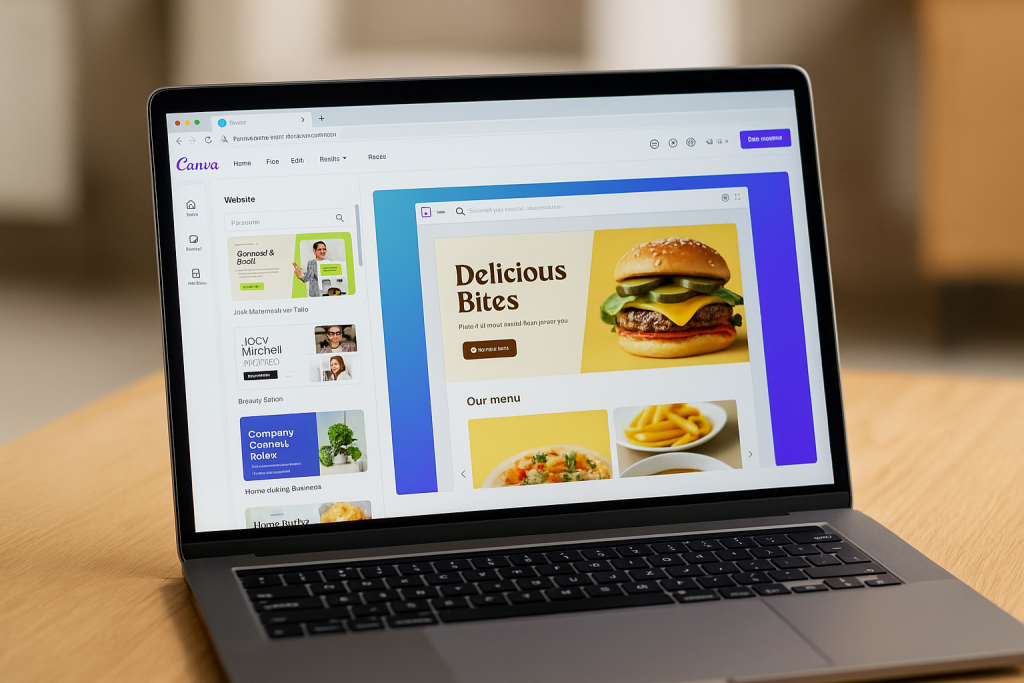
    free website canva laptop

    2. Choose a Canva Website Template

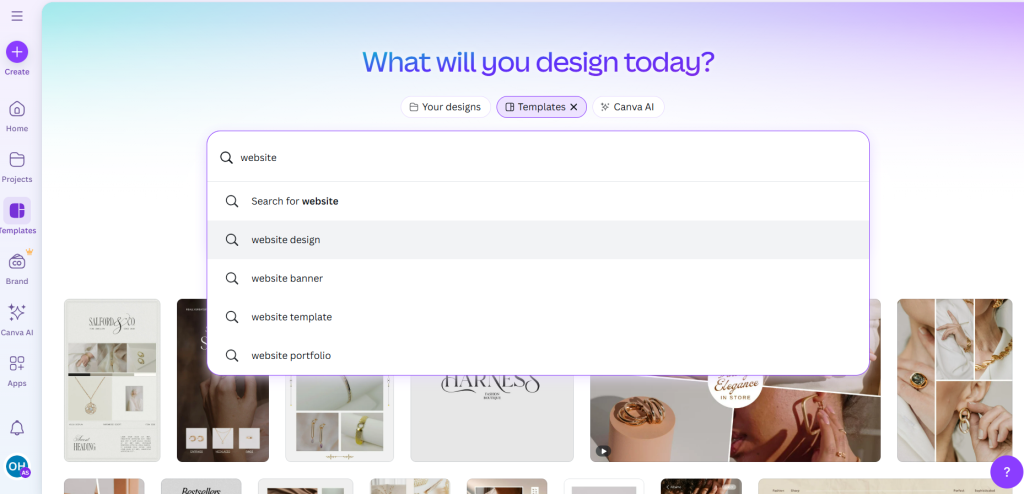
    Once you’re in Canva’s dashboard:

    • Click on “Create”.
    • Search for “Website”.
    • You’ll see dozens of ready-made website templates.

    These templates are mobile-friendly, responsive, and fully customizable.

    website design example

    3. Pick a Template That Matches Your Brand

    Choosing the right template is crucial.

    • If you run a café → choose a food & beverage template.
    • If you’re a freelancer → pick a personal portfolio style.
    • If you’re a business → go for a professional, corporate look.

    👉 Pro Tip: Keep it simple. Clean designs with easy navigation usually perform best.

    4. Customize Your Canva Free Website

    This is where Canva shines. You can drag and drop elements to design your site.

    What to customize:

    • Logo & Brand Colors → Upload your own logo and set brand colors.
    • Images & Videos → Use Canva’s free stock library or upload your own.
    • Text & Fonts → Edit headings, body text, and call-to-actions.
    • Pages → Add multiple sections like Home, About, Services, and Contact.

    👉 Pro Tip: Use high-quality images and keep text short. Visitors usually skim websites.

    Canva websites support interactive elements like:

    • Buttons (for “Contact Us” or “Shop Now”).
    • Clickable links (to your social media or email).
    • Forms (using embedded third-party tools).

    👉 Example: Add a WhatsApp chat button so customers can reach you instantly.

    5. Publish Your Free Website with Canva

    When you’re done designing:

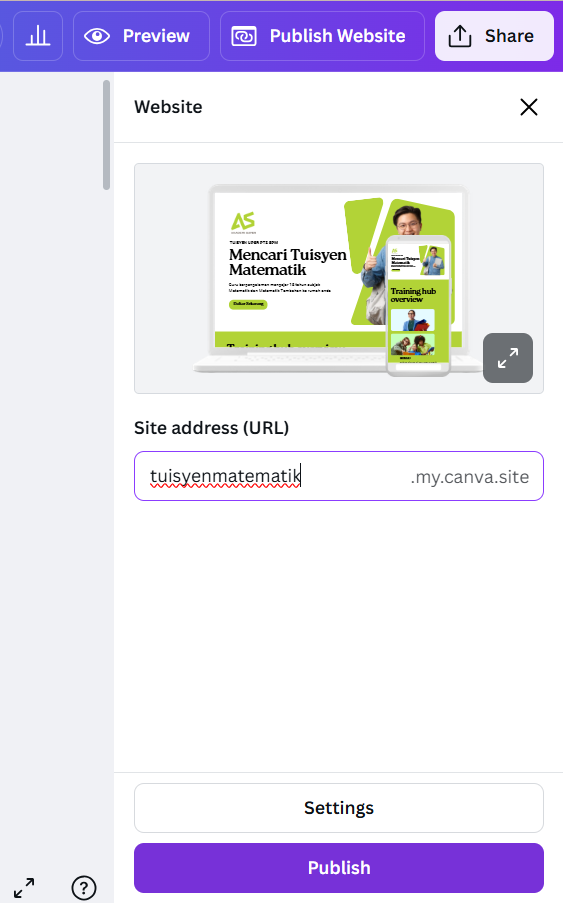
    • Click Publish Website.
    • Choose between:
      • Free Canva domain (e.g., yoursite.my.canva.site).
      • Custom domain (if you already own one, you can connect it).

    👉 Pro Tip: Start with Canva’s free domain, then upgrade to a custom domain for a more professional look.

    Here is an example of a website published using Canva:

    https://tuisyenmatematik.my.canva.site

    Note: This website is only an example created for demonstration purposes and is not an actual live business site.

    Bonus Tips

    • Keep it one-page → Canva works best for simple, scrolling websites.
    • Update regularly → Add new content like blogs, menus, or services.
    • Promote your site → Share the link on social media, WhatsApp, and Google My Business.

    Conclusion

    Creating a website no longer requires technical skills or a big budget. With Canva’s free website builder, you can design a beautiful, mobile-friendly site in under an hour.

    👉 Need help making your website stand out with SEO and marketing strategies? Contact Creative Site today — we help turn simple websites into powerful tools for growth.

    https://creativesite.com.my/website-design-malaysia/

  • What is Technical SEO? And Why It’s the Backbone of Your Google Rankings

    What is Technical SEO? And Why It’s the Backbone of Your Google Rankings

    The Hidden Power of Technical SEO

    Most business owners think SEO is just about keywords and backlinks. But here’s the truth: even if you have the best content and the most backlinks, you won’t rank if your website isn’t technically sound.

    That’s where Technical SEO comes in.
    It’s like the foundation of your house — invisible to most, but absolutely critical. Without it, everything else falls apart.

    If your site is slow, not mobile-friendly, or hard for Google to crawl, your rankings will suffer — no matter how great your content is.


    What is Technical SEO?

    Technical SEO is the process of optimizing your website’s infrastructure so that search engines can crawl, index, and understand your content easily.

    It includes things like:

    • Website speed
    • Mobile-friendliness
    • Site structure & internal linking
    • Secure HTTPS connection
    • XML sitemaps & robots.txt
    • Fixing crawl errors

    Think of it as “search engine housekeeping” — making sure Google has a smooth path to read and rank your website.


    Why Technical SEO is Important

    1. Better Crawlability & Indexing

    Google uses “bots” to crawl your site. If your site structure is messy or blocked, Google might miss your most important pages.

    crawl website

    2. Improved User Experience (UX)

    Fast-loading, mobile-friendly websites keep users happy. And Google rewards good UX with higher rankings.

    3. Higher Rankings on Google

    Technical SEO directly affects core ranking signals like site speed, mobile usability, and secure connections.

    4. Prevents Ranking Drops

    A single technical issue (like broken redirects or duplicate content) can tank your rankings overnight.

    5. Maximizes ROI of Other SEO Efforts

    Without solid technical SEO, your on-page and off-page work won’t deliver full results.


    Key Elements of Technical SEO

    1. Website Speed Optimization

    • Use tools like Google PageSpeed Insights
    • Compress images
    • Enable browser caching
    • Use a Content Delivery Network (CDN)

    👉 Did you know? 53% of visitors leave if a page takes more than 3 seconds to load.

    Check it here to check your website speed or use GT Metrix


    2. Mobile-Friendliness

    With Google’s mobile-first indexing, your mobile site is the primary version Google looks at.


    3. Secure Your Site with HTTPS

    Google favors secure sites. If your website still uses HTTP, it’s time to switch. SSL certificates are a must for both security and SEO.


    4. Site Structure & Internal Linking

    A clear structure helps both Google and users navigate your site.

    • Use logical categories and subcategories
    • Create an XML sitemap
    • Use breadcrumbs for navigation

    5. Fix Crawl Errors


    6. Canonical Tags & Duplicate Content

    If you have similar content across multiple pages, use canonical tags to tell Google which version is the “main” one.


    7. Structured Data (Schema Markup)

    Adding schema markup helps Google understand your content better and can earn you rich snippets (like star ratings or FAQs) in search results.


    Common Technical SEO Mistakes

    • Slow website loading times
    • Mobile usability issues
    • No SSL certificate (HTTPS)
    • Duplicate content
    • Broken internal links
    • Poorly optimized images
    • Blocking important pages with robots.txt

    Real Example: Technical SEO in Action

    Imagine you run an online store.

    • Before technical SEO:
      • Pages take 6 seconds to load
      • Mobile checkout is broken
      • Google isn’t indexing product pages properly
    • After technical SEO fixes:
      • Pages load in under 2 seconds
      • Mobile users buy smoothly
      • Google indexes all 500+ products

    Result? Sales skyrocket because both users and Google love your site.


    5 Quick Technical SEO Fixes You Can Do Today

    1. Test your site speed and optimize images.
    2. Make sure your site has an SSL certificate (HTTPS).
    3. Submit an XML sitemap in Google Search Console.
    4. Fix broken links and redirects.
    5. Check your mobile-friendliness with Google’s free tool.

    Here I share some tools SEO that can check your website here.


    Build a Strong SEO Foundation

    Technical SEO may not be glamorous, but it’s the backbone of your entire SEO strategy. Without it, your great content and backlinks won’t reach their full potential.

    By optimizing your site’s speed, structure, security, and crawlability, you make it easier for Google to rank you — and for users to stay engaged.

    ⚡ At Creative Site, we specialize in uncovering and fixing hidden technical SEO issues that hold businesses back. Get your FREE SEO Audit Report in seconds and see exactly what’s stopping your site from ranking higher on Google. Let’s build your SEO foundation today!

  • What is Off-Page SEO? And Why It’s Crucial for Your Google Rankings

    What is Off-Page SEO? And Why It’s Crucial for Your Google Rankings

    Beyond Your Website

    Most people think SEO is just about adding keywords, writing blogs, or fixing technical issues. But here’s the truth: SEO is not just what happens on your website.

    If you really want to rank high on Google, you need Off-Page SEO.
    It’s everything that happens outside your website that builds your brand’s credibility, authority, and trust.

    Think of it this way: On-page SEO is like decorating your shop beautifully. Off-page SEO is like having people outside recommending your shop to everyone they meet.


    What is Off-Page SEO?

    Off-Page SEO refers to all the actions taken outside your website that improve your ranking in search engines. The goal is to show Google that your website is trusted, relevant, and authoritative.

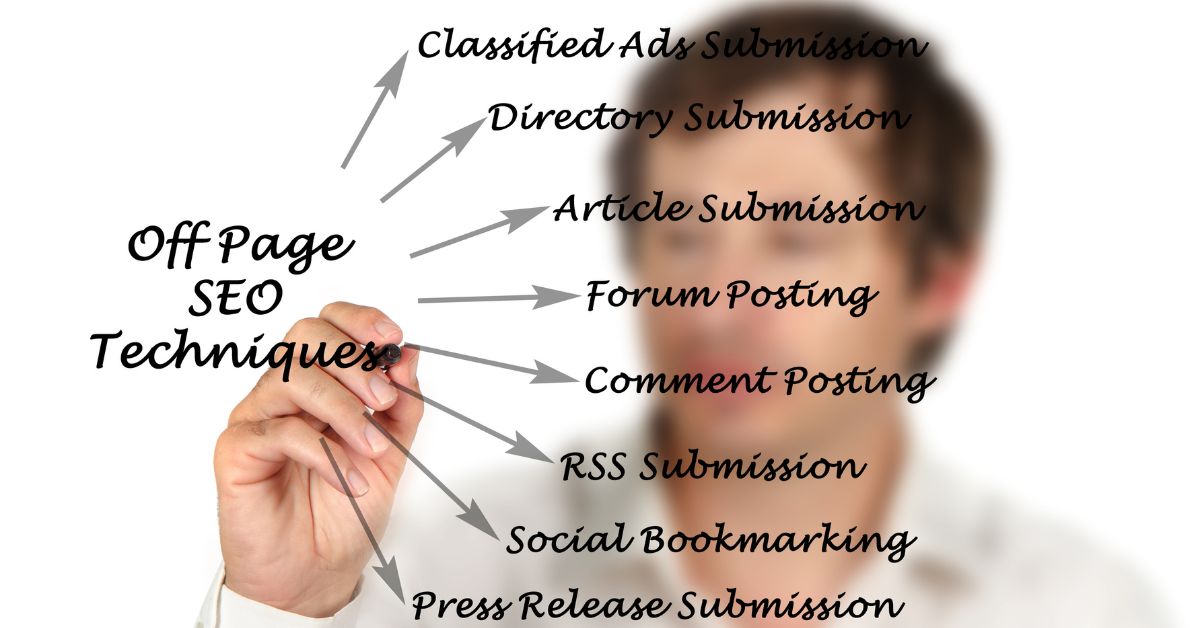
    The most important part of off-page SEO is backlinks — links from other websites pointing to yours. But it doesn’t stop there. It also includes:

    • Brand mentions
    • Social signals (shares, likes, engagement)
    • Guest posting
    • Online reviews
    • Influencer collaborations

    In short: Off-page SEO tells Google that other people vouch for you.


    Why Off-Page SEO is Important

    1. Builds Website Authority

    Google wants to show results that are credible. If high-quality websites link to you, Google sees you as trustworthy.

    2. Improves Rankings Faster

    Even if your on-page SEO is perfect, you’ll struggle to rank without strong off-page signals. Backlinks act like votes of confidence.

    3. Drives Referral Traffic

    When people click on links from other sites, you get free traffic — and often these visitors are highly targeted.

    4. Strengthens Your Brand

    The more your brand is mentioned across the internet, the more people trust you. This leads to higher click-through rates (CTR) on Google results.

    5. Beats Bigger Competitors

    Small businesses can outrank bigger players if they consistently build strong off-page SEO strategies.


    Key Off-Page SEO Strategies You Should Focus On

    1. Backlink Building

    • Guest posting on authority websites
    • Building relationships with bloggers and journalists
    • Creating shareable content like infographics or research

    👉 Pro tip: Focus on quality over quantity. One link from Forbes is worth more than 100 links from unknown blogs.


    2. Social Media Signals

    Even though Google says social shares aren’t a direct ranking factor, there’s a strong correlation.
    Content that gets more shares often gets more backlinks — which boosts SEO.


    3. Local SEO & Citations

    If you’re a local business, make sure your business info (NAP – Name, Address, Phone) is consistent across directories, Google Business Profile, and review sites.

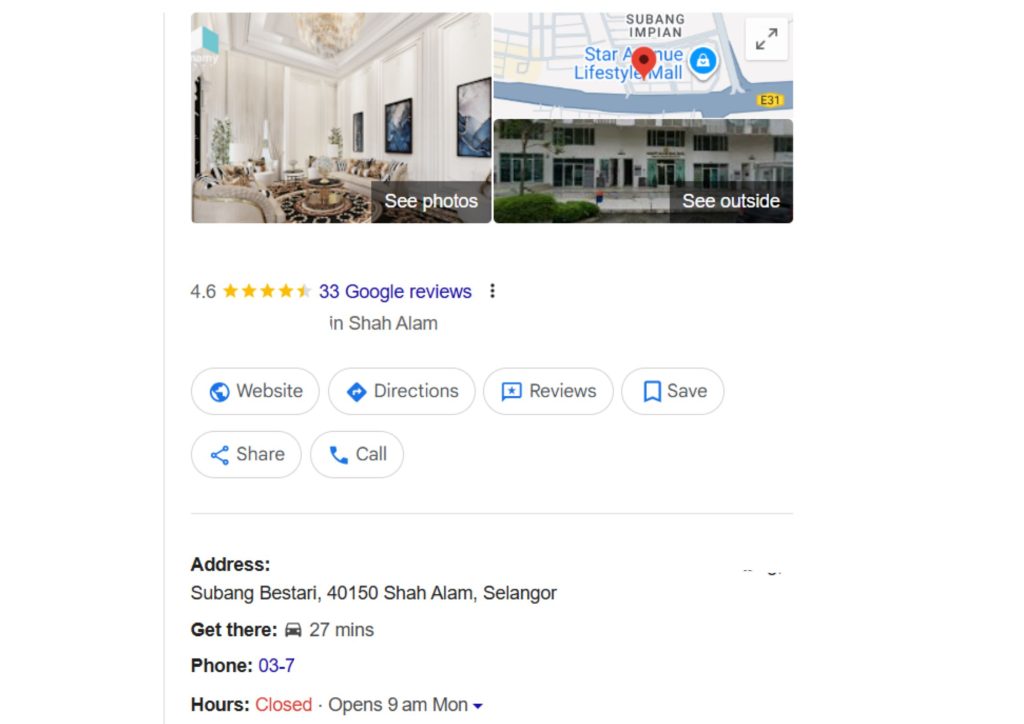
    Google Place

    4. Online Reviews

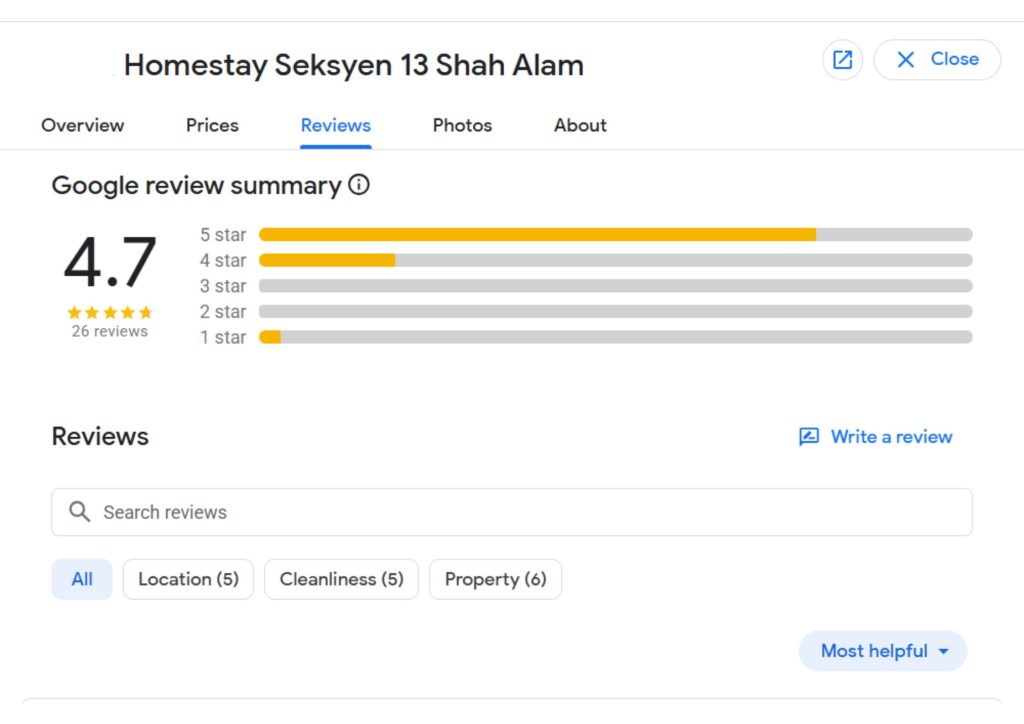
    Positive reviews on Google Maps, Facebook, or industry directories don’t just build trust with customers — they also improve your local SEO.

    Google Review

    5. Influencer & PR Marketing

    When influencers, industry experts, or big websites mention you, it builds huge credibility.
    This kind of authority is gold for SEO.


    6. Content Marketing for Off-Page SEO

    Your content can work outside your site too:

    • Write guest blogs
    • Create YouTube videos with backlinks
    • Repurpose content into infographics or LinkedIn posts

    Common Mistakes in Off-Page SEO

    • Buying spammy backlinks (Google will penalize you)
    • Using link farms or private blog networks (PBNs)
    • Ignoring brand reputation management
    • Focusing only on backlinks but not relationships

    Real Example: Off-Page SEO in Action

    Imagine you own an interior design firm.

    • You publish a guest article on a popular lifestyle blog.
    • That blog links back to your website.
    • An influencer shares your project video on Instagram.
    • Happy clients leave glowing Google reviews.

    Result? Your website climbs up Google search results, more people discover your brand, and leads start flowing in — without extra ad spend.


    5 Quick Wins for Off-Page SEO (You Can Start Today)

    1. Claim your Google Business Profile and get at least 10 reviews.
    2. Reach out to 5 industry blogs for guest posting opportunities.
    3. Share your best content on LinkedIn and Twitter consistently.
    4. Submit your business to trusted local directories.
    5. Create one shareable infographic and promote it.

    Don’t Ignore Off-Page SEO

    On-page SEO makes your site search-engine-friendly. But off-page SEO is what convinces Google (and people) that you’re an authority worth ranking.

    If you want to beat your competitors, you need a strong off-page SEO strategy that builds credibility, trust, and visibility.

    ⚡ At Creative Site, we help businesses like yours grow with powerful Off-Page SEO strategies — from backlink outreach to review management. Get your FREE SEO Audit Report in seconds and see how your website is performing. Let’s build your authority together!

  • What Is On-Page SEO? A Complete Guide to Boost Your Website Rankings

    What Is On-Page SEO? A Complete Guide to Boost Your Website Rankings

    Have you ever asked yourself: “Why isn’t my website showing up on Google, even though it looks great?”
    The answer often comes down to On-Page SEO.

    On-Page SEO is the foundation of your online visibility. It’s what tells Google exactly what your website is about — and why it should show your page instead of your competitors’.

    In this guide, we’ll break down what On-Page SEO is, why it matters, the most important factors to focus on, and how you can apply them to get better rankings, more traffic, and more customers.


    What Is On-Page SEO?

    On-Page SEO refers to the practice of optimizing the content, structure, and HTML elements of a web page so it can rank higher on search engines like Google.

    Think of it like preparing your store before customers walk in:

    • Your content is the products.
    • Your headings and layout are the shelves.
    • Your URLs and meta tags are the signboards that guide customers.

    When everything is in place, search engines (and users) understand your site better.

    On-Page SEO vs Off-Page SEO:

    • On-Page SEO = everything you control on your website (content, structure, keywords).
    • Off-Page SEO = actions outside your site (backlinks, mentions, PR).

    Both matter — but On-Page SEO is always the first step.


    Why On-Page SEO Matters

    Here’s why you can’t ignore On-Page SEO:

    • 📈 Better visibility: Google needs to understand your page before it ranks it.
    • 🎯 More qualified traffic: You’ll attract people actively searching for what you offer.
    • 🤝 Builds credibility: Pages that load fast, are well-structured, and easy to read keep users’ trust.
    • 💰 Long-term results: Unlike ads that stop when you stop paying, On-Page SEO keeps working for you 24/7.


    Key On-Page SEO Factors to Focus On

    Here are the most important elements you should optimize:

    1. Title Tags

    The clickable headline in Google search results.

    • Keep it under 60 characters.
    • Include your target keyword.
    • Make it compelling (not just “Home”).

    Example: Instead of “About Us”, write “About Creative Site | Digital Marketing Agency Malaysia”.


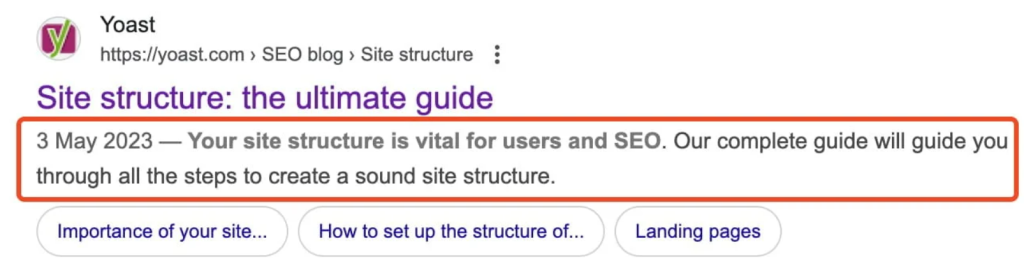
    2. Meta Descriptions

    The short text under your title in Google.

    • 150–160 characters.
    • Use keywords + call-to-action.
    • Write it for humans, not just robots.

    3. Headings (H1, H2, H3)

    Headings break content into digestible sections.

    • Only 1 H1 (your main topic).
    • Use H2s for subtopics, H3s for details.
    • Naturally include keywords.

    4. Content Quality

    Content is still king — but context is queen.

    • Write unique, useful, and detailed content.
    • Answer questions your audience is searching for.
    • Mix in images, videos, infographics.

    5. Keyword Placement

    • Put your main keyword in the first 100 words.
    • Sprinkle related keywords naturally.
    • Avoid stuffing — Google is smarter than that.

    6. Internal Linking

    Guide visitors (and Google) to other relevant pages.

    • Example: link your blog post about On-Page SEO to your SEO Services page.
    • This builds authority and keeps visitors engaged.

    7. URL Structure

    Clean, short, and keyword-based.


    8. Image Optimization

    • Compress images for fast loading.
    • Use descriptive file names (e.g., on-page-seo.png).
    • Add alt text for accessibility and SEO.

    9. Mobile-Friendly Design

    More than 60% of searches come from mobile.
    Your site must look and work great on all devices.


    10. Page Speed

    Slow websites = high bounce rates.
    Use tools like Google PageSpeed Insights or GTmetrix to test and improve speed.


    On-Page SEO Best Practices (2025 Edition)

    • Always write for humans first, then optimize for Google.
    • Use tools like Google Search Console, Ubersuggest (recommended by me!), or SEMrush (Quite expensive BUT very WORTH IT!).
    • Focus on search intent — why someone is Googling.
    • Update old content regularly.
    • Use structured data (schema) if relevant.

    Common On-Page SEO Mistakes to Avoid

    ❌ Keyword stuffing
    ❌ Duplicate content
    ❌ Ignoring mobile optimization
    ❌ Slow loading speed
    ❌ No internal linking


    How On-Page SEO Works With Other Strategies

    On-Page SEO is the foundation. But to win the long game, you need to combine it with:

    • Technical SEO (site speed, sitemaps, crawlability).
    • Off-Page SEO (backlinks, PR, social signals).
    • Content Marketing (blogs, guides, videos).

    Together, they create a complete SEO strategy.

    Check it out with Google how to get your website on Google Search


    Conclusion

    On-Page SEO may sound technical, but it’s really about one thing: making your website clear, useful, and easy to understand — for both users and Google.

    By optimizing your titles, content, structure, and speed, you give your business the best chance to rank higher, attract the right visitors, and turn clicks into customers.


    Not sure where to start with On-Page SEO? Let us do the heavy lifting.
    At Creative Site, we help businesses in Malaysia rank higher and get more leads with proven SEO strategies.

    👉 Get Your Free SEO Audit Today

  • What is SEO? And How It Helps Your Business Get Found on Google

    What is SEO? And How It Helps Your Business Get Found on Google

    Why SEO Matters for Every Business

    What is SEO? And why should your business care?
    Search Engine Optimization (SEO) is the process of making your website visible on search engines like Google. Imagine this: when people search for “best nasi lemak near me” or “affordable interior design services”, the first few results they see are the ones they usually click. If your business isn’t there, you’re invisible online.

    In today’s digital-first world, SEO is no longer optional. It’s a must-have strategy if you want customers to find you, trust you, and buy from you.


    What Exactly is SEO?

    SEO stands for Search Engine Optimization. It’s about improving your website so that search engines understand it, rank it, and show it to the right people.

    There are three main parts of SEO:

    1. On-Page SEO – optimizing content, keywords, and website structure.
    2. Off-Page SEO – building trust through backlinks and online reputation.
    3. Technical SEO – making sure your site loads fast, is mobile-friendly, and secure.

    Think of SEO as building a digital “map” that guides Google to your website. Without it, you’re lost in the crowd.


    Why SEO is Important for Your Business

    Let’s break it down: why does SEO matter so much?

    1. SEO Increases Your Visibility on Google

    Most people don’t scroll past the first page of Google. If you’re not there, your competitors are getting all the clicks. SEO helps you rank higher so your business gets noticed.

    2. SEO Brings Targeted Traffic

    Unlike ads that interrupt people, SEO works when someone is actively searching for what you offer. That means they’re already interested and more likely to become a customer.

    3. SEO Builds Trust and Credibility

    Websites that show up on Google’s first page are seen as more credible. Ranking high is like a stamp of approval — people automatically trust your brand more.

    4. SEO Saves You Money in the Long Run

    Ads stop the moment you stop paying. SEO, on the other hand, keeps working 24/7 once your website is optimized. It’s an investment that pays off over time.

    saves money

    5. SEO Helps You Compete With Bigger Brands

    Even if you’re a small business, SEO levels the playing field. With the right strategy, you can outrank larger competitors who aren’t paying attention to their SEO.


    How Does SEO Actually Work?

    Here’s a simple breakdown of how SEO helps your business:

    1. Keyword Research – Finding what people search for. Example: “best tuition center near me.”
    2. Content Creation – Writing blogs, guides, or service pages that answer those searches.
    3. On-Page Optimization – Using headings, meta descriptions, and keywords in the right places.
    4. Backlinks – Getting other trusted sites to link to your website (like recommendations).
    5. Technical SEO – Making sure your site is fast, mobile-friendly, and secure.
    6. User Experience – Google ranks sites higher if visitors stay longer and engage more.

    Google uses over 200 ranking factors, but if you focus on the basics, you’re already ahead of most businesses.


    Common Myths About SEO (That Hurt Your Business)

    • “SEO is a one-time thing.”
      ❌ Wrong. SEO is ongoing. Google changes its algorithm often, and your competitors keep optimizing.
    • “I can just pay for ads instead.”
      ❌ Ads work, but they stop the moment your budget stops. SEO gives you long-term visibility.
    • “SEO is only for big companies.”
      ❌ Small businesses benefit the most from SEO because it gives them visibility without massive ad spend.

    Real-Life Example

    Let’s say you run a bakery. Without SEO, only people walking past your shop know you exist. With SEO:

    • You show up when people search “fresh sourdough near me.”
    • You get reviews on Google Maps.
    • People read your blog about “How to Bake the Perfect Croissant” and decide to visit you.

    That’s the power of SEO — it turns searchers into customers.


    5 Simple SEO Tips to Get Started Today

    Even without hiring an expert, you can start with these basics:

    1. Optimize Your Google Business Profile – Make sure your business info, photos, and reviews are updated.
    2. Use the Right Keywords – Add relevant keywords naturally into your content.
    3. Create Quality Content – Write blog posts or guides that answer your customers’ questions.
    4. Improve Site Speed – A fast website ranks higher and keeps visitors happy.
    5. Mobile-Friendly Design – Most people search on phones, so make sure your site looks good on mobile.

    The Future of SEO: Why You Need to Act Now

    Search is changing. Voice search, AI, and personalized results mean SEO is more important than ever. Businesses that invest in SEO today will stay ahead, while those who ignore it will fall behind.

    Remember: Google is the first place people go when they want something. If you’re not there, your competitors are.

    Conclusion: Don’t Ignore SEO

    It’s the foundation of online success. Its helps your business get found on Google, brings targeted traffic, builds trust, and saves money in the long run.

    Whether you’re a small local shop or a growing online business, SEO gives you the visibility and credibility you need to thrive.

    Start with the basics. And if you want faster results, consider working with an SEO expert who can craft a strategy tailored to your business.

    With Creative Site, you can get a FREE SEO Audit Report in seconds — fast, simple, and actionable. Claim your instant audit today and see how your website is really performing on Google.