
What Website Owners Need to Know
Google completed another major spam update in August 2026, giving website owners and SEO professionals another reminder that search quality remains a major priority.
The Google August 2026 Spam Update began on 18 August 2026 and finished on 21 August 2026. The rollout lasted approximately two days and 16 hours and applied globally across all languages.
Unlike a core update, Google described this specifically as a spam update. However, the company did not announce a new spam policy or identify one particular SEO tactic as the target of the rollout.
That distinction matters.
If your website experienced ranking changes around this period, it does not automatically mean Google penalised your site.
Instead, website owners should review performance data, identify meaningful changes and ensure their SEO strategy follows Google’s existing spam policies.
So, what actually happened during the August update? More importantly, what can businesses learn from it?
Let’s break it down.

What Was the Google August 2026 Spam Update?
Google continuously operates automated systems designed to identify search spam.
These systems analyse websites, content, links and various signals to determine whether pages deserve visibility in search results.
From time to time, Google makes significant improvements to these systems. These changes are known as spam updates.
The August update started on 18 August 2026 and completed on 21 August 2026.
According to Search Engine Journal’s coverage of the Google August 2026 Spam Update, it was the third confirmed Google spam update of 2026, following earlier rollouts in March and June.
Importantly, Google did not introduce a new spam policy alongside the update.
Therefore, the best way to understand potential risks is to look at Google’s existing spam policies and evaluate whether your website relies on practices designed mainly to manipulate rankings.
Why Did the August 2026 Spam Update Matter?
Google constantly changes.
However, not every change receives an official announcement.
When Google publicly confirms a spam update, it tells website owners that meaningful improvements have been made to its spam detection systems.
That matters because spam detection is no longer limited to obvious tactics such as hiding keywords on a page.
Modern search spam can involve content production, backlinks, automated pages, expired domains, misleading functionality and large-scale attempts to manipulate search visibility.
In other words, spam has become more sophisticated.
Google’s systems have therefore become more sophisticated as well.
For legitimate businesses, this should reinforce a simple SEO principle:
Build search visibility by creating genuine value rather than trying to exploit ranking loopholes.
That approach may sound simple. However, it becomes increasingly important as Google improves its ability to detect manipulation.
Did Google Target a Specific SEO Technique?
Google did not announce that the August 2026 Spam Update targeted one particular technique.
There was no announcement saying:
“AI content is being targeted.”
There was no confirmation that the update focused exclusively on backlinks.
There was also no announcement that local SEO pages, affiliate sites or any individual industry were specifically targeted.
Therefore, website owners should avoid jumping to conclusions.
If rankings dropped during the update, the correct response is not to assume that one specific tactic caused the problem.
Instead, investigate the website as a whole.
Look at content quality, technical SEO, backlinks, user experience and the overall purpose of the pages losing visibility.
This gives you a much stronger basis for making SEO decisions.

Low-Value Scaled Content Remains a Risk
One of the most important areas businesses should review is scaled content.
Producing a large amount of content is not automatically a problem.
A large ecommerce website may naturally have thousands of pages. Similarly, a major publisher may publish hundreds of articles every month.
The problem begins when businesses create large numbers of pages mainly to capture search traffic while offering little additional value.
For example, imagine a website publishing articles such as:
“Best SEO Tips for Small Businesses”
“Best SEO Tips for SMEs”
“Best SEO Tips for New Businesses”
“Best SEO Tips for Malaysian Businesses”
If most of the articles contain almost identical information, the website may be producing more pages without providing more value.
This becomes especially risky when automation is used simply to scale production.
Therefore, businesses using AI should treat it as a productivity tool rather than a mass publishing machine.
AI can help with research, outlining, editing, idea generation and drafting.
However, the final content should still include useful information, relevant expertise and proper editorial review.
AI Content Is Not Automatically Spam
The rise of ChatGPT, Gemini, Claude and other AI tools has created a lot of confusion about Google’s position on AI-generated content.
Some website owners assume Google automatically penalises AI content.
That is too simplistic.
The more important question is whether the content provides value.
An article created with AI assistance can still answer a user’s question effectively.
Likewise, an article written entirely by a human can still be thin, repetitive or created purely to manipulate search rankings.
Therefore, content quality matters more than the tool used during production.
Businesses should ask:
Does this page answer the search intent?
Does it provide accurate information?
Does it add something useful?
Has someone reviewed the content?
Would we still publish this page if Google did not exist?
That last question can be especially useful.
If the only reason a page exists is to target another keyword variation, it may be worth reviewing its purpose.
Keyword Stuffing Still Has No Place in Modern SEO
Keyword stuffing is one of the oldest search manipulation techniques.
Unfortunately, it still appears on modern websites.
You may have seen pages containing sentences such as:
Looking for the best SEO company Malaysia? Our SEO company Malaysia provides SEO services Malaysia for businesses looking for the best SEO company in Malaysia.
That is not useful writing.
It is keyword manipulation.
A modern SEO page should use its primary keyword naturally while also covering related concepts and questions.
For example, an SEO service page may naturally discuss organic traffic, Google Search Console, technical SEO, content strategy, keyword research and search visibility.
That gives Google more context while also giving visitors more useful information.
Therefore, focus on topical depth instead of keyword repetition.

Location Pages Need Genuine Local Value
Local SEO remains extremely valuable for businesses serving different cities and areas.
However, location pages require care.
Imagine a company creates 100 pages.
Each page contains almost exactly the same content, while the city name changes from Kuala Lumpur to Shah Alam, Klang, Subang Jaya and Petaling Jaya.
That strategy creates a large number of URLs.
However, it does not necessarily create more useful information.
A better location page should provide genuine relevance to that location.
For example, it could include:
- Actual service coverage
- Relevant areas or neighbourhoods
- Common customer requirements
- Service availability
- Local project examples
- Unique frequently asked questions
The goal should be to make each page useful to someone searching from that particular area.
Therefore, businesses should avoid treating local SEO as a simple “copy, paste and change the city name” exercise.
Backlink Quality Still Matters
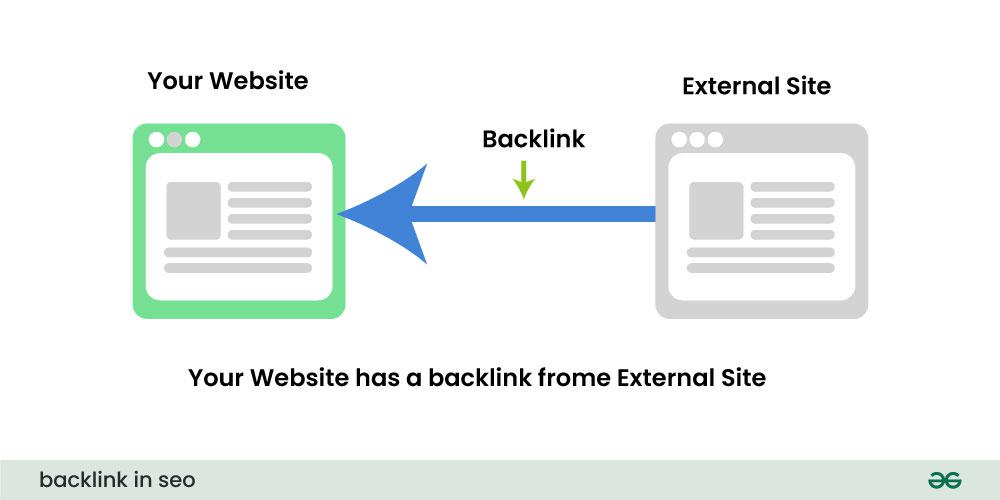
Backlinks remain an important part of SEO.
However, businesses should be careful when chasing backlink numbers.
Suppose one website has 300 relevant backlinks from genuine websites within its industry.
Another website has 30,000 links from random directories, automated profiles and unrelated websites.
The second website has more backlinks.
However, that does not automatically mean it has stronger authority.
Quality, relevance and authenticity matter.
Businesses should therefore be cautious of offers promising hundreds or thousands of backlinks at extremely low prices.
Instead, focus on sustainable link acquisition.
This may include industry citations, useful resources, partnerships, PR coverage, relevant directories, expert contributions and naturally earned links.
A backlink should ideally exist because another website has a genuine reason to reference your content or business.
That creates a healthier SEO foundation.
What Should You Check After the August 2026 Update?
Because the August rollout finished on 21 August 2026, businesses now have enough post-update data to begin analysing whether meaningful changes occurred.
Start with Google Search Console.
Instead of looking only at a third-party ranking tracker, compare real Google performance.
Look at overall clicks and impressions.
Then go deeper.
Check whether specific pages lost visibility.
Next, identify which queries changed.
For example, imagine overall organic traffic dropped by 8%.
That sounds concerning.
However, deeper analysis might reveal that one article lost traffic from informational keywords while service pages remained stable.
That creates a very different situation compared with every major commercial page losing rankings at the same time.
Context matters.
You can explore more examples of how search visibility and user behaviour change through our Search Insights.
Do Not Judge an Update Based on One Keyword
Rank tracking is useful.
However, one keyword should never determine your entire SEO strategy.
Imagine one keyword changes from position four to position nine.
It can feel dramatic.
However, your website may simultaneously gain visibility for twenty other queries.
Alternatively, Google may display new SERP features that temporarily change the position of traditional organic results.
Therefore, evaluate SEO performance across several metrics.
Consider clicks, impressions, landing pages, conversions and overall search visibility.
More importantly, look at trends rather than individual daily fluctuations.
SEO decisions become stronger when they rely on broader data.
What If Your Website Lost Traffic?
If your website experienced a significant decline after the August update, start by identifying exactly where the loss occurred.
Do not immediately rewrite the entire website.
First, compare pre-update and post-update periods.
Next, analyse the affected landing pages.
Then review the queries those pages previously ranked for.
You may discover that the issue is concentrated within one content section.
Alternatively, several unrelated areas may have declined at the same time.
Once you identify the pattern, review the affected pages.
Ask whether the content is still accurate.
Check whether the page adequately satisfies search intent.
Look for thin sections.
Review excessive keyword targeting.
Check whether several pages compete for essentially the same topic.
Also examine the backlink profile and technical health of the website.
SEO problems are easier to fix when you identify the cause before making changes.
If you are unsure where your website may be losing search visibility, you can start with our Free SEO Audit.
Content Consolidation Can Sometimes Be Better Than Publishing More
Many SEO strategies focus heavily on publishing.
One article every week.
Two articles every week.
Thirty articles every month.
However, more content does not always equal more organic traffic.
Sometimes, the better strategy is to improve what already exists.
For example, imagine your website has four articles discussing almost the same topic.
Instead of creating a fifth article, you might combine the strongest information into one comprehensive resource.
Then update internal links to point towards that page.
This can reduce keyword cannibalisation and make the website easier for users to navigate.
It also forces businesses to focus on content quality rather than publishing volume alone.
Before producing a new article, ask:
Do we already have a page that answers this search intent?
If the answer is yes, improving the existing page may be more valuable than creating another one.
Build Topical Authority Instead of Chasing Every Keyword
Strong SEO websites rarely rank because of one article.
They build authority around a group of related topics.
For example, an SEO agency should not publish random articles simply because a keyword has search volume.
Instead, its content might naturally cover technical SEO, keyword research, content strategy, Google Search Console, backlinks, algorithm updates and search analytics.
Those topics reinforce each other.
Internal links then help users and search engines understand the relationship between the pages.
Over time, that creates stronger topical depth.
This is a more sustainable strategy than publishing disconnected pages simply to capture individual keywords.
You can find more SEO guides and Google Search updates in our SEO Blog.
Why Businesses Should Avoid Panic During Google Updates
Google algorithm updates can create anxiety.
Rankings move.
Traffic charts change.
SEO tools send notifications.
As a result, some businesses immediately start changing their websites.
However, reacting too quickly can create new problems.
If you change titles, headings, content, URLs and internal links at the same time, it becomes difficult to understand what caused the next performance change.
A better strategy is to monitor first.
Collect enough data.
Identify patterns.
Then make targeted improvements.
This approach is particularly relevant to the August 2026 Spam Update because the rollout itself completed relatively quickly.
Now that it is finished, post-update Search Console data gives businesses a cleaner period for comparison.

Sustainable SEO Is Becoming More Important
Google updates come and go.
SEO fundamentals remain surprisingly consistent.
Build useful pages.
Answer real questions.
Make the website easy to crawl.
Use clear site architecture.
Optimise important titles and headings naturally.
Create internal links where they genuinely help.
Build relevant authority.
Avoid shortcuts designed purely to manipulate search engines.
Most importantly, continue improving pages based on user needs and real performance data.
Businesses that follow this approach may still experience ranking fluctuations.
No legitimate SEO strategy can guarantee permanent rankings.
However, a strong foundation makes it easier to understand changes and respond intelligently when Google updates its systems.
Final Thoughts
The Google August 2026 Spam Update ran from 18 August until 21 August 2026 and applied globally across all languages.
Google did not introduce a new spam policy alongside the rollout.
Therefore, businesses should not treat the update as evidence that one particular technique, such as AI content or backlinks, suddenly became unacceptable.
Instead, the update reinforces Google’s existing direction.
Avoid low-value scaled content.
Do not stuff keywords.
Create useful location pages.
Build backlinks responsibly.
Monitor Google Search Console.
Most importantly, focus on creating a website that provides genuine value beyond simply ranking for keywords.
Google’s spam detection systems will continue to evolve.
Businesses should evolve with them.
The strongest long-term SEO strategy is not about trying to find the next algorithm loophole.
It is about building a website that deserves to be found.
For additional information about the rollout, read Search Engine Journal’s coverage of the August 2026 Google Spam Update.
If you want to understand whether your website has technical, content or search visibility issues, request a Free SEO Audit from Creative Site.
Frequently Asked Questions About the Google August 2026 Spam Update
When did the Google August 2026 Spam Update start?
Google started the August 2026 Spam Update on 18 August 2026. The rollout applied globally and across all languages.
When did the August 2026 Spam Update finish?
The rollout finished on 21 August 2026. It lasted approximately two days and 16 hours.
Did Google announce a new spam policy in August 2026?
No. Google did not announce a new spam policy alongside the August update. Website owners should continue reviewing Google’s existing spam guidelines and avoid tactics designed mainly to manipulate rankings.
Does the August 2026 Spam Update target AI content?
Google did not state that the August update specifically targeted AI-generated content. The bigger concern is using automation or AI to create large amounts of low-value content primarily for search rankings.
Can AI-generated articles still rank on Google?
Yes, the method used to create content does not automatically determine whether it can rank. Content should provide useful, accurate and relevant information while satisfying the user’s search intent.
What should I do if my website lost rankings after the update?
Start by comparing Google Search Console data before and after the rollout. Review affected landing pages, queries, content quality, backlinks and technical SEO before making significant changes.
Should I remove backlinks after a spam update?
Not automatically. Review your backlink profile first. Avoid buying links or intentionally building large numbers of low-quality links purely to influence rankings. Focus on relevant and genuine links instead.
Are location pages bad for SEO?
No. Location pages can perform well when they provide genuine information for users in each area. Problems arise when hundreds of almost identical pages are created simply by changing the location keyword.
How can I prepare for future Google spam updates?
Focus on useful content, natural keyword usage, strong technical SEO, responsible link building and regular Search Console monitoring. Avoid strategies that exist mainly to manipulate rankings rather than help users.