

Google September 2026 Spam Update: What Website Owners Need to Know
Google has started rolling out another major search update, and this time the focus is spam.
The Google September 2026 Spam Update officially began on 24 September 2026. According to Google, the update applies globally, affects all languages and may take up to two weeks to complete.
For business owners and marketers, that immediately raises a few questions.
Will rankings drop? Is AI-generated content now dangerous? Are backlinks becoming less important? Should you start rewriting your website?
The short answer is: do not panic and do not make rushed changes.
Google has not announced that the September update targets one specific SEO tactic. Instead, it is another improvement to Google’s automated systems for detecting search spam. Search Engine Journal also reported that Google has not provided additional details about a particular tactic targeted by this rollout.
Therefore, the smartest approach is to understand what Google already considers spam, monitor your data carefully and focus on long-term SEO quality.
If your website already follows sustainable SEO practices, this update may not necessarily be bad news.
What Is the Google September 2026 Spam Update?
Google continuously operates automated systems that identify content and techniques that attempt to manipulate search results.
From time to time, Google makes significant improvements to these systems. Google calls these changes spam updates.
One of the technologies involved in Google’s spam detection is SpamBrain, an AI-based spam-prevention system. Google regularly improves these systems to identify both existing and emerging spam techniques.
The September 2026 update started on 24 September at 9:15 a.m. PDT.
Unlike several earlier spam updates in 2026, which completed within a few days, Google said the September rollout could take up to two weeks.
In addition, this is already the fourth confirmed spam update of 2026, following updates in March, June and August.
This tells us something important.
Google is becoming increasingly aggressive about maintaining the quality of search results.
However, that does not mean every ranking fluctuation means your website has been penalised.
Search rankings naturally move. During a major algorithm rollout, those movements may become more noticeable.
What Type of SEO Spam Could Be Affected?
Google has not confirmed that the September 2026 Spam Update specifically targets backlinks, AI content, doorway pages or any other individual tactic.
Nevertheless, website owners should understand Google’s existing spam policies because these policies provide the clearest indication of the practices Google wants to prevent.
Google defines search spam as techniques designed to deceive users or manipulate its search systems into ranking content more prominently.
Several areas are particularly relevant for modern SEO.

Scaled Low-Quality Content
One of the biggest risks today is scaled content abuse.
This happens when websites create large numbers of pages mainly to manipulate search rankings rather than genuinely helping users.
For example, a business might publish hundreds of articles targeting slightly different keywords while providing almost the same information on every page.
The problem is not simply the number of articles.
The real problem is lack of value and originality.
Google specifically states that scaled content abuse can include using generative AI to create many pages without adding meaningful value for users.
Therefore, using ChatGPT, Gemini, Claude or another AI tool does not automatically make content spam.
Google’s own guidance explains that generative AI can help with research and content structure. However, mass-producing pages without useful additional value may violate its spam policies.
The distinction is important.
AI-assisted content can still perform well when businesses add genuine expertise, useful examples, accurate information, original insights and proper editorial review.
Keyword Stuffing Still Creates Risk
Keyword stuffing is one of the oldest SEO mistakes, yet it still happens.
Some websites repeatedly insert keywords such as:
“best SEO company Malaysia”
“SEO company Malaysia”
“professional SEO company Malaysia”
“top SEO company Malaysia”
into the same paragraph simply because they want Google to notice the keyword.
That approach usually creates an unnatural reading experience.
Google describes keyword stuffing as filling pages with keywords or numbers in an attempt to manipulate rankings.
Instead, write naturally.
Your primary keyword should appear in important places such as the title, introduction, headings and relevant sections. However, related phrases and natural language should support the main topic.
Modern SEO is about topic relevance, not repeating the same phrase twenty times.
Be Careful With Duplicate and Near-Duplicate Pages
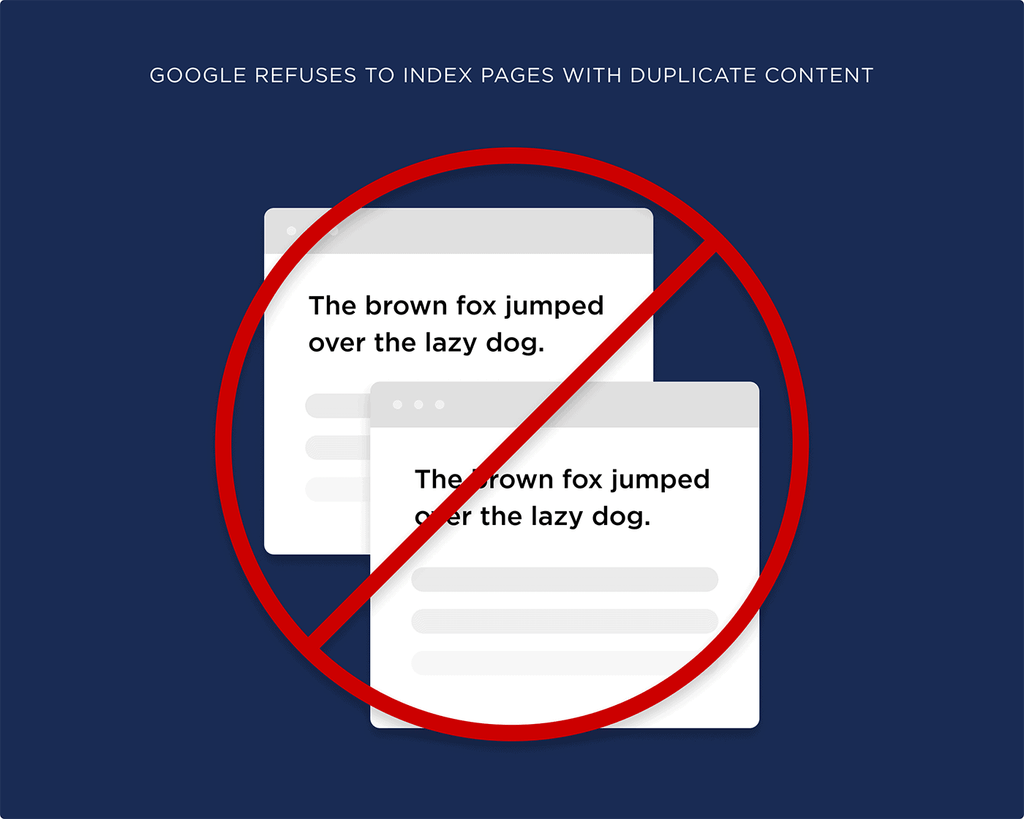
Another area businesses should review is repetitive content.
This problem often appears on service-area websites.
For example:
/seo-company/shah-alam/
/seo-company/petaling-jaya/
/seo-company/subang-jaya/
Location pages are not automatically spam.
However, problems can occur when every page contains almost identical content and only the city name changes.
Google’s spam policies include doorway abuse, where multiple similar pages or websites target similar search queries and act mainly as intermediate pages rather than useful destinations.
Therefore, businesses that use location SEO should make each page genuinely useful.
A strong location page could include local service information, service coverage, common customer requirements, relevant examples, unique FAQs and information that genuinely helps people in that area.
Changing “Shah Alam” to “Klang” throughout an otherwise identical page is not a strong long-term SEO strategy.
Backlink Spam Remains a Major Concern
Backlinks still matter in SEO.
However, the way you acquire them matters even more.
Google identifies several practices as link spam, including purchasing links for ranking purposes, excessive link exchanges, automated link-building services and low-quality directory links.
For example, imagine someone offers:
“1,000 dofollow backlinks for RM100.”
It may sound attractive.
However, you should ask a more important question:
Why would 1,000 genuine websites suddenly want to recommend my business?
If the answer is simply because you paid someone to generate those links automatically, the backlink profile probably does not represent genuine authority.
A stronger approach focuses on relevant industry mentions, useful resources, digital PR, genuine partnerships, citations and links that make sense for the audience.
Quality generally creates a more sustainable SEO foundation than quantity.
Does the September 2026 Spam Update Target AI Content?
This is probably one of the biggest questions businesses will ask.
The answer is not specifically, based on what Google has announced so far.
Google has not said that the September 2026 Spam Update is an “AI content update”.
In fact, Google does not prohibit content simply because AI helped create it.
Google’s guidance says generative AI can be useful for researching a topic and adding structure to original content. The issue arises when businesses use automation to create large volumes of pages with little or no additional value.
Therefore, the question should not be:
“Was this article written by AI?”
A better question is:
“Does this article deserve to rank?”
Does it answer the searcher’s question?
Does it provide useful information?
Is the information accurate?
Does it contain genuine expertise?
Does it offer something better than ten other articles already ranking?
Those questions matter far more than whether someone used an AI tool during the writing process.

What Should You Do During the September 2026 Spam Update?
If your rankings move during the rollout, avoid making immediate major changes.
Google’s own guidance recommends reviewing Search Console data when investigating search traffic drops. Small ranking movements do not necessarily mean something is fundamentally wrong with your website. Search results constantly change as Google evaluates new and existing content.
First, monitor your Google Search Console performance.
Look at:
- Total clicks
- Total impressions
- Average position
- Search queries
- Landing pages
However, avoid looking at one day of data and immediately drawing conclusions.
Instead, compare meaningful periods.
For example, once the rollout finishes, compare performance before and after the update.
If only one or two keywords moved slightly, there may be no reason to change anything.
However, if multiple important pages lose significant visibility across many related searches, investigate further.
You should also check Google Search Console for manual actions, indexing problems and technical SEO issues.
If you want a broader view of how search behaviour changes over time, you can also explore our latest Search Insights, where we analyse search trends and SEO performance patterns.
Should You Rewrite Your Website After a Ranking Drop?
Not immediately.
One of the biggest mistakes businesses make during an algorithm update is changing everything at once.
They rewrite titles.
Then they change headings.
Next, they remove content.
After that, they build new backlinks.
Finally, they redesign entire pages.
The problem is that they no longer know which change actually helped or damaged performance.
Instead, diagnose the problem first.
If a page loses rankings, compare it against the current search results.
Ask whether competitors now provide better information.
Check whether your content has become outdated.
Look for repetitive sections, thin information or excessive keyword targeting.
Then improve the page because it becomes more useful, not simply because the ranking dropped.
Google states that websites affected by spam updates should review its spam policies. If automated systems detect improved compliance, recovery can happen over time, although Google notes that this process may take months.
SEO recovery rarely comes from finding one secret trick.
It usually comes from improving the overall quality of the website.
How to Build a More Spam-Resistant SEO Strategy
A good SEO strategy should not depend on finding loopholes in Google’s algorithm.
Instead, build a website that deserves visibility.
Start with helpful content.
Answer questions your customers genuinely ask.
Next, strengthen your website structure so Google and visitors can easily understand your important pages.
Internal linking also matters. A well-organised website allows related articles, service pages and resources to support each other naturally.
Technical SEO is equally important.
Make sure Google can crawl and index your website correctly. Improve page speed, mobile usability, internal links, canonicalisation and metadata where necessary.
Google’s Search Essentials continues to recommend creating helpful, reliable, people-first content and using the words people search for in prominent areas such as titles, headings and descriptive text.
At the same time, build authority naturally.
A smaller number of strong and relevant backlinks can often provide more meaningful value than thousands of low-quality links.
Most importantly, think beyond individual keywords.
Your website should gradually establish expertise around the topics that matter to your business.
If you want to identify potential SEO issues before they become bigger problems, you can request a Free SEO Audit.
You can also read more practical SEO guides and Google Search updates on our SEO Blog.
What the September 2026 Spam Update Means for Businesses
The Google September 2026 Spam Update should not cause businesses to stop investing in SEO.
Instead, it reinforces an important lesson.
SEO strategies built only around manipulating rankings become increasingly difficult to sustain.
Google is constantly improving its ability to understand content, links, websites and user intent.
Therefore, businesses should move away from strategies such as mass-produced thin content, automated backlinks, duplicate location pages and excessive keyword repetition.
Focus instead on building genuine topical authority.
Publish content that answers real questions.
Improve existing pages instead of constantly creating new ones.
Use AI as a productivity tool rather than a shortcut for publishing hundreds of low-value articles.
Build relevant backlinks rather than chasing backlink numbers.
Finally, use real performance data from Google Search Console before making major SEO decisions.
The goal should not be to “beat Google’s algorithm”.
The goal should be to create a website that Google’s systems have good reasons to trust and recommend.
Thoughts
The Google September 2026 Spam Update is another reminder that sustainable SEO requires more than keywords, articles and backlinks.
Google began rolling out the update globally on 24 September 2026, and the rollout may take up to two weeks. At the time of writing, Google has not announced that the update specifically targets one individual SEO tactic.
Therefore, avoid reacting to short-term ranking movements.
Monitor your Search Console data. Review your content quality. Check your backlink strategy. Remove genuine spam risks where necessary.
Most importantly, continue building useful content and a website that serves real users.
Algorithm updates will continue.
A strong SEO foundation gives your website a better chance of surviving them.
For additional coverage of the announcement, read the Search Engine Journal report on Google’s September 2026 Spam Update.
You can also review Google’s official Spam Policies for Google Web Search and its guidance on Google Search Spam Updates.

Frequently Asked Questions About the Google September 2026 Spam Update
When did the Google September 2026 Spam Update start?
Google started rolling out the update on 24 September 2026 at 9:15 a.m. PDT. It applies globally and across all languages. Google said the rollout could take up to two weeks.
Does the September 2026 Spam Update target AI content?
Google has not announced that this update specifically targets AI-generated content. Google allows the use of generative AI as part of the content creation process. However, creating large numbers of low-value pages primarily to manipulate rankings may violate Google’s scaled content abuse policy.
Can my website lose rankings during a spam update?
Yes. Websites may experience ranking changes during and after an update. However, a small ranking movement does not automatically mean Google has penalised your website.
What should I do if my rankings drop?
Start by reviewing Google Search Console. Compare queries, landing pages, clicks, impressions and ranking positions before and after the rollout. Then review Google’s spam policies before making major changes.
Are backlinks still important after the spam update?
Backlinks remain part of SEO, but businesses should prioritise genuine and relevant links. Google considers practices such as buying links for ranking purposes, automated link generation and excessive link exchanges potential forms of link spam.
Are location pages considered spam?
No. Location pages can provide useful information for people searching for services in particular areas. However, creating many nearly identical pages simply to target different city keywords may create doorway or scaled-content risks.
How can I protect my website from future Google updates?
There is no way to guarantee that rankings will never change. However, you can reduce risk by creating useful content, maintaining strong technical SEO, avoiding spammy link practices, preventing duplicate or thin content and monitoring your website through Google Search Console.