Tag: seo Malaysia

  • What Is SEO in Malaysia? How It Works and Why Your Business Needs It

    What Is SEO in Malaysia? How It Works and Why Your Business Needs It

    What Is SEO in Malaysia?


    If you have ever searched for something on Google and wondered why certain websites appear at the top of the results that is SEO at work. And in Malaysia, more businesses are realising that SEO is no longer optional. It is one of the most powerful tools for growing your business online without spending a ringgit on ads every single day.

    In this guide, you will learn exactly what SEO Malaysia means, how it works, and why your business needs it to compete in today’s digital landscape.


    What Is SEO?

    SEO stands for Search Engine Optimisation. In simple terms, it is the process of improving your website so that it appears higher in search engine results — primarily Google.

    When someone in Malaysia searches for “renovation company Shah Alam” or “best homestay in Selangor,” Google displays a list of results. The websites that appear on page one are not there by accident. They earned those positions through consistent, strategic SEO work.

    In other words, SEO helps Google understand what your website is about, who it serves, and why it deserves to be recommended to searchers.

    service seo

    How Does SEO Work in Malaysia?

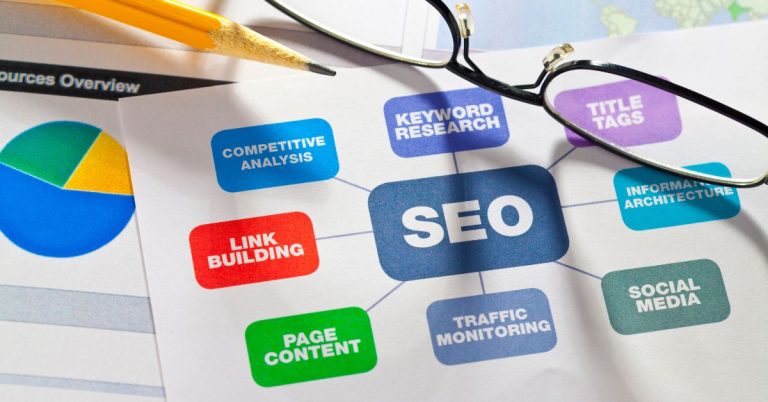
    SEO works by optimising three core areas of your website. Furthermore, all three areas need to work together for the best results.

    1. Technical SEO

    Technical SEO is the foundation. It ensures that Google can properly crawl, read, and index your website. Without a solid technical base, even the best content will struggle to rank.

    Technical SEO in Malaysia typically involves:

    • Fast page loading speed (especially on mobile)
    • Clean and readable URL structure
    • Proper sitemap and robots.txt setup
    • HTTPS security
    • Schema markup so Google understands your business entity
    • Mobile-friendly design

    If Google cannot access your website properly, it simply will not rank it no matter how good your content is.

    service seo

    2. On-Page SEO

    On-page SEO refers to everything on the actual pages of your website. This includes your content, headings, images, and how well your pages match what people are searching for.

    Key on-page SEO elements include:

    • Title tags and meta descriptions — the first thing Google and users see in search results
    • Heading structure (H1, H2, H3) — helps Google understand the hierarchy of your content
    • Target keywords — using the right words that your customers actually search for
    • Internal linking — connecting your pages together so Google can navigate your site
    • Content quality — detailed, helpful, and relevant content that answers real questions

    For example, if you run an interior design company in Kuala Lumpur, your service page should clearly mention location keywords, service details, and answer common questions your prospects have.

    3. Off-Page SEO

    Off-page SEO refers to signals that come from outside your website. The most important of these are backlinks links from other websites pointing to yours.

    When a reputable Malaysian news portal or industry website links to your business, Google treats it as a vote of confidence. The more quality backlinks you have, the more authority your website carries in Google’s eyes.

    Additionally, off-page SEO in Malaysia includes:

    • Google Business Profile optimisation
    • Online reviews and ratings
    • Social media presence
    • Brand mentions across the web
    what is seo

    Why Is SEO Important for Businesses in Malaysia?

    The numbers speak for themselves. According to Statista, Google holds over 92% of the global search engine market share. In Malaysia, this figure is even higher — most Malaysians turn to Google first when looking for a product, service, or information.

    Here is why SEO Malaysia matters for your business specifically:

    Malaysians Search Before They Buy

    Before making any purchasing decision, most Malaysians search online first. Whether they are looking for a contractor, a restaurant, a clinic, or an SEO agency — they Google it. If your business does not appear in those results, you are essentially invisible to a large pool of ready buyers.

    SEO Brings Free, Long-Term Traffic

    Unlike Google Ads or Facebook Ads, SEO does not stop working when your budget runs out. Once your website ranks well, it continues to attract visitors organically — 24 hours a day, 7 days a week — without paying for every click.

    This makes SEO one of the highest-ROI digital marketing investments for Malaysian businesses in the long run.

    Your Competitors Are Already Doing It

    If you are not investing in SEO Malaysia, your competitors almost certainly are. Every day that passes without SEO work is another day your competitors are climbing the rankings while your website stays buried on page two or three — where almost no one clicks.

    Local SEO Puts You on the Map — Literally

    For businesses that rely on local customers, local SEO is a game-changer. When someone searches “kedai makan near me” or “plumber Petaling Jaya,” Google shows a map listing with the top three local businesses. Appearing in that local pack can drive a significant number of phone calls and walk-ins — without any ad spend.


    What Are the Types of SEO?

    Understanding the different types of SEO helps you build a more complete strategy. Broadly, SEO in Malaysia falls into these categories:

    Technical SEO — Fixing the backend of your website so Google can read it properly.

    On-Page SEO — Optimising the content and structure of each page.

    Off-Page SEO — Building authority through backlinks and brand mentions.

    Local SEO — Ranking for location-based searches and Google Maps.

    Content SEO — Creating blog posts, guides, and articles that attract organic traffic.

    E-commerce SEO — Optimising product pages and category listings for online stores.

    Each type serves a specific purpose. However, the most effective SEO strategy combines all of them working together consistently over time.


    How Long Does SEO Take to Show Results?

    This is one of the most common questions business owners in Malaysia ask. The honest answer is it depends.

    Generally, most websites start seeing meaningful improvements within 3 to 6 months of consistent SEO work.

    That said, several factors affect the timeline:

    • How competitive your industry is — ranking for “SEO company Malaysia” takes longer than ranking for “renovation company Seremban”
    • The age and authority of your domain — newer websites take longer to build trust with Google
    • The quality and consistency of your content — publishing regularly speeds up results
    • Your technical SEO health — a website with many technical errors will rank more slowly

    SEO is a long-term strategy. Therefore, businesses that approach it as a 6 to 12-month commitment almost always outperform those who expect overnight results.

    SEO GSC Result

    What Is the Difference Between SEO and Google Ads?

    Many business owners confuse SEO with Google Ads (also known as Google SEM or PPC). While both appear on Google, they work very differently.

    SEOGoogle Ads
    Cost per clickFreePay per click
    Time to results3–6 monthsImmediately
    LongevityLong-termStops when budget ends
    Trust levelHigher (organic)Lower (labelled as Ad)
    Best forSustainable growthFast, short-term traffic

    The smartest approach for most Malaysian businesses is to use both together — Google Ads for immediate leads while SEO builds your long-term organic presence in the background.


    How to Get Started with SEO in Malaysia

    Starting with SEO does not have to be overwhelming. Here is a straightforward approach:

    Step 1: Conduct an SEO audit. Before anything else, understand where your website currently stands. An SEO audit will reveal technical issues, content gaps, and missed opportunities. You can read more about what a technical SEO audit covers on our blog.

    Step 2: Research your keywords. Find out what your potential customers are actually searching for. These keywords will guide your content and on-page optimisation strategy.

    Step 3: Fix your technical foundation. Address site speed, mobile usability, indexation issues, and schema markup before focusing on content.

    Step 4: Optimise your existing pages. Update your title tags, meta descriptions, headings, and content to match your target keywords and search intent.

    Step 5: Create consistent, helpful content. Publish blog posts and guides that answer real questions your customers have. This builds topical authority over time.

    Step 6: Build backlinks gradually. Reach out to industry directories, local publications, and partners to earn quality backlinks to your website.

    Step 7: Track and improve. Use tools like Google Search Console and Google Analytics to monitor your progress and identify what is working.


    Do You Need an SEO Agency in Malaysia?

    While it is possible to learn and implement SEO yourself, working with an experienced SEO agency in Malaysia can significantly accelerate your results. A good agency brings:

    • Proven keyword research and strategy
    • Technical expertise to fix complex issues
    • Content creation aligned with search intent
    • Link building experience
    • Regular reporting and transparent communication

    However, not all agencies are the same. When choosing an SEO company in Malaysia, look for one that shows you real case studies, explains their process clearly, and sets realistic expectations. Avoid any agency that promises “page one in 30 days” that is almost always a red flag.

    Check if you need SEO for your company.

    At Creative Site, we have helped businesses in multiple industries from homestays to interior design companies achieve consistent organic growth through strategic, long-term SEO. You can explore our SEO case studies to see real results from real clients.


    Final Thoughts

    SEO Malaysia is not a luxury reserved for big corporations. It is an essential growth tool for any business that wants to be found online whether you are a small local shop, a growing SME, or an established brand.

    The businesses winning on Google today are the ones that started investing in SEO 6 to 12 months ago. So the best time to start is now.

    If you are ready to grow your organic traffic and generate consistent leads without depending on paid ads, get in touch with Creative Site for a free SEO consultation. We will help you understand exactly where your website stands and what it takes to rank.


    Frequently Asked Questions About SEO Malaysia

    What does SEO stand for?
    SEO stands for Search Engine Optimisation. It is the process of improving a website to increase its visibility in search engine results, primarily on Google.

    Is SEO worth it for small businesses in Malaysia?
    Yes. In fact, local SEO is particularly effective for small businesses because it targets people searching for services in a specific area making every visitor highly relevant and more likely to convert.

    How much does SEO cost in Malaysia?
    SEO pricing in Malaysia varies widely depending on the scope of work and the agency. Professional SEO packages typically range from RM1,500 to RM5,000 per month for ongoing services. You can read our full breakdown in our SEO pricing guide.

    Can I do SEO myself?
    Yes, you can handle basic SEO tasks yourself such as writing optimised content and submitting your site to Google Search Console. However, technical SEO and competitive keyword strategy are best handled by an experienced professional.

    How do I know if my SEO is working?
    The clearest indicators are increases in organic traffic, keyword rankings, and enquiries or leads coming from search. Tools like Google Search Console and Google Analytics help you track all of these metrics.


    Written by the Creative Site team — an SEO agency in Malaysia helping businesses grow through search visibility and AI-ready digital strategy. Learn more about us.

  • 10 SEO Competitor Analysis Tools That Matter

    10 SEO Competitor Analysis Tools That Matter

    A lot of SEO campaigns stall for the same reason. The site is publishing content, fixing metadata, and tracking rankings, but nobody has a clear view of what stronger competitors are doing differently.

    That is where seo competitor analysis tools become useful. Not because software magically improves rankings, but because the right tools show where competitors are winning in search intent coverage, backlink authority, content depth, technical structure, and increasingly, AI visibility signals. If you are choosing tools for a business site or eCommerce brand, the goal is not to collect more dashboards. It is to find the signals that support better decisions.

    What seo competitor analysis tools should actually tell you

    The best tools do more than show who ranks above you. They help you answer practical questions. Which competitors own your high-value keywords? Where are the content gaps? Which pages attract links? How strong is their domain relative to yours? Are they building topical authority across a category, or just ranking for a handful of terms?

    For modern SEO, that analysis should also support entity-based SEO and GEO thinking. That means looking beyond single-keyword rankings and asking whether a competitor has stronger topic clustering, better structured content, clearer schema implementation, and broader digital signals that support both Google and AI discovery.

    Not every tool does all of that well. Some are better for backlinks. Some are better for keyword gap analysis. Some are better for technical crawling. The right stack depends on your site size, budget, and internal capability.

    10 seo competitor analysis tools worth considering

    1. Ahrefs

    Ahrefs is one of the most complete platforms for competitor SEO research. It is especially strong in backlink analysis, organic keyword tracking, content gap discovery, and identifying pages that drive the most traffic for competing domains.

    For many businesses, Ahrefs is the fastest way to understand why another site is outranking them. You can compare domains, isolate shared keywords, and find pages that consistently earn links. That matters because strong rankings often come from page-level authority, not just domain strength.

    The trade-off is cost. Ahrefs is powerful, but smaller businesses may not use enough of its features to justify a higher-tier plan.

    2. Semrush

    Semrush is a strong all-around platform and often the easiest choice for teams that want both SEO and broader digital marketing data. It handles keyword overlap, competitive positioning, backlink research, PPC visibility, and site auditing in one place.

    Its competitor reports are useful for businesses that want a broader market view, not just a ranking snapshot. If you need to compare multiple competitors and understand paid plus organic search activity, Semrush can be more practical than a narrower tool.

    Its weakness is that the interface can feel crowded. For beginner and intermediate users, that can slow down decision-making unless there is a clear process behind the tool.

    3. SE Ranking

    SE Ranking is often a good fit for smaller businesses that want meaningful competitor data without enterprise-level pricing. It covers keyword tracking, competitor research, website auditing, and backlink monitoring with a cleaner learning curve than some larger platforms.

    This is a sensible option when budget matters but you still need reliable visibility into ranking movements and keyword gaps. It may not go as deep as Ahrefs or Semrush in every category, but for many SMBs, it offers enough to act on.

    4. Similarweb

    Similarweb is useful when you need a bigger picture of market share, traffic channels, and audience behavior. Traditional SEO tools focus heavily on keyword and link data. Similarweb helps you understand how competitors attract traffic across organic search, direct, referral, social, and paid channels.

    That broader view matters because not every competitor is beating you on SEO alone. Some are winning through brand demand, strong referral ecosystems, or multichannel acquisition. If you only look at rankings, you can misread the market.

    5. SpyFu

    SpyFu is best known for competitor keyword intelligence, especially when you want to compare organic and paid search behavior. It helps reveal which terms competitors have targeted over time and where they appear to be investing consistently.

    This can be useful for lead generation businesses that want to identify high-commercial-intent keyword patterns. It is less comprehensive than top-tier enterprise platforms, but often good enough for targeted research.

    6. Moz Pro

    Moz Pro remains a credible option for keyword research, site audits, and domain-level competitive tracking. Its strength is usability. Many business owners and in-house marketers find it easier to understand than more complex platforms.

    That simplicity comes with limits. If backlink intelligence is your top priority, you may find stronger depth elsewhere. Still, for teams that want a more approachable toolset, Moz Pro remains relevant.

    7. Screaming Frog

    Screaming Frog is different from most tools on this list because it is primarily a crawler, not a competitive intelligence suite. But it is still valuable in competitor analysis.

    When you crawl competitor sites, you can inspect page structure, indexation patterns, internal linking depth, metadata strategy, heading use, canonicals, redirects, and technical architecture. That level of analysis is useful when a competitor appears to have stronger technical SEO or cleaner page hierarchy.

    It will not tell you estimated traffic or backlink profiles. It tells you how a site is built. That makes it a strong supporting tool, not a standalone solution.

    8. Majestic

    Majestic is focused heavily on backlinks. If your SEO challenge is authority and off-page competitiveness, it is still worth considering. Its trust and citation metrics can help you evaluate link quality patterns across competing domains.

    For businesses in competitive niches, backlink analysis still matters. But links should not be treated in isolation. A competitor with weaker links can still outrank you if their content architecture and search intent alignment are stronger.

    9. Ubersuggest

    Ubersuggest is a lighter and more affordable option for businesses that need basic competitor research. It can surface keyword ideas, ranking data, backlink snapshots, and content opportunities without the complexity of larger tools.

    This is often a starting point, not an end-state platform. It is useful for smaller websites or early-stage SEO efforts, but growing brands usually outgrow it when they need more precise competitive insight.

    10. Google Search Console and manual SERP review

    This is not a paid platform, but it belongs on the list because too many businesses overlook it. Search Console shows which queries already generate impressions and where your site is underperforming. When paired with direct SERP review, it becomes a practical competitor analysis method.

    You can see who ranks above you, what content formats Google favors, how titles are written, whether local packs appear, and what search intent is actually winning. No third-party tool replaces manual review of the live search results.

    How to choose the right tool stack

    The best choice depends on what you need to fix.

    If your main issue is content coverage and keyword gaps, Ahrefs, Semrush, or SE Ranking are usually the strongest starting points. If authority is the problem, Majestic or Ahrefs can add stronger link analysis. If technical structure is holding the site back, Screaming Frog gives you insights that ranking tools miss. If you need broader market intelligence, Similarweb adds useful context.

    For most small to mid-sized businesses, one all-in-one SEO platform plus Search Console is enough. Adding more tools only makes sense when you have a clear analysis framework and someone who can turn findings into implementation.

    What to look for in competitor data

    Tool access alone does not improve performance. What matters is what you extract from the data.

    Start with keyword overlap. This shows where competitors rank and you do not. Then check content depth. Are they covering the topic more completely, or are they simply targeting a cleaner search intent angle? Next, review page structure, internal links, and schema signals. Finally, assess backlinks at the page level, not just the domain level.

    If you are planning for AI visibility as well as Google rankings, review how clearly competitors define entities, structure answers, and organize related topics. AI systems tend to favor content that is well-structured, explicit, and context-rich. That overlaps with good SEO, but it is not identical.

    A realistic point most businesses miss

    The strongest competitors are not always using better tools. They are usually making faster decisions from clearer data.

    That is the real value of seo competitor analysis tools. They reduce guesswork. They help you stop publishing random pages and start building around search intent, authority gaps, technical priorities, and topical coverage. When used properly, they support a website that is built for Google and trusted by AI.

    If your business is trying to improve rankings, traffic quality, and long-term discoverability, competitor analysis should not be a one-time audit. It should be part of how your SEO strategy is planned, measured, and refined. That is also why many growing brands choose a partner like Creative Site at https://creativesite.com.my – not just for reporting, but for turning competitive insights into implementation that moves search performance forward.

    The smartest tool is still the one that helps you act with confidence.